
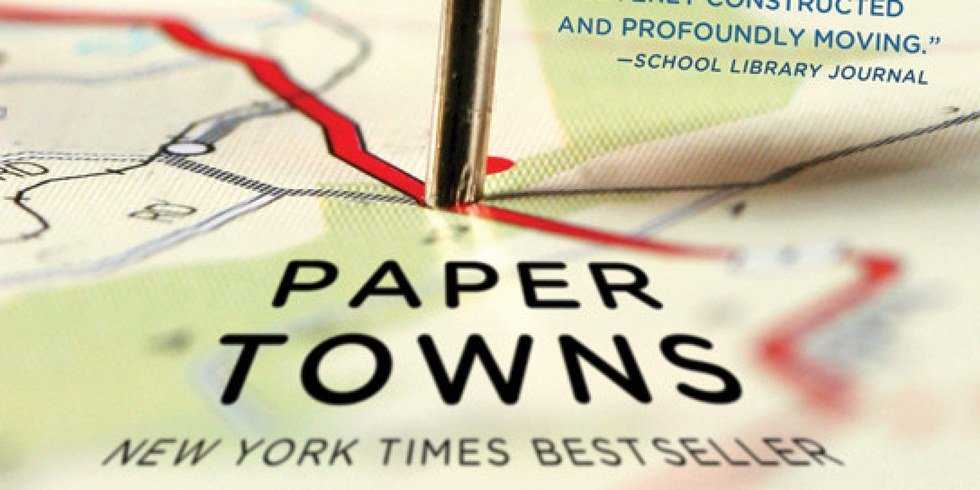
John Green’s book "Paper Towns" was recently released as a movie, and as I sat in the theater thoroughly enjoying the movie experience (almost as much as the book experience), I began to realize there was a larger story being told than the surface level plot of a girl who ran away. Through the adventures of Q and his friends as they attempt to understand Margo, John Green is communicating something very important, especially in the age of constant comparison: No one is perfect, no matter how perfect they appear. Your idols are just people and are flawed, just like you.
We hold others to insanely high expectations and forget that they are just as human as we are. We praise them as untouchable or disregard them as hopeless if their shortcomings are readily apparent. We create impossible expectations for those we don’t even personally know. Our tendency to idolize others and put them on pedestals often causes heartbreak when the inevitable occurs and we realize our idol is just another person, same as you and me. Once this truth makes its appearance we get angry and frustrated that the figure of the person fabricated in our minds does not accurately resemble the physical human being we have standing in front of us. A person is a person, each with their own flaws, their own story, their own behavioral traits and up close they are just as imperfect as every one else.
It is the allure of distance that allows us to create these illusions. It is what causes us to fall victim to the idea that people can be something amazingly unattainable simply because we do not know them on a personal level. Distance gives our heads room to play and construct misconceptions but the closer you get (both physically and emotionally) to someone, the more you see of reality. This tendency to view those we don’t know as unerring leads to the problem of falling in love with the idea of someone rather than their actual self. When you don’t know someone personally, you can only see one dimension of him or her. Upon closer inspection, you can see their beliefs, fears, quirks, and the flaws that make them human. We often accept that we have flaws but forget to remember that our human existence is not different from everyone else’s human existence.
Realizing and accepting this universal truth, that perfection does not exist, will not turn our world upside down. It will not cause a shattering of relationships or a crushing of dreams. It will just make us that more accepting of one another. It will allow us to truly connect and to accept not only the flaws of those around us, but also the ones inside of us.