
“OMG TBT THIS WAS MY JAM!!!! This song is SO OLD!!!” I scream as “Happy” by Pharrell comes on my Spotify playlist.
The song came out barely two years ago.
Not much has changed since then. My personal life has changed significantly in four years; I have a myriad of new experiences, and maybe a slightly better fashion sense, but overall, the world around me is not that different to the world of early 2014.
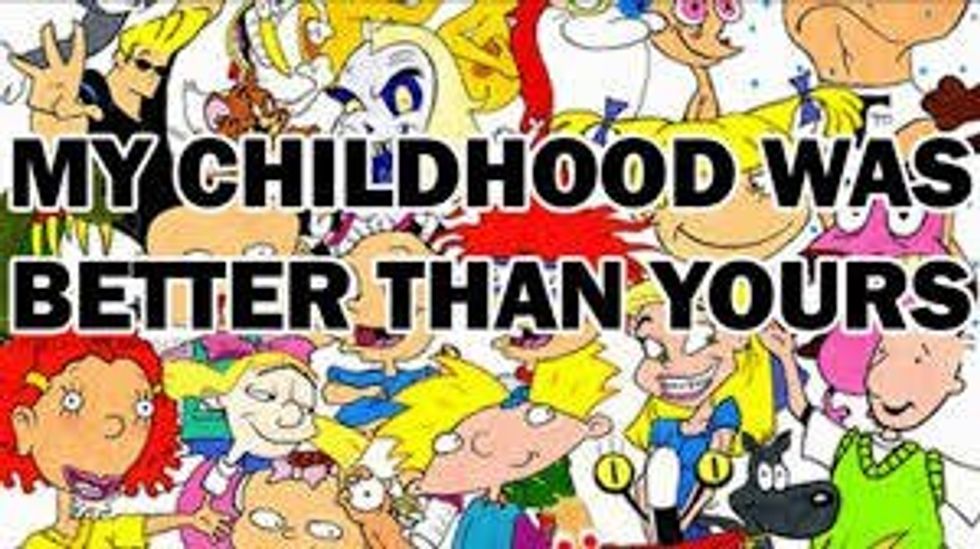
The music is...pretty similar (albeit maybe a little slower). The fashion is...also pretty similar. So why is it that I have an intense longing for the world that existed two years ago today as if it were a time long ago? This sort of precocious nostalgia seems to be epidemic among people today, and especially among my generation. Of course, I don’t have any answers as to why this might be the case, but I certainly have a few theories.
My first theory is that the world is simply moving faster these days than it ever did before, and because we, as young people, are so deeply immersed in it, we experience it more acutely. We are required to keep up with ever-changing technology, vocabulary, music and policy, as every little change affects our lives significantly.
Because everything moves so fast, the past begins to fade and become antiquated at an unnaturally fast pace. I’m sure to a person living in 1616, the experience of living in the year 1606 was identical to that of their present time, because the world was changing at a significantly slower pace than it is today. However, when you look at life today versus life in 2006, it’s virtually unrecognizable. 2006 was the age of Juicy Couture tracksuits, Uggs, flip phones, dial-up Internet and computer viruses!
In 2006, my family had one clunky laptop that took ten minutes to even turn on, a desktop computer that was as deep as it was tall and wide, and 4 times as many pairs of Crocs as we did cell phones. In reality, ten years is a miniscule amount of time, but given how much has changed in that short period of time, it may as well be a different world.
Maybe to someone who is older and who doesn’t pay as much attention to the rapid changes that occur in the world these days, it might not seem so different, but as a young person who must be aware of this changing world to survive, every year seems different from the next one.
My second theory is that social media allows us to be hyper-aware of how our personal lives are changing, thus giving us a heightened sense of nostalgia. For example, when I think back to my pre-social media childhood, I am unable to envision what I looked like without seeing a picture for reference.
All my memories are 100 percent mine, and I can be sure of that because of the relative lack of time-specific photo documentation. I don’t automatically think about how different the world was when I was a child.
However, when I stalk my Facebook profile from freshman year of highschool, I see a world that is infinitely different than my world today, because I am able to look at different pictures and observe all the minor things that have changed (i.e. different hairstyles, changes in my appearance, technologies, etc.) that I would not have otherwise noticed if I were relying solely on randomly retrieved memories.
This notion causes me to feel alienated from the world that my younger, social media-present self inhabited. I see it as being even more distant than my childhood.
My third theory is that nostalgia is a coping mechanism for disillusioned and hopeless young people. As young citizens in 21st century America, we are faced with poor career prospects, mountains of student debt, and a highly uncertain future.
All this residual stress over the possibility that the future might be bleak might be a huge factor in our tendency to glorify the periods of our life in which these realities were further away. Because the world seemed less scary to us back then, we assume that the world was better as a whole, while in reality, it most likely was not any better.
There were a whole host of problems that the world faced a decade or two ago; we just weren’t aware of them because we were so young and naïve.
I often get really wrapped up in my thoughts and memories, to the point where the lines between past and future often get blurred. While it is important to learn from your past, it’s also important to live in the present, especially when you’re in the prime of your life.
I think we all need to take a step back and realize that we have lived too little of our lives to be longing for days gone by. Maybe, instead of longing for the past, we can work on making the present something to be longed for in the future. I think we’d all be a lot happier.