Last week, author and Christian Sarah Bessey joined in a small hashtag on Twitter: #ThingsOnlyWomenWritersHear. She posted a few tweets with the theme of what a woman who writes hears regularly that a man in the same position would not: comments like, “So what does your husband think about your job?” and “How do you balance raising your children and homemaking with your career?" and “I know I'm obviously not your intended audience - I'm a man! - but I'll be darned, I actually liked your book."
After a handful of tweets with the hashtag about women writers, she posted:
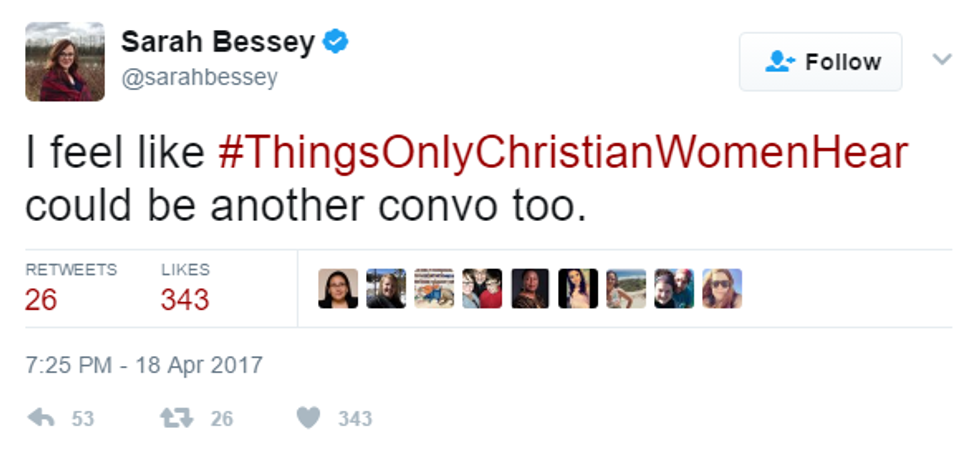
A few hours later and #ThingsOnlyChristianWomenHear exploded on Twitter.
Bessey was surprised but happy about the sudden popularity of the concept she started on a whim. She made a Facebook post, writing about the hashtag: "I didn't have a big agenda with it - I honestly just thought it would be an interesting convo on the heels of similar conversations.
"Thousands of tweets were posted using the hashtag. Most of them came together to chronicle an intricate pattern of hypocrisy and double-standards that Christian women all across the nation have noticed in the Church.
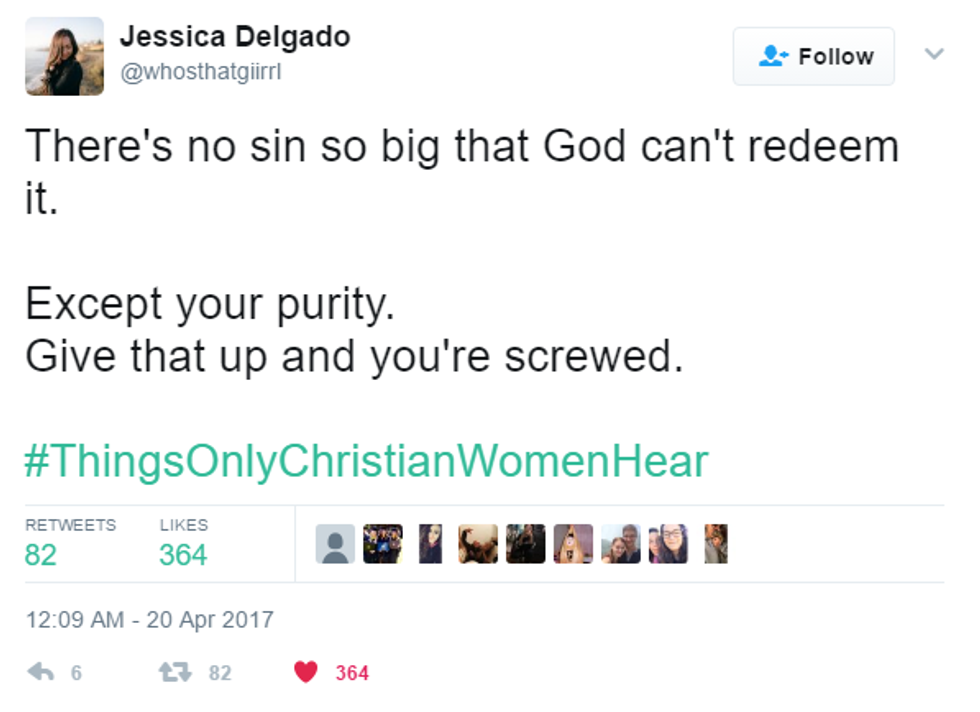
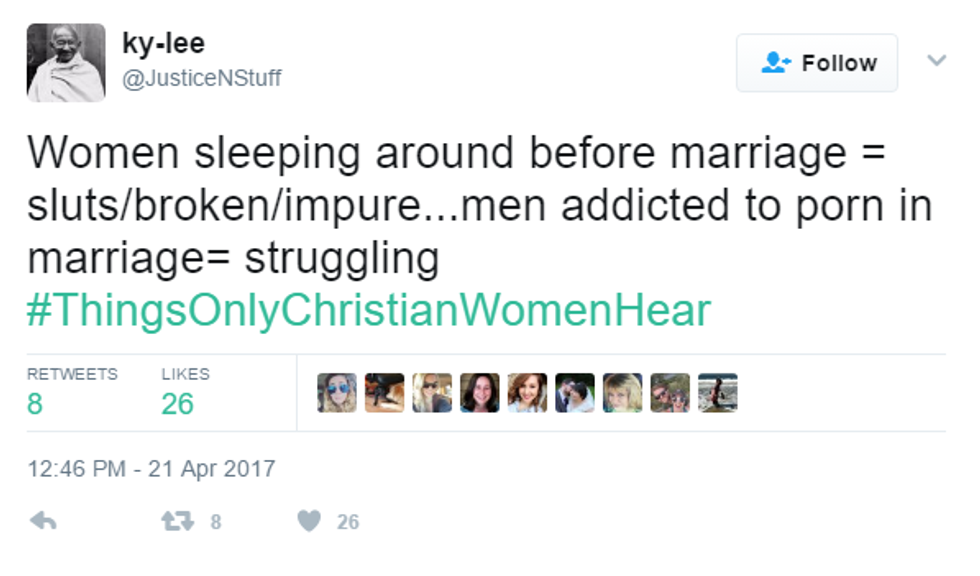
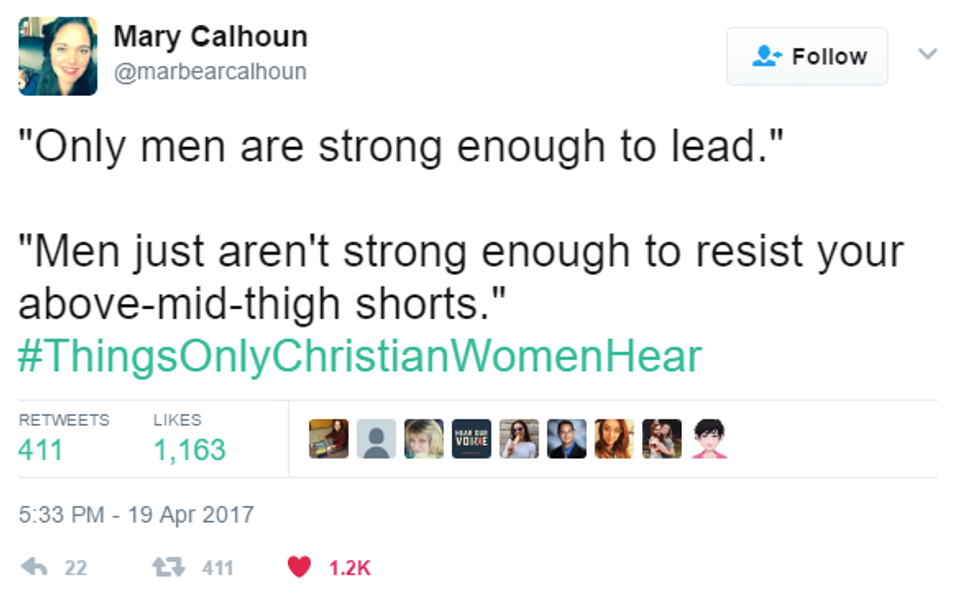
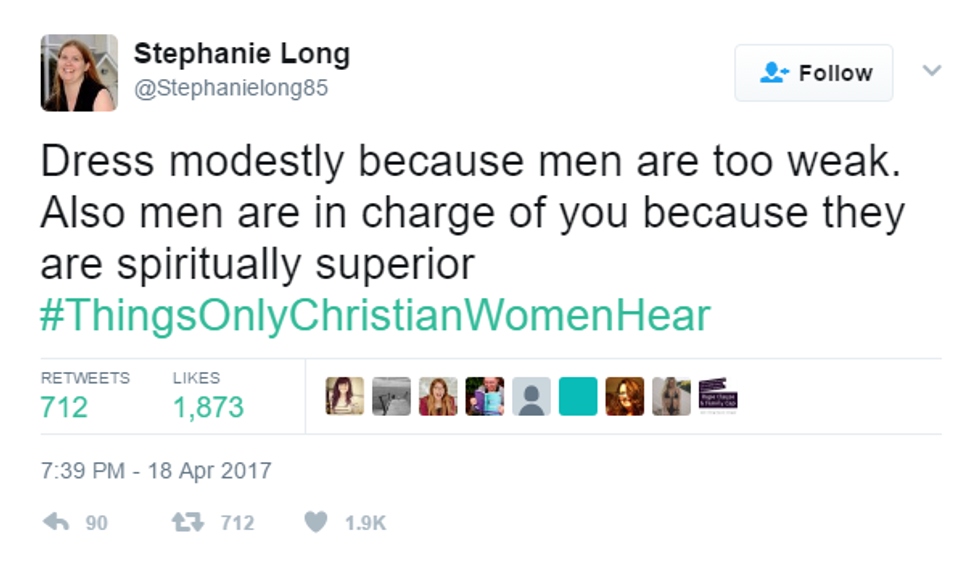
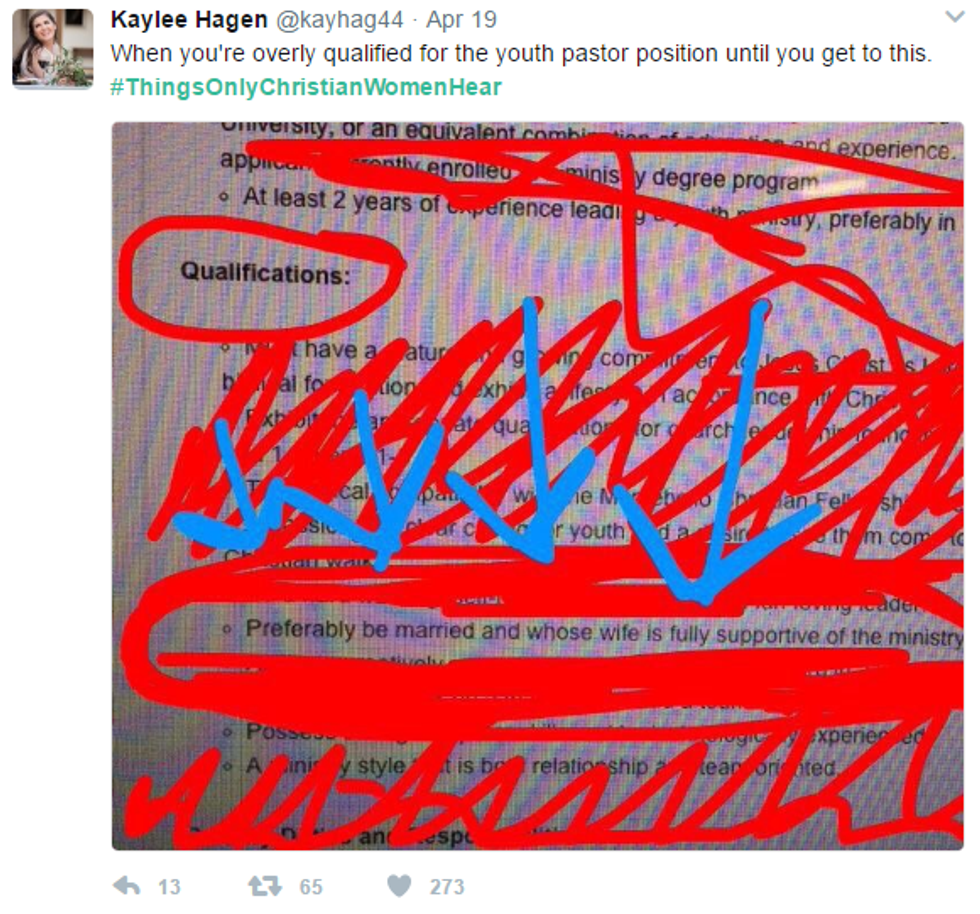
The tapestry begins with women's experiences of being condemned on grounds of impurity (click each picture to open a link of the live tweet in a new tab):
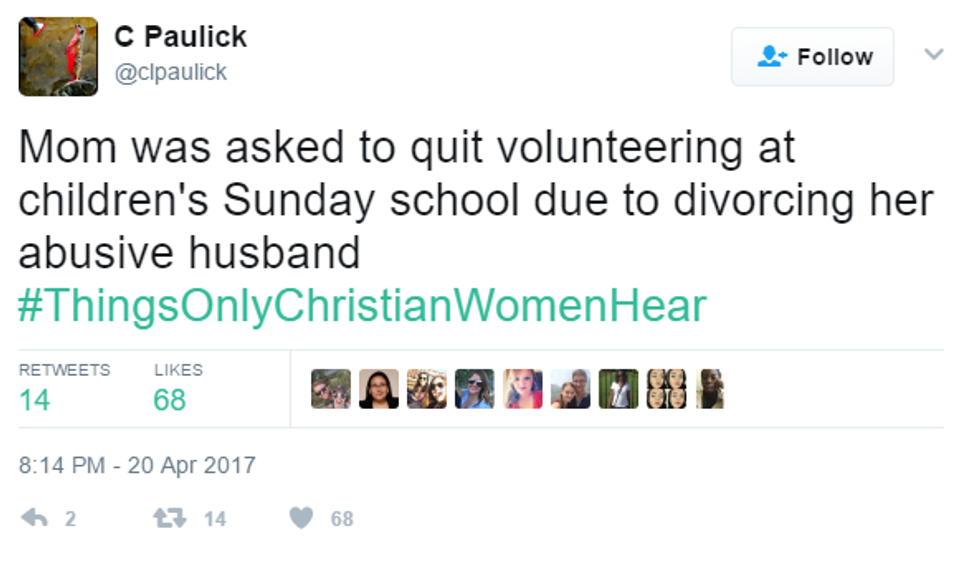
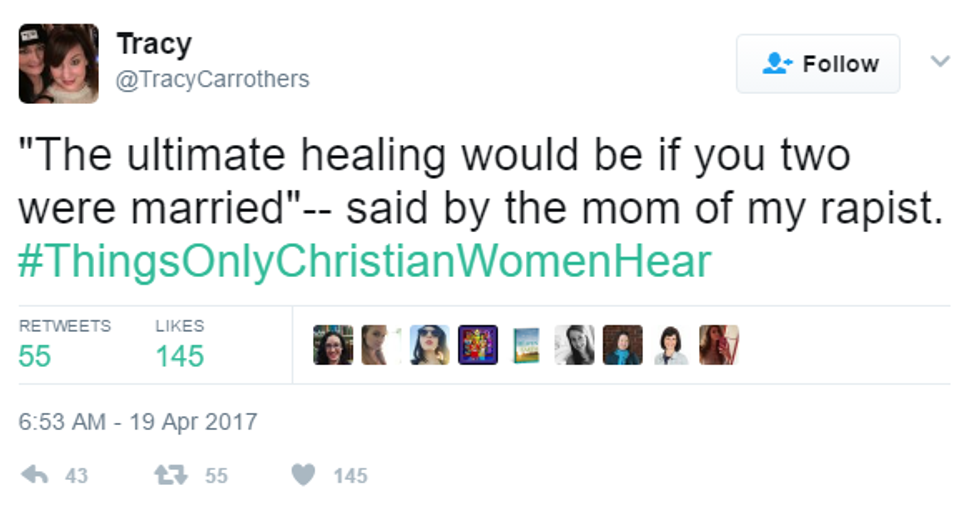
And speaking of personal stories, some women shared the deep hurts they were given by Christians after being abused by men:
If you're tired of hearing about men, one woman offers a comment about experiences with other women in the Church on Bessey's Facebook post:
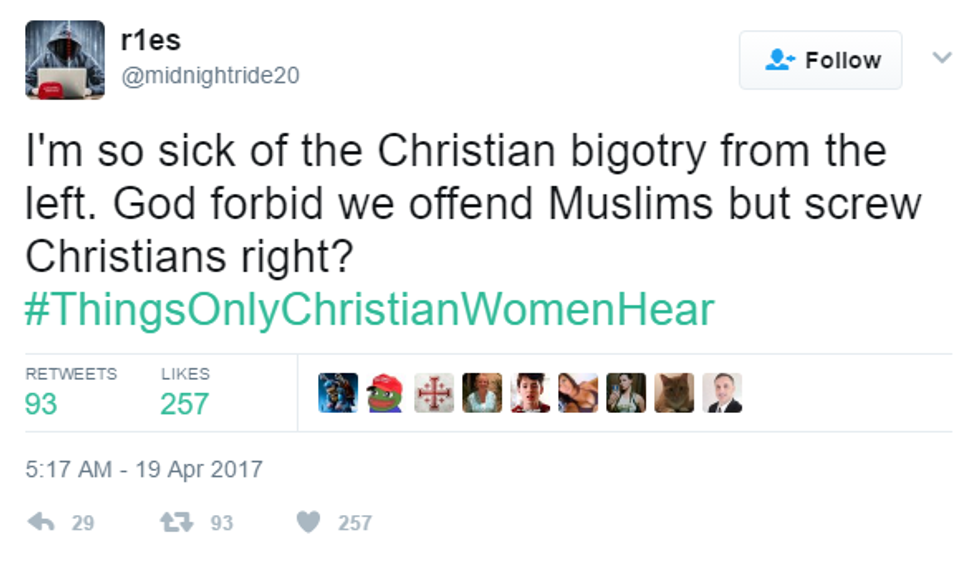
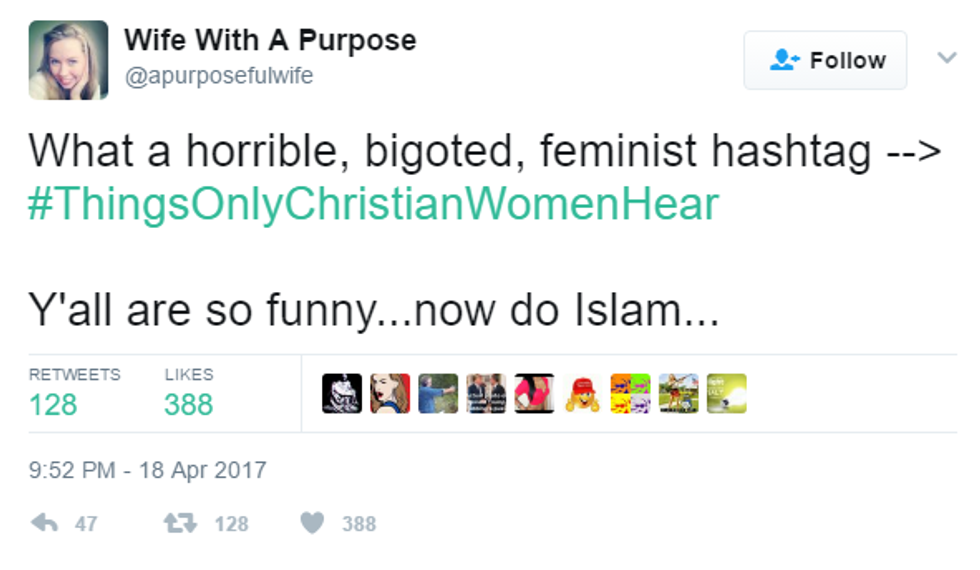
Not everyone, however, has been supportive of the message of the hashtag. Varying in severity of opinions, some view the hashtag as an unnecessary, divisive attack on Christianity, offensive to women in other cultures who are "actually" being oppressed and/or nothing more than a bullet point on the liberal agenda, preventing modern women from accepting a – biblical – submissive nurturing role:

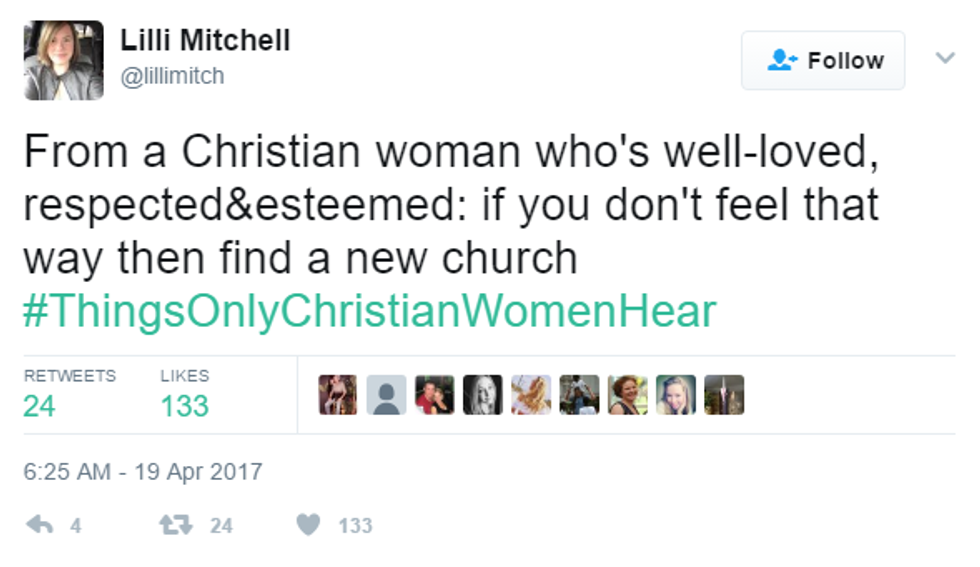
What might be the most deeply troubling instances of backlash against the hashtag for me personally, though, are ones that share this sentiment:
I spent several hours scrolling through the results on #ThingsOnlyChristianWomenHear, and I came across some hard things. The examples I share here hardly even scratch the surface. For every tweet's content, there were ten or more other tweets saying the same thing – no one problem was an isolated event.
It's not like there is one bad church where all these women have had poor experiences of feeling unloved, undervalued and disrespected. Not all misogynists congregate in one place. Oppressive mindsets aren't restricted to a single denomination. If you're willing to admit that this is a problem among women and Christians, you cannot say it is a problem in a church. It is an issue in the Church.
I hate Christian cliché, but moreover I hate having conversations about the Church where Christ Himself isn't ever mentioned. So forgive me for the cheesiness of this statement: I just can't help wondering what Jesus would do in this situation.
Jesus holds a very positive opinion of women. One of the best examples of this is in Luke 7. In this chapter, he equalizes a religious male leader and a sinful but loving woman. He condemns the man for failing to treat Him with hospitality and for scolding the woman who does treat Him with honor. Simultaneously, He praises the woman for going above and beyond in boldness and love. Jesus takes no account of the gender of those around him. He loves and is most loved by the one whom others cast farthest off – the one others know as "that kind of woman."
Based on this interaction in Luke 7 and many similar ones in the Gospels, I can't imagine Him being content with the status of women in the Church today.
As a young woman who feels called to love, to disciple and to minister, I've thankfully come from a background where I haven't felt the negativity I've read in the tweets of many women pastors.
But I have listened to friends who were raised in the Church, who are just now entering their 20s, talk about feelings of pressing expectations to get married, have kids, be a good wife and mother and be submissive to a husband – expectations they've felt from a very young age.
So far, I have been blessed by mentors and churches who love and support me for who I am, how God sees me and what the plan for my life is. But I understand that not everyone experiences that acceptance.
What if I was older and single? Or married but without kids? What if I was more "impure" or simply raised in a different church? I suspect I would have had more content to personally contribute to #ThingsOnlyChristianWomenHear. I can see there is a problem in the Church, though I haven't yet experienced it head-on.
The solution isn't for all women to flock to churches where they are spoken to as they should be. The real solution – as huge, complex and long-term as it is – is for the Bride of Christ herself to treat both women and men as she ought.