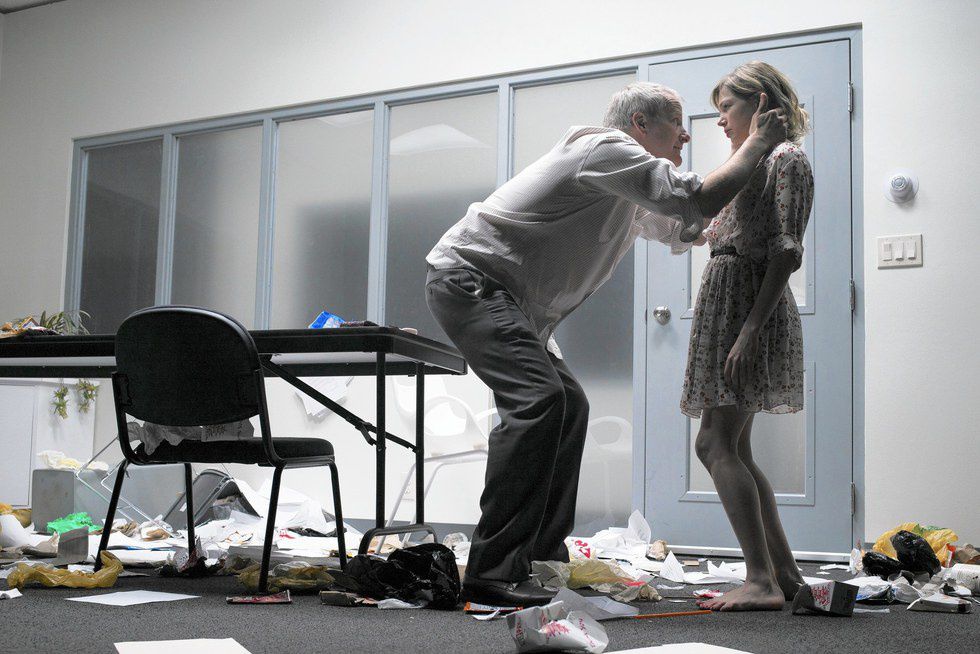
Recently, I saw the Broadway production of Blackbird written by David Harrower, the play revival starring Jeff Daniels and Michelle Williams. This play tells the story of a 20 something year old woman confronting the man who sexually abused her for three months when she was 12. This woman’s life has been negatively impacted because of what this man did to her. She is riddled with depression and PTSD as a result of what happened. These ideas, ideas of child molestation and its effects on the victims, are ideas so difficult to talk about, that they are not brought up as much as they should be in society. Ideas such as depression of rape victims and the broader idea of mental health—these are ideas that theatre is helping to shed light on and open up a lively discussion.
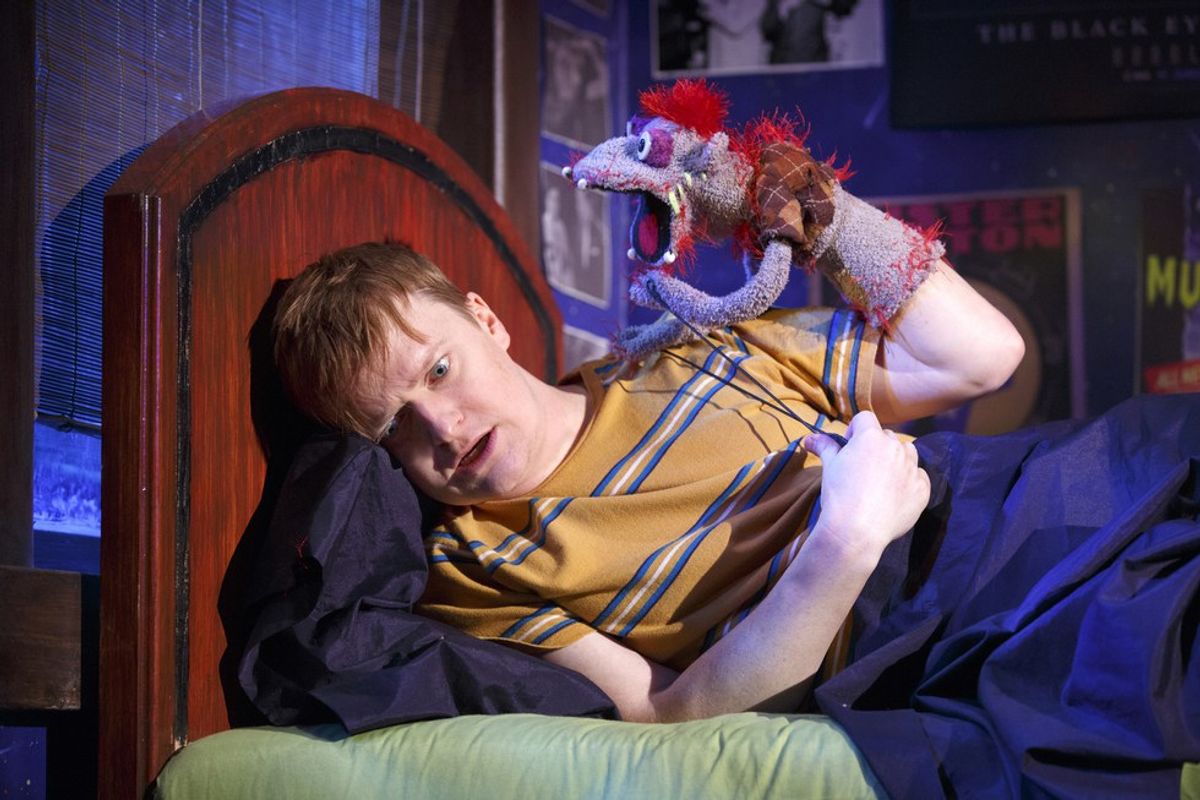
It is not just Blackbird. Shows such as Hand to God, Orphans, Next to Normal, Miss Saigon, Spring Awakening, American Idiot and many more portray mental illness and society’s perverted way of dealing with it. In Hand to God, schizophrenia is depicted as the devil possessing a characters body, and to solve the issue, as exorcism must occur. In Next to Normal, a mother’s depression over the loss of her son is treated with Electric Shock Therapy, an extreme, last resort, solution and one that often does not solve the deep emotional problems.

Bare, a musical about two boys in love at a Catholic boarding school depicts the horrors of what it is like to feels like to be so on the outside of a society that the only way to feel free is to end your own life. Fun Home, a graphic novel turned musical about Allison, a lesbian cartoon artist, illustrates a closeted father of three, so ashamed of who he is that he steps in front of a speeding truck and ends his life.

These issues should have more of a dialogue in society, but they aren’t. So instead, playwrights have taken it upon themselves to create a dialogue, but this time on stage, for an audience. Writers use theatre as a way to discuss topics that are hard to talk about on a regular basis. The musicals and plays that touch upon these challenging issues in a delicate and beautiful manner are what get the conversations going. These shows get you to think about these issues, not only while watching the show, but after you leave the theatre and beyond.

What is interesting is that sometimes the shows that talk about the most intense, scary, blame-placing issues are the ones that last the shortest on Broadway. One example of this is a show that was on Broadway this season: Allegiance. Inspired by true events of George Takei, who also stared in the show, Allegiance is a musical depicting the hardships facing Japanese Americans during WWII and their forced placement into Internment Camps. This beautiful, heartfelt show closed too quickly. Perhaps it was because American people did not want to feel “to blame” for 2.5 hours in their lives. When in reality that is exactly what all Americans should have wanted to do.

The internment of Japanese Americans is something rarely talked about in history class, and if they are brought up, they are glossed over. Yet these camps are an extremely important, although also devastating, aspect of our history. During WWII, 127,000 US citizens were imprisoned for being of Japanese ancestry. These American citizens were suspected of remaining loyal to Japan, and due to the increase of “Anti-Japanese Paranoia,” these citizens were taken from their homes and relocated to concentration camps. We don’t like to discuss this part of our history because it shockingly recent in our history and a time where we inflicted pain onto an innocent group of people; It’s hard for us to stomach.

But theatre should not be about the audience feeling good or bad, it should be about learning what life was like for another person at any point in time. Theatre is about leaving the world in which we live to take on another world: the world of the play. You should not pass on theatre because it is “too intense” or “too sad” or “too real.” You should cherish theatre because of those things. Plays and musicals can teach lessons, if you let them. You just have to be open to what these shows have to offer.