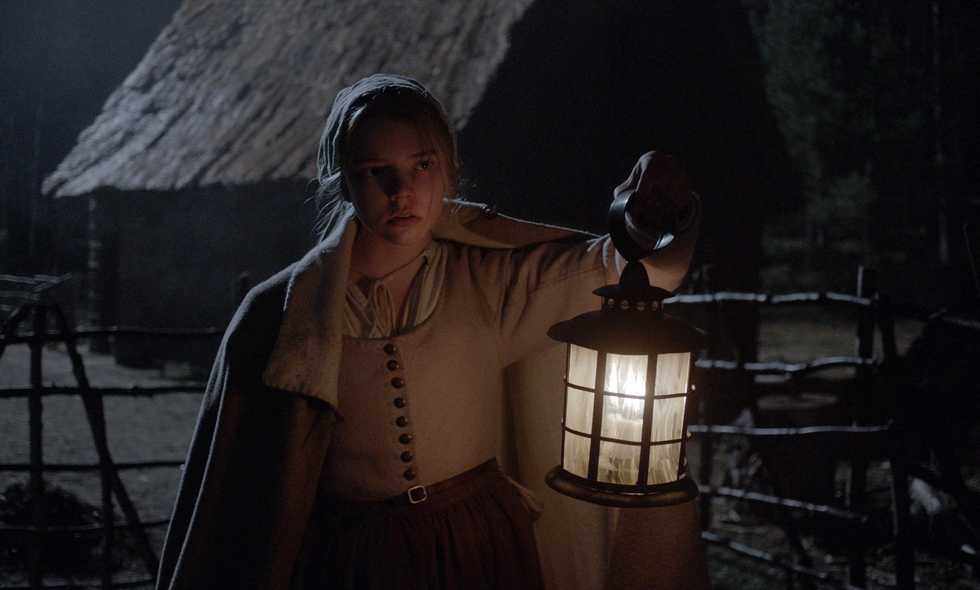
One of the most talked about horror films of this year so far is Robert Eggers’ “The Witch” (2016), a period piece which details a Puritan family’s exile into an untamed wilderness. Though they attempt to do well for themselves, their inability to survive off the land and a subsequent series of supernatural attacks leads the family into a psychological and spiritual descent of distrust, betrayal and fear.
The initial reactions to “The Witch” has varied depending on the source. The film has done well with critics, boasting an impressive 90% on Rotten Tomatoes which is no small feat for an independent horror film. However, a quick trip to IMDb and other similar sites reveals a sense of disappointment from portions of the audience. One moviegoer attributed their disappointment to a distinct lack of spook: “It is supposed to be a horror but not once did I see something to Shock/Scare/make me jump.” Others deemed it as a film that emphasized style over substance, prioritizing aesthetics and carefully composed shots over fleshing out a rather predictable storyline. To this, I completely disagree; the film was indeed heavily stylized, but its dark and foreboding aesthetic was well suited for a character-driven storyline.
Putting aside the narrative aspirations of the film, the divisive perspectives on whether “The Witch” is a good horror film provides a good example of how limited of a genre horror has become. As modern horror movies go, a modern moviegoer can expect one of two things. One, a remake of a classic slasher film that is so awful that not even hardcore horror movie buffs will give it the time of day. Yes, I am referencing “Friday the 13th”, and as much as it pains me, no amount of Jared Padalecki in a leather jacket will ever cure that trauma for me. Two, your typical all-American family moves into a haunted house, tries to get rid of the spirit haunting them, and realizes that it’s not actually a ghost, it’s a demon. Also, the dog dies. Either way, recent horror films have put a great deal of emphasis on getting in as many scares as possible, without really giving films a cohesive plot to link them together (“Annabelle”, I’m looking at you), to the point that audience members become confused when they watch a film with a cohesive plot that doesn’t rely on badly rendered CGI ghosts.
But is “The Witch” a scary film? Not necessarily, at least not in a conventional manner. But it is interesting. Which I will admit, is not so much lowering the bar than it is plopping it onto the ground, but “The Witch” is one of those rare films that prioritizes its visual narrative to provide a more isolated and sinister sense of fear that runs deeper than just ghosts and demons. It takes advantage of the horror conventions of isolation and enigma in order to raise a sense of unease and anxiety that slowly increases as the film goes on. There were no jump scares, and there was no rain of blood and guts; however, the absence of cheap pop ups and CGI blood and guts was probably the film’s best thematic decision; how can one truly explore the fear of the unknown, the fear of those closest to us becoming strangers, without focusing on the breakdown of inter-character relationships?
The true horror in “The Witch” is not necessarily the witch herself, but how her presence and actions affect the family in question. Her presence is seared into the very wilderness of the film; the image of a deep and dark forest looming over the family’s cabin serves as a constant reminder of her influence over their religious and mental anxiety. It's a story in which the horror isn't necessarily from the monster itself, but from how quickly we will turn on the people we love. Overall, "The Witch" probably one of the better mainstream horror films that have come out in the past few years, and I would recommend watching it more than once to really enjoy the slow burn.