
I’ve recently been making my way through philosopher John Caputo’s book "The Weakness of God." He begins the book with the following preface:
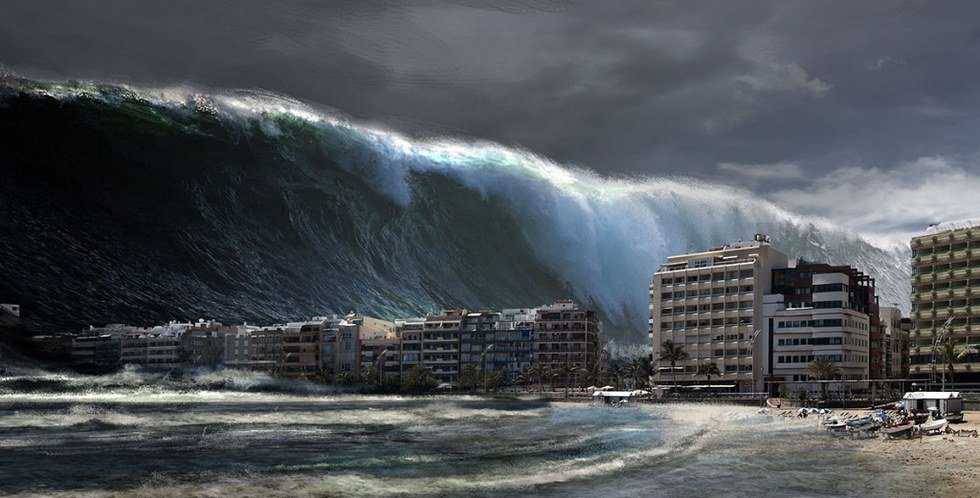
“As I put the finishing touches on this book, the world reels under the overwhelming violence of the tsunami that occurred on the day after Christmas 2004, which destroyed the lives and property of hundreds of thousands of people in South Asia.
Predictably, many religious leaders have been rushing to the nearest microphone or camera to explain that, while these are all innocent victims, we cannot hope to explain the mystery of God’s ways- implying that this natural disaster is something God foresaw but for deeper reasons known only to the divine mind chose not to forestall. Others are telling us that God has taken this terrible occasion to remind us that we are all sinners and to dish out some much-needed and justifiable punishment to the human race...
Those are blasphemous images of God for me, clear examples of the bankruptcy of thinking of God as a strong force with the power to intervene upon natural processes...one can look upon the book that follows as an attempt to think of God otherwise.”
Typically within Christianity, God is thought of as an omnipotent being with total control over the events of history and the processes of the natural world, orchestrating everything according to some pre-determined plan. Of course, this assumption begins to run into some trouble the moment one considers the reality of human suffering. All the way back in the 3rd-century, Epicurus first laid out the contours of this issue:
“Is God willing to prevent evil, but not able? Then He is not omnipotent. Is He able, but not willing? Then He is malevolent. Is He both able and willing? Then whence cometh evil? Is He neither able nor willing? Then why call Him God?”
In other words, if God is all-powerful, but doesn’t want to stop evil, than he isn’t good, but if he is all-powerful and good, then why doesn’t he do anything?
Christian thinkers often resolve this problem through recourse to one of two solutions. In the first, suffering will be explained away through pointing to God’s “plan”; like Caputo outlined above, it is suggested that the miserable events of the present are the only possible way to arrive at God’s pre-determined and ultimately greater future. It is better that things turned out this way. God’s got it all under control, and we just need to trust him. In the second solution, we are told that humans were granted free will by God, and that therefore our suffering is a result of our own choices. We bring our suffering upon ourselves.
Of course, these “solutions” are not without their faults. For instance, let’s take the above example of the 2004 tsunami in South Asia: which of those people chose to have a tsunami crash into their village and destroy their loved ones and everything that they own? How was that a result of “free will”?
And if the tsunami was not caused by free will but by God, who has a plan for history that involves this disaster, we must ask: what possible future would make up for the sudden and disastrous death and suffering of hundreds of thousands of people, many of them already poor and struggling? Is this the best possible course God could have taken to accomplish his goals? Why does God have to work through violence and destruction?
As made clear by the above example, conceptualizing God as all-powerful necessarily produces a slew of problematic conclusions that struggle, if not outright fail, to reconcile the reality of human suffering. This is why Caputo, instead of accepting the normal platitudes about God and suffering, argues that the issue is that we ever conceived of God as all-powerful in the first place. While Epicurus thinks God has to be all-powerful, do we have to accept God’s omnipotence as an indisputable fact?
For Caputo, God is not an omnipotent being who, like a puppeteer, orchestrates world events according to his fancy. Rather, he is a “weak force,” something that can only operate through persuasion, not through powerful force and control. God can call upon us, can happen upon us, attempt to convince us to become and accomplish good, and he can, perhaps, offer limited help here and there, but that’s it.
God stirs within all things religious and non-religious, on the behalf of all people religious and non-religious, aiding in bringing everything to its fullest potential where possible, but she does not have the final say on what occurs, because she doesn’t have control over what occurs, she can only promise to never give up on creation. Therefore as humans we have a great deal of responsibility in actualizing what God is calling for, not simply because God is holding back in order to grant us free will, but because God actually needs us to help.
By conceptualizing God as weak, Caputo (and many others who have done similar work) frees God from the normal bind we impose on him by expecting him to be in total control, wielding unlimited power. For if God isn’t in control, then he isn’t at fault and life merely contains contingent elements, elements of disorder that God is trying to set right but without the guarantee of success.
Although this way of thinking about God isn’t without issues (for instance, if God is dependent upon humanity, why give recourse to God at all?), I overall think it is a much more helpful way of thinking about God than the typical theological sophistry surrounding God and the problem of human suffering. One isn’t forced to see God as responsible for their suffering and then struggle to figure out why he thought it would be a good idea to send a tsunami barreling through their town.
Instead, one can merely accept the difficulty and contingency of life, seeing God as someone equally upset about the tragedy that has befallen the world, a tragedy he was not responsible for, but one he is going to help people through in the small ways that he can.