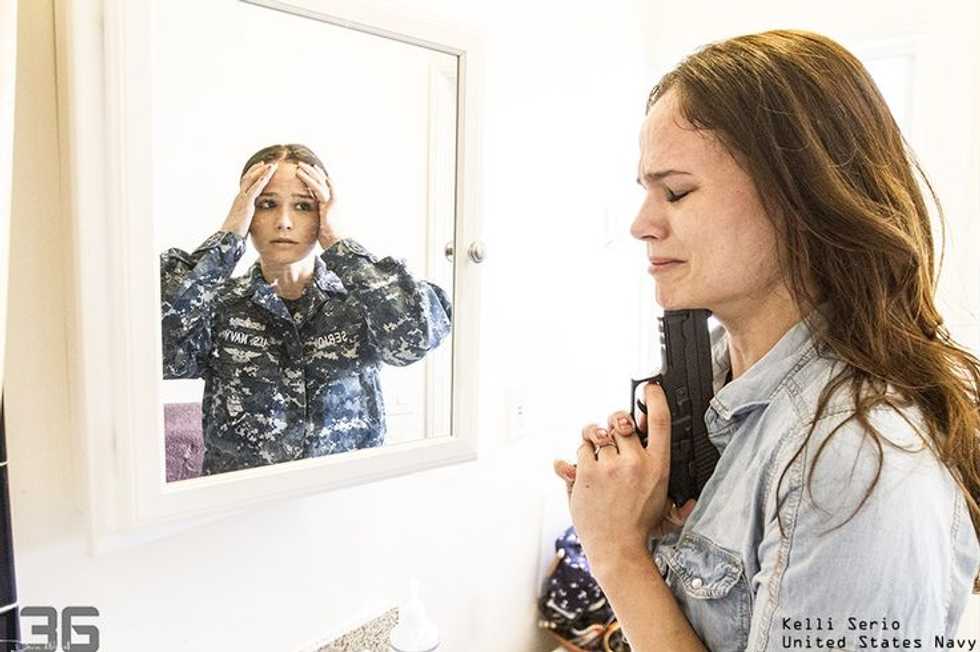
"You're not just going out there, maybe sacrificing your own life. There's also sacrifices still going on at home. You can serve in the military and have a good marriage, but you just need to be aware of it so you can take those steps to take care of it." -Chris Kyle, Navy Seals
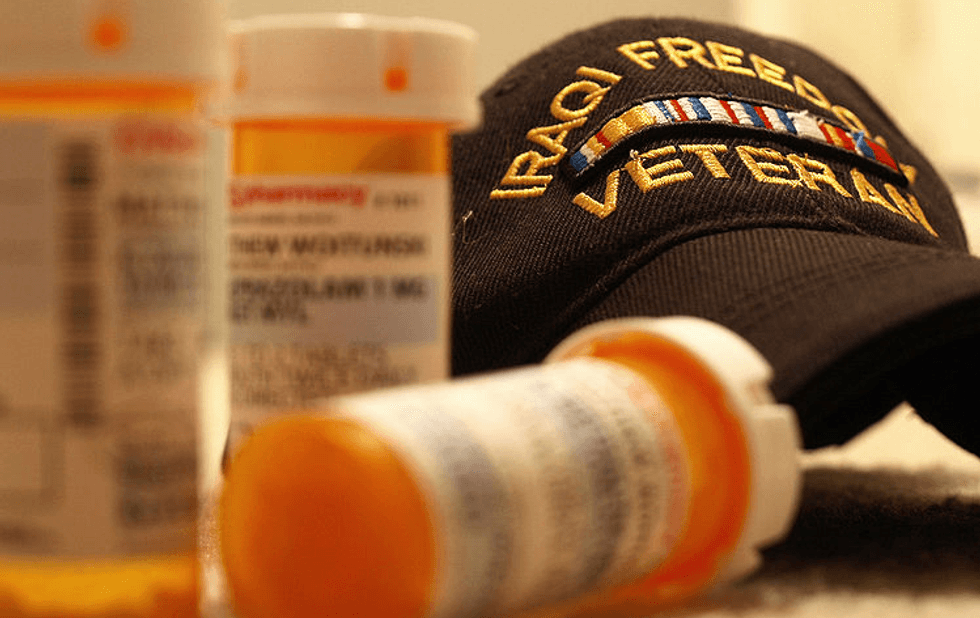
Recently, the movie "American Sniper" brought light to the struggles of PTSD. It told the story of Chris Kyle, a Navy Seal sniper who was killed on February 2nd, 2013 by another veteran with PTSD. Eddie Ray Routh,former was found guilty for the murders of Kyle, and his friend Chad Eastwood.
According to the Oxford Dictionary, Post-Traumatic Stress Disorder, also knows as PTSD, is a condition of persistent mental and emotional stress occurring as a result of injury or severe psychological shock, typically involving disturbance of sleep and constant vivid recall of the experience, with dulled responses to others and to the outside world.
According to NIH Medical Plus , the United States Department of Veteran Affairs reports that 31 percent of Vietnam Veterans, 10 percent of Gulf War veterans, and 11 percent of veterans who fought in the war in Afghanistan have PTSD. Currently 21 percent of veterans who fought in the war in Iraq are also suffering from PTSD. This doesn't include veterans in the Korean War, or the World Wars.
Bringing to light the struggle of one veteran might have helped educate us on the issue a little, but what about the brave men and women who fought for our country who still suffer every day?
According to the U.S Department of Housing and Urban Development, 49,933 vets were reported homeless. They also report that the number of homeless vets has declined 33 percent since the 2010. One third of homeless veterans have been stationed in a war zone. Two-thirds of the veterans that are homeless have served their country for at least three years. Their 50 percent of their ages range from 18-50.
More than 40,000 of homeless veterans receive benefits and compensations for their war efforts, however, they aren't given enough to live off of. More than fifty percent of them suffer from disabilities, and about two thirds of them suffer from substance abuse News Max News Max reports.
When veterans are sent home from war, it is hard from them to adapt to everyday situations and life in a working environment that isn't a war zone. Some suffer from injuries. They can develop a drinking habit and abuse substances. Depression in veterans is as common as PTSD. In 2013, NBC News reported that 22 veterans commit suicide every day.
What is the government doing to help our vets? Are they doing enough? Organizations such as the The Wounded Warrior Project, and The Veterans Crisis Line are set up to help veterans in need. But is that enough?
I asked a veteran what is being done for those who are struggling after deployment, and he replied with out hesitation "not enough." Bills have been passed to help veterans and statistics have been lowered, but they are still really high. If you apply for a veteran loan to buy a house, the VA needs to inspect and approve every house. Small things such as a bathroom not having a window can be the reason you are denied of this loan. So what happens if you cannot find a home that the VA approves of that will support your family? What are you suppose to do then?
Veterans are proud people. Some might not have a problem with seeking help, but some might as well. Why are we providing more compensation to veterans to help them get homes, or the help they need after they return from their tours? Why aren't the people who are physically putting their lives on the line for our countries' freedom given more for their efforts? Why is the government allowing almost 50,000 veterans to live on the street and 22 veterans a day commit suicide? There is no reason why we should not be stepping up our game to help the people who volunteered to put their lives on the line for our well being. There isn't an excuse for it anymore.
Over the past 13 years, 2.4 million active and reserve military forces have left the military and have re-entered into civilian life. President Obama challenged American businesses to hire 100,000 unemployed veterans or their spouses. 380,000 veterans and military spouses have been trained or employed. An additional 48,000 will be added to those numbers by 2018 according to The Washington Post. My question is, what about the millions of others?
So when you meet a veteran, not only thank him/her for all s/he has done for you, but also ask them if there is anything you can do for him/her.