
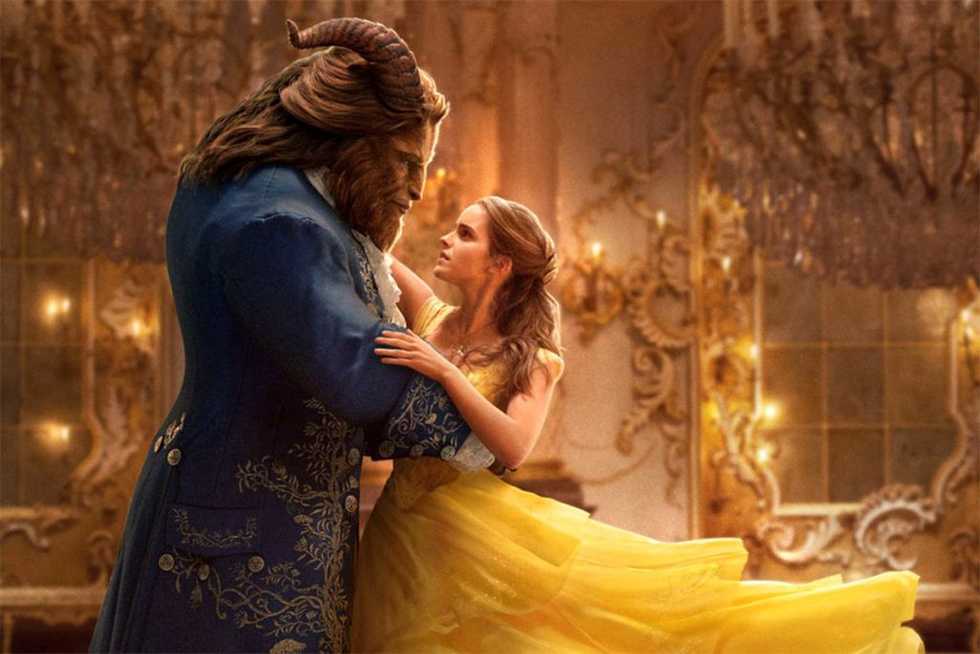
Beauty and the Beast, a tale as old as time, but with a new more important twist. This reenactment of an old classic is more than just visually stunning, but also severely essential. The movie provides a modern-day empowerment for princess Belle that carries to females everywhere, and a role model for consensual love.
The movie, first shows Belle, portrayed wonderfully by Emma Watson, walking around her small home town, wishing for more than it is capable of holding. The townspeople describe Belle as strange and silly, however this does not sway the well-read, intelligent, and strong Belle from pursuing her dreams. Belle simply continues reading and holds onto the hope that “there must be more than this provincial life.” This is an extremely important message for children, the hopeful market of the movie, and especially young girls. It is important for young girls to see, especially in a society that consistently tries to steer girls from pursuing their aspirations, that a princess they look up to, does not allow her hopes to be squashed.
Belle’s intelligence is consistently shown throughout the movie. From her first knowing exactly what tools her father needed, even before he did, to building a horse-run washing machine she is portrayed as the smart female she is. This is important, because it is showing a princess, whom young females use as a role model, with a brilliantly intelligent mind. Instead of tormenting themselves about beauty or dresses or prince charmings, Watson’s portrayal of Belle allows young girls to value intelligence. Belle’s love of reading is another important lesson for the young audience watching. It is proven that children, and even adults for that matter, model what they watch in movies. Because of Belle’s character, a love of reading, gaining knowledge, and not being content until one has reached their full potential, is what will be modeled.
One criticism of the fairytale, “Beauty and the Beast” is the idea of possible Stockholm Syndrome for Belle. This new live action movie obliterates that claim; and it does this while inspiring young girls to never just sit and wait to be rescued, but to always fight back. When Belle’s father is captured, she is the one who saves him, and when the Beast takes Belle captive and tries to order her around by howling at her, she defends herself just as forcefully. She never allows herself to give into the Beast, and she only chooses to go back to help him AFTER he saves her life. Belle continues to show the equality within their relationship. The Beast saved her from wolves and now she will nurse him back to health. From this they develop a friendship, but only when he begins to act kindly to her. Therefore, this is not Stockholm Syndrome, but a love that blossomed from a powerful woman not allowing herself to be pushed down, and a Beast being respectful of that.
Another theme that is portrayed throughout the movie is the constant need for consent. Even as the Beast and Belle become friends, through snowball fights and sipping soup, she does not admit to loving him until he sets her free. After the iconic dance scene, the Beast asks Belle if she could be happy in the castle and she responds “Can anyone be happy if they aren’t free?” No. One cannot be happy if he/she isn’t free and it is important that movies begin to show that, especially princess tails. Belle shows through this very simple, yet severely powerful line, that she cannot ever truthfully love the Beast until he gives her the equality in the relationship that she deserves. Before setting her free, he in some ways controlled her, and the love that they shared can only be true, and can only be viable when it comes from a completely equal standpoint on both sides.
Beauty and the Beast is not a story of Belle succumbing to the Beast. In fact, it is quite the opposite. Belle is not concerned with finding prince charming and will never give up her intelligence for the Beast. In fact, the reason she loves the Beast is because he values her intelligence. He is as well read as she is and wants her to continue her intellectual growth. He gives her a library to foster her reading and he sets her free to provide the equality she, and everyone deserves. Belle makes the consensual decision to love the Beast because he adds to her dream of having more than a provincial life, and she does not have to give any piece of herself up to be with him.
That is a true fairytale.

















