
If there’s one video game franchise I love, it’s "Resident Evil." Primarily, what I love about the game is it's lore, characters, and story, but it’s also the only survival horror or horror game I play. The game is sold categorized as a survival horror game, meaning you try your best to survive the horrible monsters that await you in either an overly complex mansion you find yourself stuck in or investigating. That said, the sad part is it’s really not all that scary and the same can be said for other horror games out there like "Five Nights at Freddy's," Slender: The Eight Pages," "Dead Space," "Silent Hill," or "Until Dawn."
As I’ve mentioned before, I’ve only really played "Resident Evil," so what I’ve seen from the other games comes from Let’s Plays, videos of people playing a video game, or walkthroughs, videos of people showing you how to beat the game. Now, although these don’t allow me to get the full experience of playing the games themselves, they do allow me to experience what might be considered scary in the games. Like all horror-related things, these games try to get most of their scares through jump scares and frightening situations when in reality their not that scary. So, what about these games have people raving about how scary they are and what makes them so popular or successful?
Like I said, though the situations and creatures involved may be scary, the thing that ultimately causes you to be scared and freak out at a simple jump scare is yourself.
Sure, a zombie stumbling to you, a Wendigo chasing you through a coal mine, or the unsettling appearance of a slightly creepy animatronic may be scary, but it’s your mood that determines just how scary it is. Watching the videos, I noticed that a common thing amongst them was that the player anticipated to much or let the situation or music get to them. By anticipating that Freddy Fazbear might jump out at your while playing "Five Nights at Freddy's" and worrying about the other animatronics as your try to get through the night, you find yourself jumping at every noise to the point when the jump scare dose happen, your screaming at the top of your lungs.
In "Slender," the fact you're roaming through a dark forest with an increasingly intense music score as you find each page and the static that flashes on the screen when Slender man gets close causes most players to freak out at each static flash or glimpse of Slender man. "Silent Hill," "Dead Space," and "Resident Evil" use music along with terrifying monsters and dark environments to get players dreading what might be around the corner or down the dark corridor, while "Until Dawn" puts you into flight or fight situations with a combination of every element ever seen in a horror movie or game.
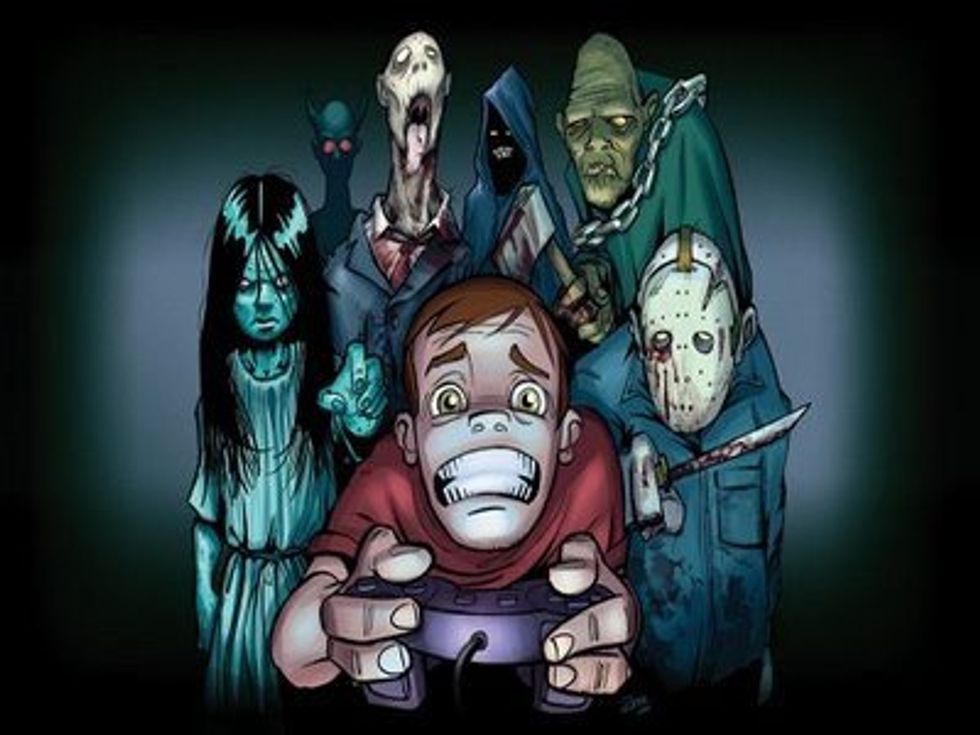
What makes these games so terrifying isn’t the situation, it’s how you react to what the game throws at you that can determine how scary it really is. If you let the game get to you, you’re going to have a hard time playing it since you’ll be freaking out at every little scare tactic, but if you manage to control how you feel and stay calm, you’ll overcome the horrors you face.

















