
With Easter Sunday finally here, I cannot help but feel excited for the many Orthodox traditions that are involved with celebrating this sacred holiday. Like other Christian faiths, Easter is a time to commemorate the resurrection of our Lord Savior, Jesus Christ. This season is the most important and significant time of the Orthodox church; not only a significant religious event, but also a time for people to gather together to celebrate Christ’s resurrection.
Easter is one of my favorite holidays, not only because of how important it is with my faith, but also because of all the traditions it holds.
On Easter Sunday, it is not uncommon to find loaves of Greek Easter Bread at every table. Greek Easter Bread, also known as Tsoureki, is a sweetbread that is traditionally accompanied by red-dyed eggs. Tsoureki is by far my favorite Easter tradition because the bread is nothing less than amazing. I kid you not when I say I eat loaves at a time; it’s that good.
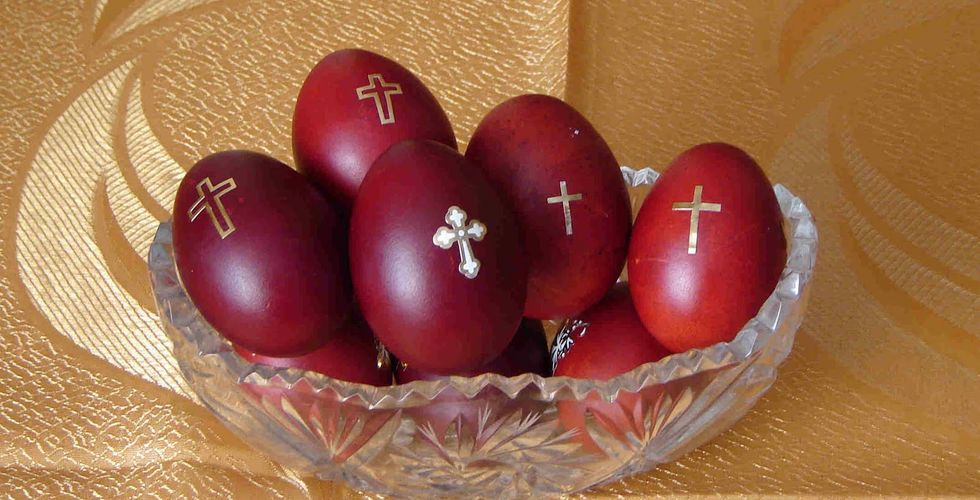
Another tradition of Greek Easter is that of red Easter eggs. On a traditional Greek Easter table, there will only be red dyed eggs. The choosing of the color red is no coincidence. The red symbolizes many things such as the blood Christ shed for our sins while being crucified. But these eggs aren’t just representing Christ’s death, but also His resurrection. In an effort to represent His resurrection, two people will each take an egg, one individual will say in Greek Christos Anesti (Christ is Risen) and the other will respond Alithos Anesti (He is Truly Risen). After those words are said, the two individuals will take their eggs and gently tap them against each other. When one egg cracks, the insides are revealed, thus symbolizing His resurrection. Often as a little kid I would make a game out of this symbolic tradition just to see who had the strongest egg (the one that didn’t crack). It was fun. Well, that is up until my egg cracked…
And lastly, one of the most obvious Greek Easter traditions is that of the roasted lamb that is twirling above a fire on a spit. Yes, that is actually how us Greeks cook our lamb. It’s a somewhat morbid sight, but the taste makes it worth it. The obvious symbolism behind the lamb as the choice of meat during Easter is due to the fact that Jesus is known as the Lamb of God. We cook lamb in remembrance of that.
To my fellow Greeks, I leave you with this:
Χριστός ανέστη εκ νεκρών, θανάτω θάνατον πατήσας, και τοις εν τοις μνήμασι ζωήν χαρισάμενος
Happy Easter!














