

Take time, and pay attention; the consequences of western colonization of the majority of the world are still evident. Now, that's a statement with an immensely broad stroke. However, this article will focus on one consequence that has impact on political unrest and loss of cultural heritage: the proliferation of the western ideal.
First of all, there are a lot of problems with that phrase. The western world is equally diverse as any other, and so to assume that it has some sort of ideal to begin with is, at the very least, limited in scope. Nonetheless, there is a generally accepted view of "western" government, education and systems. Such systems have infiltrated a large portion of the world through the colonization of the past and the globalization of today.
The existence of these western systems in non-western settings is not inherently negative; in fact, it's often positive. What is harmful is the assumption that these systems are the ideal. Indeed, it is often assumed that a nation that does not adopt western governmental structure and western educational priorities will be of lesser quality.
This is a significant problem and, frankly, impossible for an undergraduate student with limited understanding to fully flesh out in 500 words. The only thing I can do, in an attempt to do the topic justice, is give two examples of where this assumed ideal proved to be problematic in 2015.
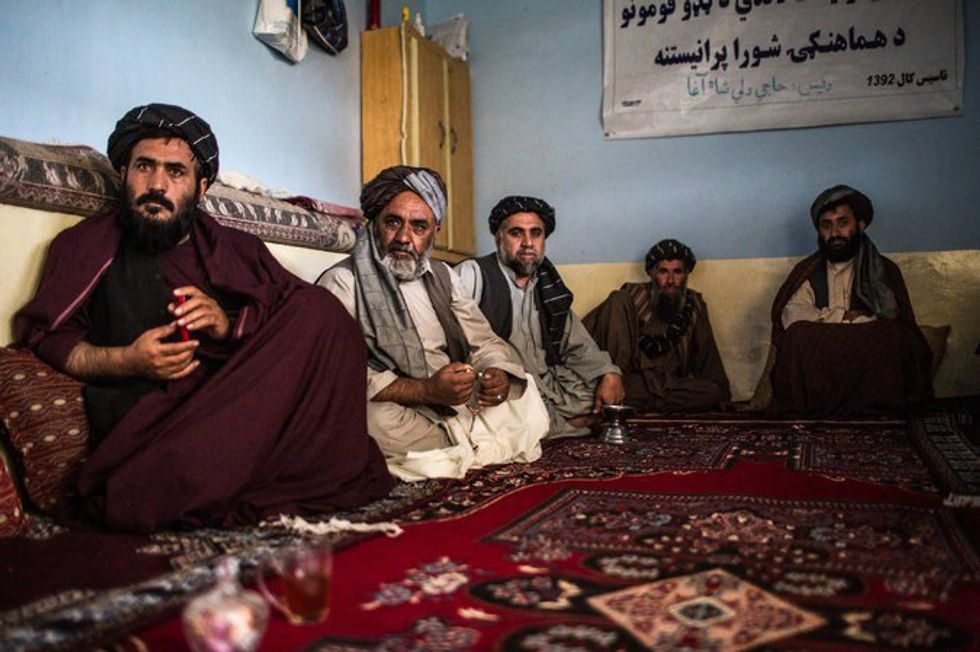
Anyone well versed in current events should have a basic understanding of the Taliban. The Taliban are brutal traditionalists who ran Afghanistan for some time. Since then, a government has been established in Afghanistan separate from the Taliban. Unfortunately, in the process of setting up the government a western court system was adopted⎯ the kind of court that has its roots in "big wig" London. This served to effectively re-establish Taliban influence in the region because Afghani's desired Afghani forms of justice. The Taliban began to set up their own courts, which were based on a system of village elders. The western ideal effectively gave the Taliban legs, and they continue to influence Afghanistan heavily.
Another example is recent protests in South Africa by students who are somewhat tired of a western centric education. The desire to learn South African traditions and ways of thought became enflamed the more students were exposed to western thinkers. Now, that's not to say western thought does not have its own value, but when western thought is viewed as the purest form of thought, people can be starved of their own cultural understandings.
All that to say, when western systems of government and education are assumed to be of higher quality than other more culturally nuanced expressions, problems occur. I have no solution to offer, only a personal challenge, both to me and anyone who happens to read this. Think broadly when deciding how systems should be put in place internationally. Do not assume that the western ideal is best, for some of the most violent of acts and horrific of unrest are rooted in this misconception of the western ideal.