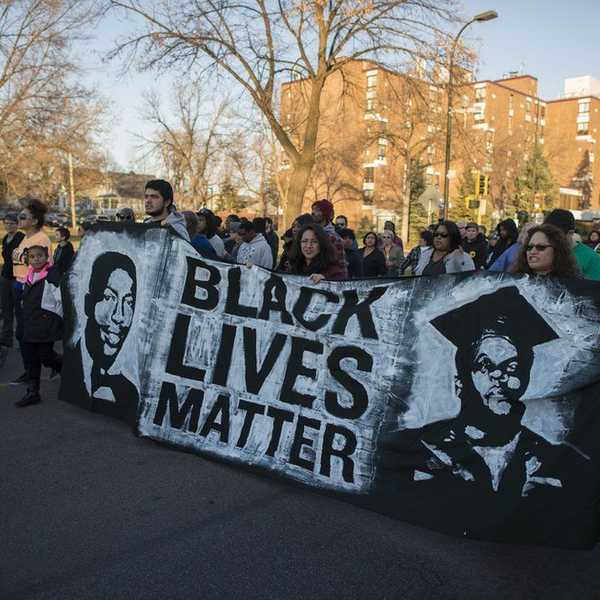
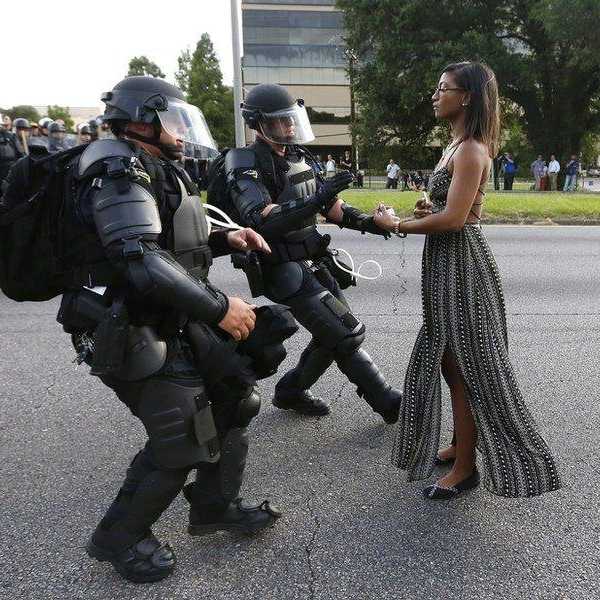
In light of the numerous cases of police brutality that have occurred in America's past and is continuing to occur, #BlackLivesMatter was the response of people of color to the senseless killings and, even worse, targeting of their people. While this may seem like a pretty rational thing to be upset about (the hunting of a group of people in order to make certain quotas), the movement seemed to have a lot of backlash, mainly due to the misunderstanding of why #BlackLivesMatter exists, and who/what it is really "attacking."
I first noticed the confusion when I stumbled upon the hashtag #ALLLIVESMATTER.
Not gonna lie, I agreed with the message for a good millisecond until I actually thought about what each hashtag symbolizes. In order to understand what #BlackLivesMatter really means, one must first look into history. There were/are many instances in which Black lives have, very obviously, not mattered. First and foremost, slavery. I mean, what shows someone that their life is dispensable more than slavery?
"But Africans are the ones who sold the slaves in the first place." "Well, Africans had slaves too." Blah blah blah.
Okay, first, um, cultural differences? Just because Africans practiced methods that included servitude doesn't mean that it justifies White people coming over and deciding that they can do the same (you know, like cultural appropriation?) And second, they are completely different situations. While, yes, there were "slave raids" going on in Africa in which Africans would go to neighboring villages and steal their people, Europeans came and took that to a whole new level and used a much larger portion of the population as a means to their very selfish ends.
But I digress. So, slavery happened and was terrible, right? What if I told you it doesn't end there? *dramatic gasp* Even when freed, Black people were treated like the very scum of the earth for a good century after that. By not being able to get a decent non-agricultural job, Black people were not able to live in nice "white" areas or even receive a loan to get a house in a not-as-nice predominately black or mixed neighborhood due to it being in a "dangerous area." Thus, Black people were placed in a standstill, where a society that "promotes upward mobility" was doing the best it could to keep Black people down. The Civil Rights movement definitely helped improve the social standing of Black people in America, but not too much of an extent. There were still many instances in which Black lives were being thrown to the bottom of the barrel and mocked as they tried their hardest to climb up to the top.
Okay, so how does all of this relate to what's happening today? It's clear that many different systems were set against Black lives-- political, economic, social, educational, etc.-- well, the Law Enforcement system is another one of them that continues to be set against Black lives. I have literally been in a car with someone doing so many illegal activities, including driving way past the speed limit (the most obvious of illegal activities), and when I told them to slow down, they told me "don't worry, I'm white." Which is funny because the same person that used that phrase is someone who just does not understand that they have white privilege. Hmm. Moral of the story is, Black people run a way higher chance of getting incarcerated than white people, despite the fact that they only make up 13.2 percent of the population and white people make up 77.7 percent.
Wow, numbers are fun.
All this being said, it is clear that Black lives have been seen as dispensable for centuries now, and Black people are finally trying to bring that to an end. So, yes, all lives do matter. We get that. I mean, you wouldn't go through a Breast Cancer Awareness ceremony screaming that there are other cancers out there, too, would you? We are just going against all of the systems designed against us and saying "WE MATTER TOO!" And we are doing a great job.
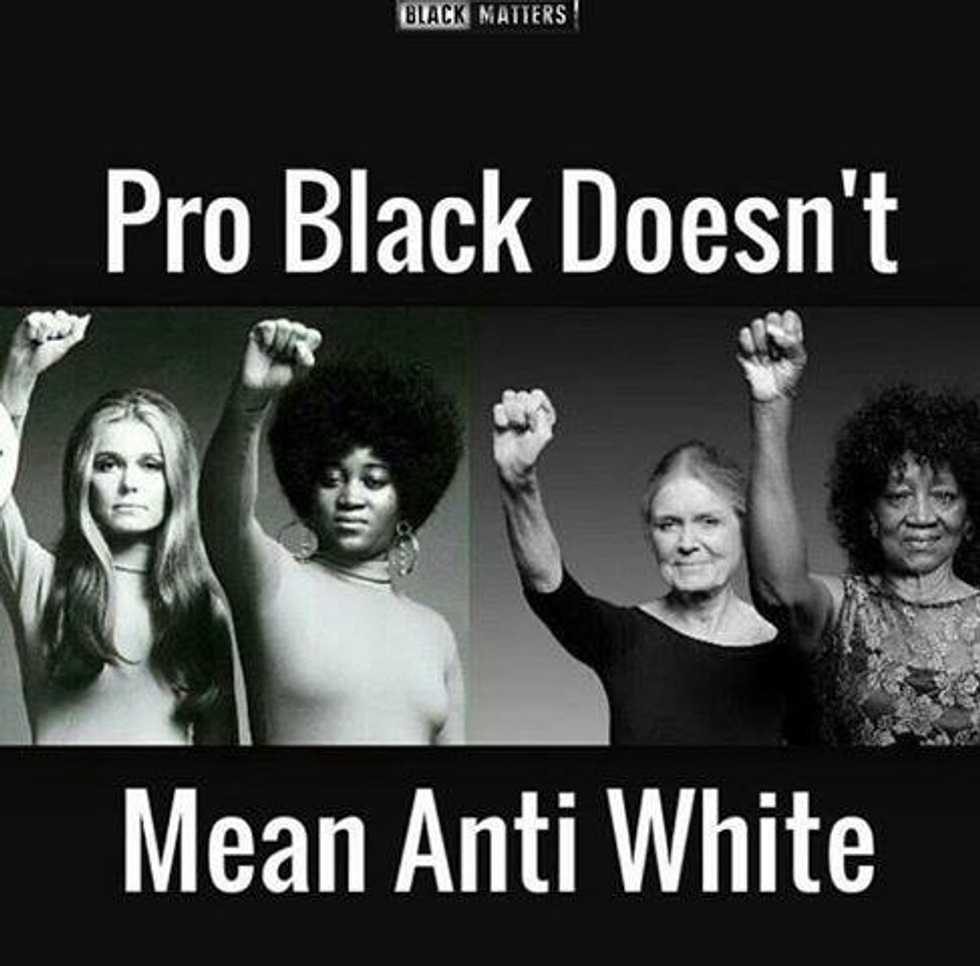
It's not "Black Lives Matter More," it's "Black Lives Matter Too"
P.S. We don't hate white people, we just hate white privilege.