
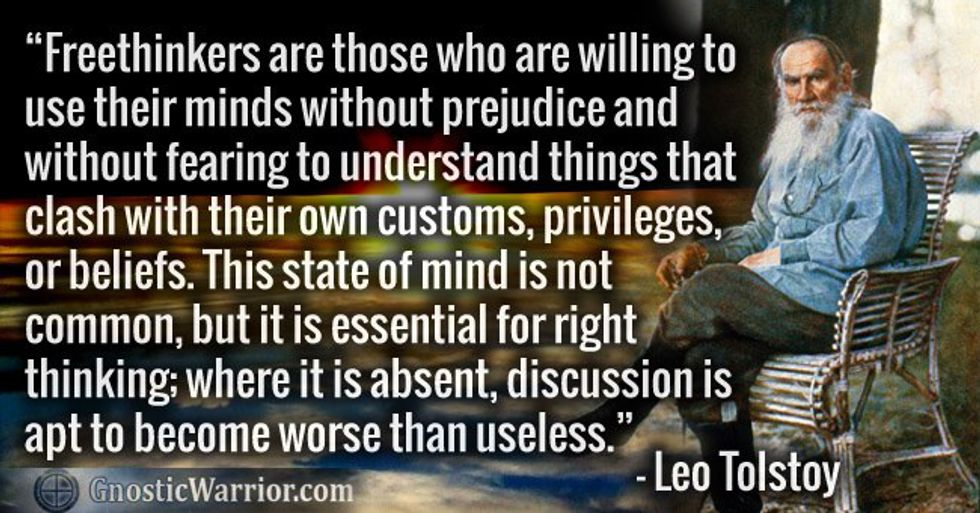
Before I begin, I realize that the topic I am writing on is a controversial one. Many of my fellow college-aged generation will look at the title and cast my counterargument to the side and discredit it. Many will not like what I write. Nevertheless, I would like to begin with a quote:
We live in a new era, an era where the Civil Rights Movement feels like written history and the challenges of the '60s and '70s are all resolved.
For many, this is not the case.
The protection of minority rights and keeping the forces of bigotry at bay are active struggles that many still fight. Mostly it is college students and the Millennial generation that has picked up where the prior generation left off. While I believe in the pursuit of justice and truth, I believe that there are moderate approaches to reaching these goals.
Let it be said, I do not argue the aims of those pursuing justice and ending discrimination. I support it. I argue with their rhetoric and methods that cumulates into the image of “Political Correctness,” the definition of which reads, "agreeing with the idea that people should be careful to not use language or behave in a way that could offend a particular group of people"
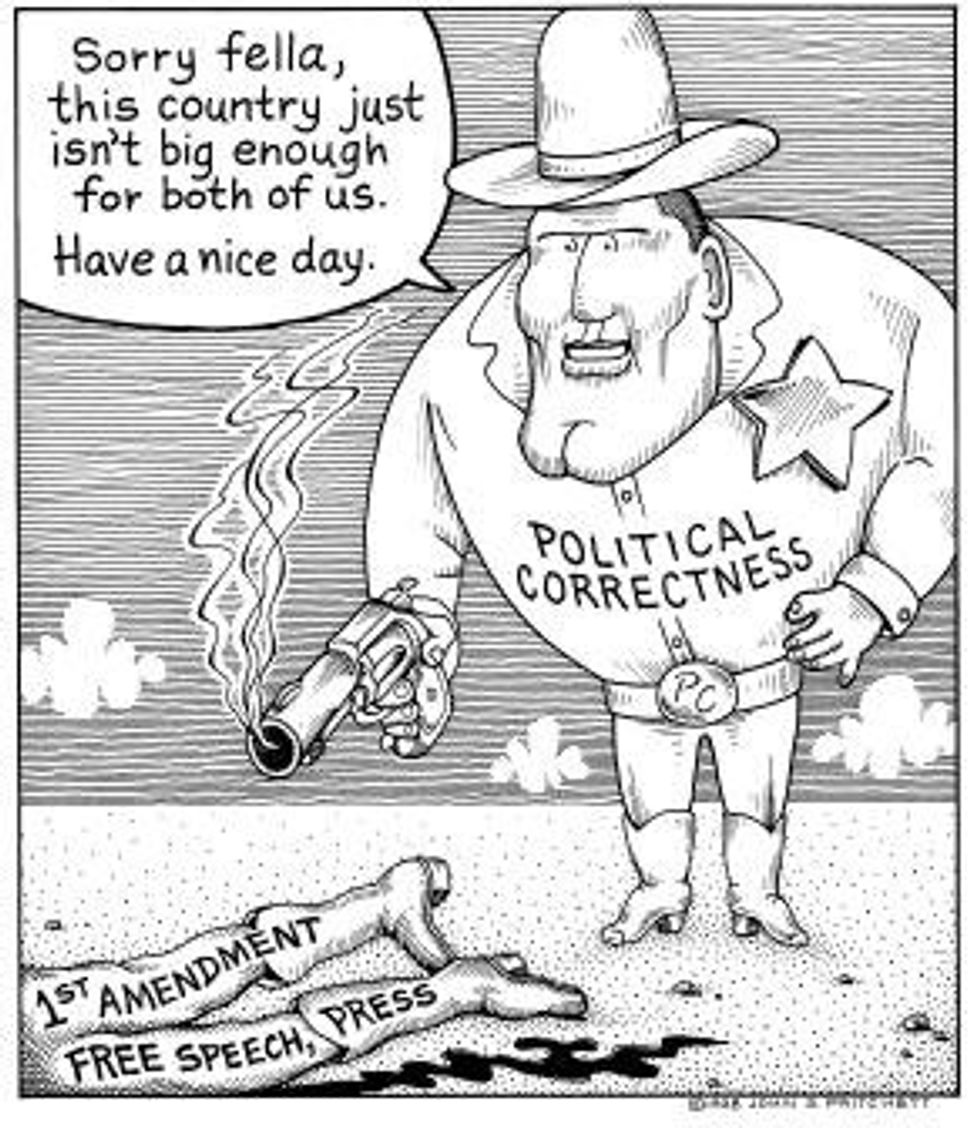
My issue with the PC culture is that it inhibits individual and critical thinking. A visible trend of college students across the nation, many agree that students are compelled to follow a single, structured narrative. Anyone who dissents with the "PC culture" is viewed as prejudiced. People operate within the PC culture because they are afraid to speak what they believe out of the fear of ostracization. This “guilting” or shaming does not build a dialogue; it destroys it. However, those on the polar opposite side who endorse violent racism or use obscene language indicating a violent action are also in the wrong, which neither contributes to an open, realistic dialogue.
I believe that diversity should be incorporated in an individual’s life. Listen to these comedians as they discuss and argue the issues of PC in the U.S.
(Warning: explicit language)
Speaking of comedians, as of this year, comedian Jerry Seinfeld announced he would no longer preform on college campus. College campuses, an excellent creative ground for raunchy comedy that pushed the limits reflected in films such as Animal House and Old School, are no longer such places as indicated by Jerry Seinfeld.
I guess what these comedians are asking: should there be a line drawn to subscribe to these new norms?
Other generations have caught on to the super-sensitivity of the PC culture on college campuses. Recently, an article was published on the Oklahoman Wesleyan University President’s comments about American college students. He writes in a Fox News opinion article, ““Our culture has actually taught our kids to be this self-absorbed and narcissistic. Any time their feelings are hurt, they are victims! Anyone who dares challenge them and, thus, makes them ‘feel bad’ about themselves, is a ‘hater,’ a ‘bigot,’ an ‘oppressor,’ and a ‘victimizer.’”
This is not how I would ever classify myself, but this is how older generations are beginning to perceive Millennials. Do college students really want to be perceived as narcissistic?
Dr. Piper warned that could set the stage for a problem that transcends college campuses. “Do we want ideological fascism or do we want intellectual freedom and academic freedom?” he asked. “Because really what we have right now is an argument for ideological fascism. You must submit. You must agree. You must be one of us. And if you don’t, we will silence you. We will crush you.”
Some may argue, this is sometimes the mentality many students have to face on a day-to-day basis. Some feel compelled to “sugar coat” their ideas to make it acceptable to those who are subscribe to the PC culture. Whether it is in the classroom or amongst peers, one’s argument is invalidated whether they use a wrong term or refer to a group incorrectly.
From the same article, a recent Pew Research poll revealed that 40 percent of Millennial’s support a crackdown on offensive speech. My argument is that, while it may be offensive, it is not necessarily hateful, and if it doesn’t threaten the safety of someone, then it is free speech, defended by the First Amendment of the Bill of Rights. Some may argue that when someone uses hateful language, they devalue the individual, which is most certainly true. However, when taking cases of race or prejudice, the shades of grey cloud the distinctions between what is appropriate and what is not. Sometimes, you cannot take one inference and apply it to someone or a group's position.
Another reason why the PC culture demeans dialogue is that it forces an individual to assume they are wrong and their opinion is meaningless because it offends a person or group. Because someone is at chance offended at the ideas one offers doesn’t mean that they are wrong. What is wrong is when words manifest in actions and those actions are directed in hateful motives.
We can see parodies of the PC culture most prominently in Trey Parker and Matt Stone’s series "South Park" with the introduction of PC Principal. Aside from making fun of PC doctrine, they satirize college students themselves. Below are a few clips relatable to the PC argument:
While some of it is certainly absurd, these clips do point to the language of "privilege" and "demeaning."
College students are meant to be seekers of truth and knowledge. In order to make it out on our own, we must be resolute with our ideas and what we believe in. When injustice occurs, we must face it head on. If, however, someone believes (take the "South Park" example) that Caitlin Jenner is not a hero, they are entitled to their ideas. They should not be perceived as a bigot. The major point I address is: If is a valid and defendable claim, let them argue on behalf of their claim. That is the essence to debate and free thinking.
Even throughout History and Literature, there are difficult dialogues and dilemmas offered that censoring or avoiding is not possible. Slavery, Colonization, the Nature of Man; these are all subjects within these two areas of the humanities that need to be actively discussed. These are not easy to talk about. The PC culture cannot remove these problems from discussion. Sometimes, its required of us, seekers of truth, to think dangerously and to think openly.
Overall, I believe that the generalization of college students as “coddled” is certainly not true. If we as a generation are serious about the challenges faced about discrimination, oppression, and violent manifestations of hate, we all must come together as free thinkers and think critically of our environment and the people who surround us. Yes, some people are ignorant of many issues and hold their opinions, which they have collected reasoning for over the course of their life. That is why we are life-long learners. Every idea is valid, so long as it can be defended by the one who proposes it. No idea should be discredited on the strict basis of offensive nature. Much like many philosophers, we must argue and argue well to make our points justified, not simply on the basis of offensiveness. Let's us be open to real dialogue, unrefined to find new solutions to society's ills.