When I was nine years old, I experienced what was, upon reflection, the worst day of my young life. I was on my way to the art museum with my mother, grandmother, and my younger cousin, ready to see the latest mummy exhibit and some of the great paintings of this century. We passed the 29th Street exit, and my grandmother’s phone rang. Immediately, our party would end. We were going to the hospital morgue. The pastor approached our group as soon as we arrived at the Veteran’s Affairs Hospital, and showed us into the unit which held my grandfather. He had arrived earlier that morning for a check-up on his ear and suffered a massive heart attack as soon as he stepped out of his vehicle. Within minutes, it was too late: he was gone. I never got to say “I love you” or “goodbye” before he left the Earth, and to this day, I regret that.
My grandfather had suffered from heart disease, asthma, diabetes, and a rare blood disease since before I was born. All four of these ailments, according to several specialists and family doctors, could have been prevented or avoided if my grandfather had not have smoked since he was a teenager. He passed away when he was fifty-six, and would have been sixty-nine in November of last year. In those thirteen years that he has been absent from my life, I realize that smoking was the thing that took away from me all those years I could have had with my grandfather. Smoking took away his getting to watch me graduate from high school and even college and possibly law school in my near future. Smoking had taken away his seeing me off to prom the three times I went. Smoking had taken him away from his “Pooh Bear” too soon.
Yesterday, I visited my grandmother in the Intensive Care Unit of the hospital. She has been admitted for one week and two days now, without the ability to breathe properly on her own due to her newly developed C.O.P.D. and asthma. She is sixty-seven and has smoked one-pack-a-day since she was sixteen years old, missing only when she hasn’t been able to. She cried in her hospital bed last night, telling me that she would not be able to go to my undergraduate college graduation because she is too weak to leave the hospital and too weak to leave home without a breathing treatment or oxygen on hand.
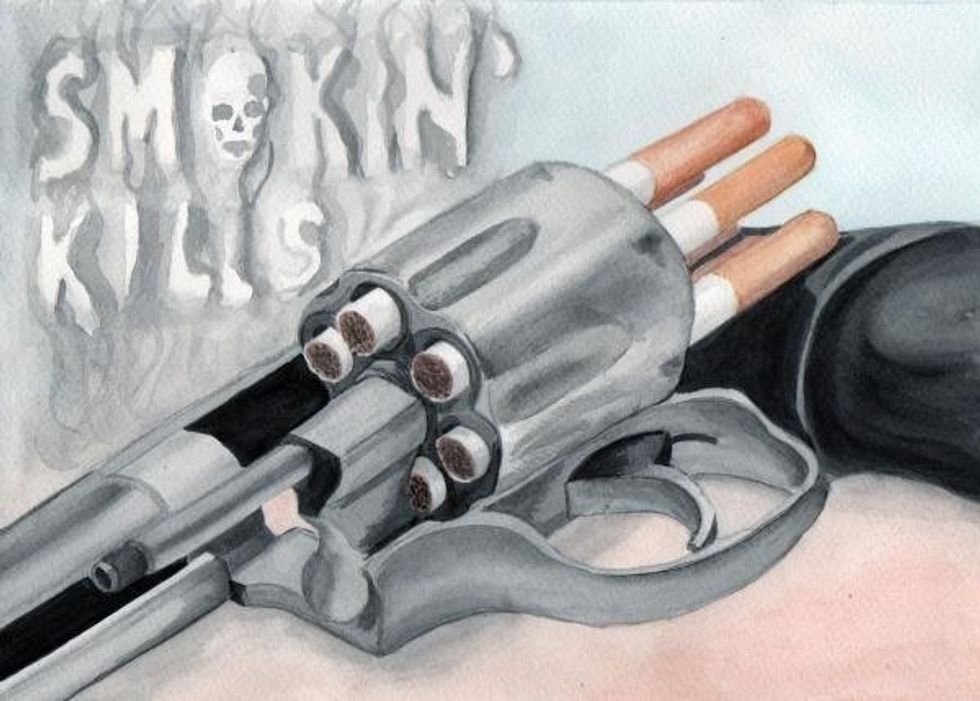
Tobacco-use (cigarette smoking and smokeless tobacco such as “chew” and “snuff”) remains the single largest preventable cause of death and disease in the United States of America to this day. Cigarette smoking kills more than 480,000 Americans each year, and more than 41,000 of these deaths alone happen from exposure to secondhand smoke. Additionally, smoking-related illness in the United States costs more than $300 billion a year, including nearly $170 billion in direct medical care for adults and $156 billion in lost productivity. Smoking is a serious threat to the health of our loved ones, as well as those who are physically around them, and we as a country should do something about it.
The consequences of smoking are not just primarily health-related. Deep down, we all know that, but we need to take the truth more seriously. We are losing valuable time and experiences with our loved ones because of smoking. Those are the real consequences of smoking.