As I sit here penning this article, the wind howls outside my window and the echoes of raindrops still haunt the window glass from the storm that raged earlier tonight. Mother Nature set the atmosphere perfectly this evening, since I attended two short plays at my university that dealt largely with the topic of horror. Although thoughts of terror largely occupied my mind during these performances, a train of thought more concerned with the observation of horror methods entered my mind as well. It occurred to me that theater may just be the most effective delivery system of horror.
Since a very young age, horror has always fascinated me. I have always been greatly entertained and enthralled by anything that could sink its terrifying claws into my mind and keep me in a state of fear while I was still safe snuggled up in my favorite reading chair, or hiding behind my hands in a crowded movie theater. What fascinates me more than horror itself, however, is its effect on its audience, and the subsequent questions of why we love being scared so much and what are the most effective ways of experiencing that fear? And it dawned on me in particular, attending these stage performances of that same kind of horror, how much more effective this format is for inflicting that fear. So why, in my opinion, are these plays more effective in the goal of terrifying us than other mediums?
I think, overall, it boils down to atmosphere. We want to feel that chill that creeps up the back of our spine in the dark when the lights go down. It is true that we get that behind a screen in films, but even then, there is a wall between us and the action. When we see a horror play, up close and personal, in the darkness of the theater, we are not only watching the fear: we are immersed in it.
Theater horror is based on the basic horror principles of suspense and not revealing too much that Alfred Hitchcock prided himself on in his films. High-tech but concealable special effects are limited on stage where everything is laid bare before the audience in real-time, so actors, writers, and directors must get creative in how they will shock and scare their audience in a convincing, but sneaky, manner.
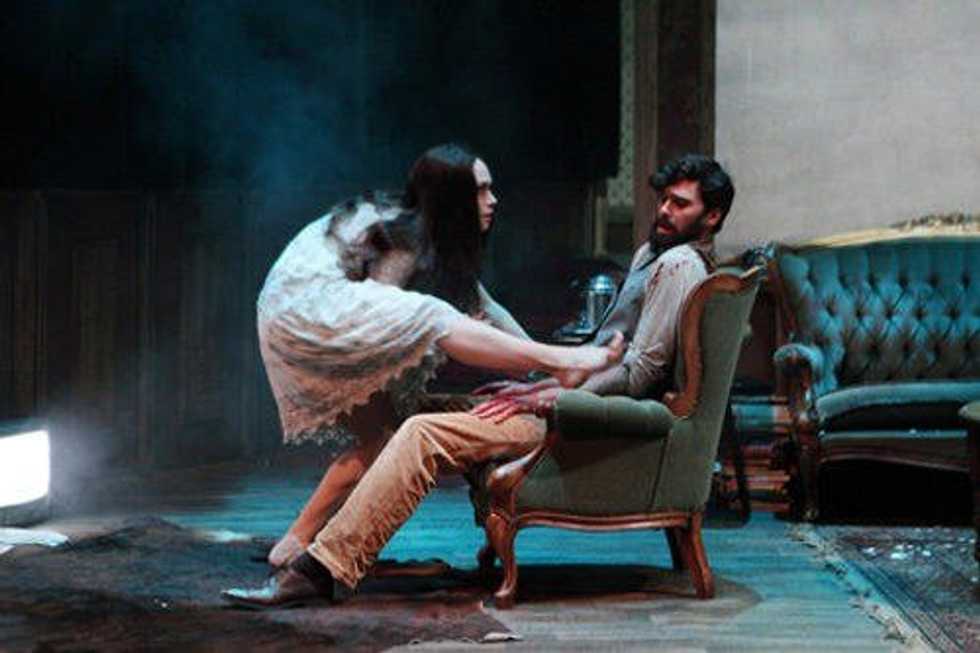
Hungry Jane, one of the plays written and directed by David Skeele and performed by the acting students of Slippery Rock University that I went to see, was a perfect example of how this fear works. A play about the ghost of a small child with a voracious and unconventional appetite, it relied on the atmosphere to sell its fear.
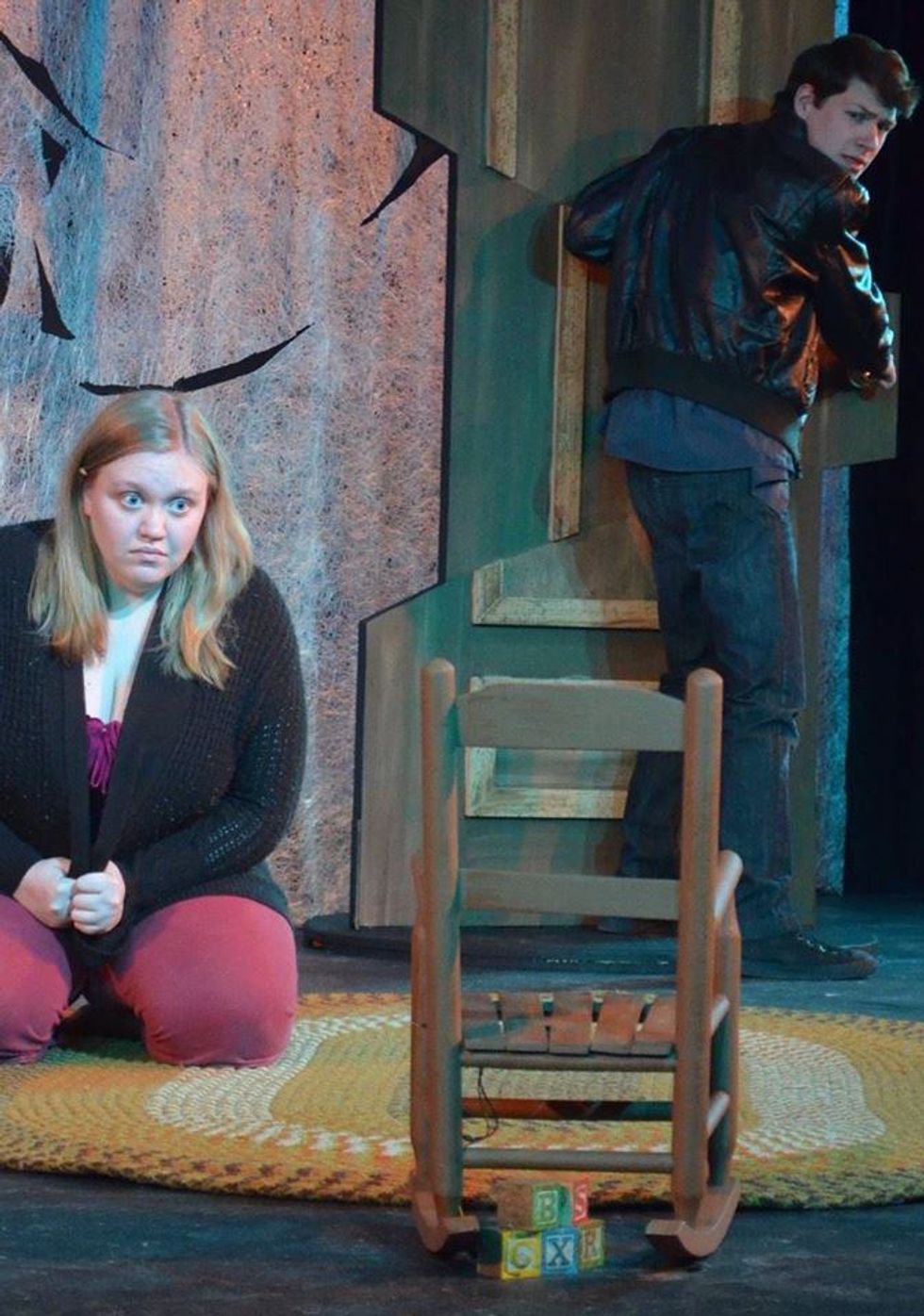
Scene from David Skeele's "Hungry Jane" Photo Credit: Casey Squires; Acting Credit: Rebecca McGann and Cole Vecchio
The set was very basic but effective, with a crooked, abstract door, a child's set of alphabet blocks, and a single tiny rocking chair that was rigged to rock on command, seemingly on the whim of a ghost. Children are pretty creepy to begin with, so they did have that on their side from the start, but they were able to further create an atmosphere of fear with a simple set and perfectly chosen audio of children's laughter, pattering little feet, and sinister munching sounds.
So, it can be said that the power of theater horror lies in the mysterious and the tricks of slight of hand and illusion, which is ultimately where the horror genre takes its roots. If it's true fear you are in search of, there is no better place to seek it than in a darkened theater.