


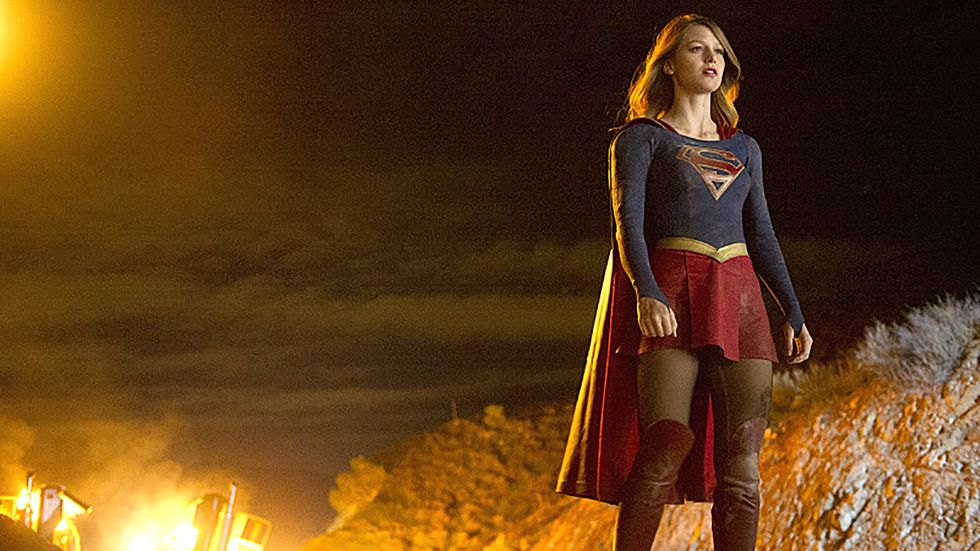
I was 14 when I visited a comic book store for the first time. I had been a huge fan of comics for a couple of years before that -- I devoured anything Batman or Captain America related I could find on the internet -- and finally was able to muster up the courage to physically go into such a mystical place. As I looked around the store, I couldn’t help but notice the lack of female protagonists on the shelves. Meandering through the aisles full of labels that read "Iron Man," "Batman," and "Superman," I began to feel uneasy. Did I really belong here? Then, out of the corner of my eye, I spotted a light blue-covered comic wedged in between "Batman" and "The Flash": "Supergirl."
As I have grown older, I have loved Supergirl and everything she stands for. The symbol on her outfit may be the symbol of hope on Krypton, but to me it is much more. It is the hope that I can be a real life hero in my career and won’t be brushed aside simply because of my gender.
Then here comes CBS’s new hit show "Supergirl." I remember when the trailer first came out -- I was so ecstatic that I nearly jumped out of my desk chair. I immediately texted all of my friends that “they had to watch it” followed by several heart-eye emojis. My favorite super-heroine was getting her own show, and on top of it all, the show would be completely centered on Kara Danvers (whose alter ego is "Supergirl").
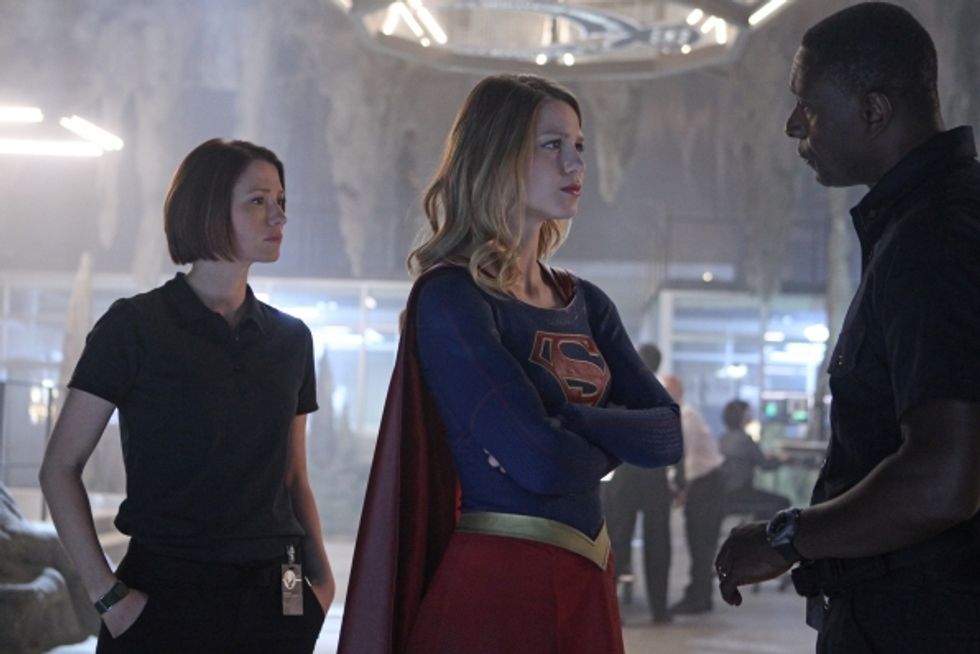
Giving women a voice in a community that is dominated by male characters, "Supergirl" has received a warm welcome from female comic fans of all ages. Kara is witty, sharp, and has the same day-to-day problems we all have -- regardless of her alien DNA. Through interviews and marketing campaigns, the team behind "Supergirl" pride themselves on the fact that the show is empowering to women and girls. Viewers can explore the world through Kara’s eyes instead of her cousin Kal-El’s (Superman).
The Chicago Tribune’s Dawn Turner disagrees. She has a real objection to using the word “girl” to describe someone who is an icon to young women everywhere.
“When we refer to women as girls in ways that are not empowering, it feels especially wrong-footed at a time when we're trying to help our girls — I mean, our real girls — break out of stiff gender roles and expectations,” Turner wrote.
Remarkably, Kara herself brought up this issue in the pilot episode. Kara is an assistant to the powerful Cat Grant, and in a conversation between media members at CatCo, the media discusses just what they should name this new heroine that has saved the lives of so many in National City. They coin the name “Supergirl” and soon it can be seen as the headline on every newspaper in the city. Kara protests the title at first. She claims that the heroine is a woman and doesn’t deserve the lesser appellation of “girl.” Kara quickly changes her mind after hearing her boss’s retort:
“And what do you think is so bad about ‘girl’? I’m a girl,” Cat explains. “And your boss. And powerful and rich and hot and smart. So if you perceive Supergirl as anything less than excellent — isn’t the problem you?”

Kara realizes the problem is indeed she. As she takes to the skies of National City sporting the iconic blue and red jumpsuit, she wears the name she was given proudly. Kara even goes so far as to get upset when she isn’t called by her new name. It’s because she realizes that “Supergirl” shouldn’t be a dispute over a name. Supergirl herself is a message of hope to all women and girls across the world -- you can be a hero even if you are a “girl.”
*photos are from CBS.com

















