Most of us understand the basics of how elections work in a democracy. It essentially means that the voters have a say in who runs the country. We get to choose who represents us and our beliefs, values, and opinions. Majority rules, and we either reap the benefits or deal with the consequences. Even if we the people decide we want to elect a complete idiot, we should technically have that power… Right?
It was once said that “Democracy is beautiful in theory; in practice it is a fallacy." Sure it was Mussolini who said that, but it makes sense. The theory of Democracy is pretty great, but in practice it seems more like “real” Democracy is letting the people feel like they have a say in what goes on so that they won’t complain too much. To me, it feels kind of like when my mom used to ask me for my opinion on things like what to make for dinner that night. If I said something reasonable, I felt like I had a choice in the matter. If I, for instance, wanted ice cream for dinner? Not so much.
You’re probably vaguely aware of how the delegate system works. People vote for their favorite candidate, and the state’s delegates are split up in proportion to how the people in their state voted. If Candidate X reaches the magic number of delegates (2,383 this year, to be exact) at the end of the primaries, it means the people have chosen them to represent their party. That's all there is to it, Right? Wrong. Enter: superdelegates. Think back to our mom, child, and ice cream analogy. Regular delegates are like the really “cool” parents who let their kids rule the household.
Superdelegates are the regular delegates’ stricter parent counterpart, ready to lay down the law if things get out of hand. If the kids want to stay up until midnight on a school night, they might let it happen against their better judgement to prevent an argument. However, if they want to do something that puts the household in jeopardy, the superdelegate is ready to step in. While superdelegates usually side with the kids, er, voters; they are completely free to make a judgement call and vote for who they personally think is best for the country.
Superdelegates are 712 members of the Democratic Party made up of major elected officials, important party members, and some members of the Democratic National Committee. Superdelegates account for approximately 30% of the total delegates needed to win the nomination. While they usually side with their voters in order to keep the peace, the superdelegates technically do not have to follow the public vote. They’re free to choose whomever they want, and change their minds at any time.
So what does this mean for this year’s election?
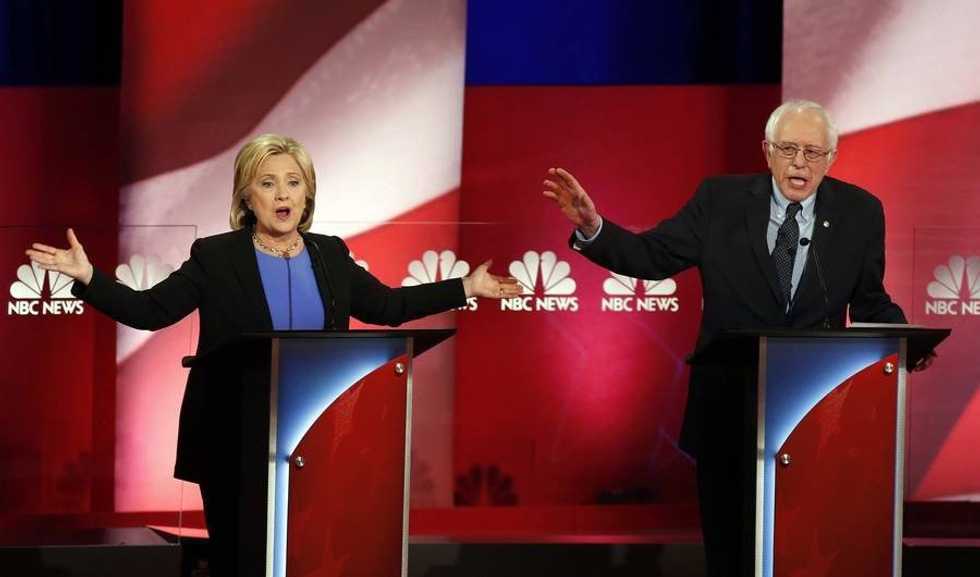
So far this year, Hillary Clinton has 91 regular delegates and Bernie Sanders has 65. Seems pretty close until you factor in the superdelegates. In the overall results as of today, Hillary has 544 delegates while Bernie has 85. Not so close anymore, is it? Superdelegates have pledged themselves to Hillary in an overwhelming majority. In New Hampshire, Sanders beat Clinton 60.4% to 38% and received 15 delegates to her 9. Nonetheless, 6 of the state’s superdelegates had already pledged their support to Hillary, raising her count to equal Bernie’s.
While it is not likely that superdelegates will ever completely ignore public opinion, it is entirely possible that they could one day decide an entire election. Why, then, do we have this system? It seems to me like the superdelegates are just a failsafe put in place for if the party bigwigs don’t like who the “little people” vote for. It allows the major players in the Democratic party give the nomination to who they think will really have a chance in the general election, in order to keep a Democrat in the White House. While that system in theory isn’t all that bad, Democracy isn’t something you can pick and choose when to follow through with. If you give citizens the power, you can’t just take it back when they don’t do things the way you want. If we the people don’t have any real power when it comes to selecting our elected officials, are we even truly in a democracy?