


Have you ever sat down to watch a movie on the couch and then immediately become overwhelmed with an urge to check your phone or pull out your laptop and do some pointless Internet surfing? This is a sentiment that is becoming more and more common, especially among millennials and the younger generations. Does this need for constant multiplicity of information and brain stimulation mean that we are just better at multitasking, or does it add up to a severe attention deficit?
This is not a dig at millennials; we’re so used to our predecessors moaning about how superficial and vapid we are, which can be true in some cases, but it is necessary to examine the root of this characteristic that we tend to share in increasing numbers. In doing so, we can learn more about the effect that constant interaction with technology has on the evolution of our brains and also the potential flaws that we must become aware of to better ourselves. Every generation is different and has its own assets and disadvantages, ours is one so intertwined with technological advancement that it would be ignorant not to study the way it has shaped our lives and our everyday habits.
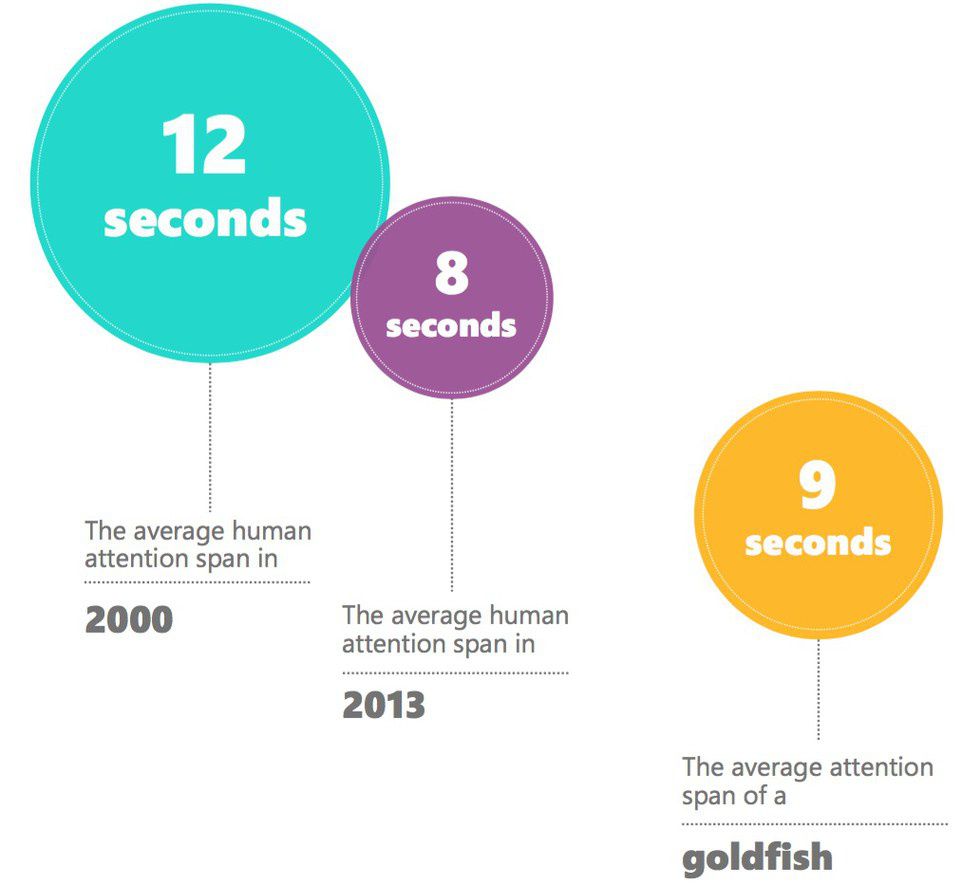
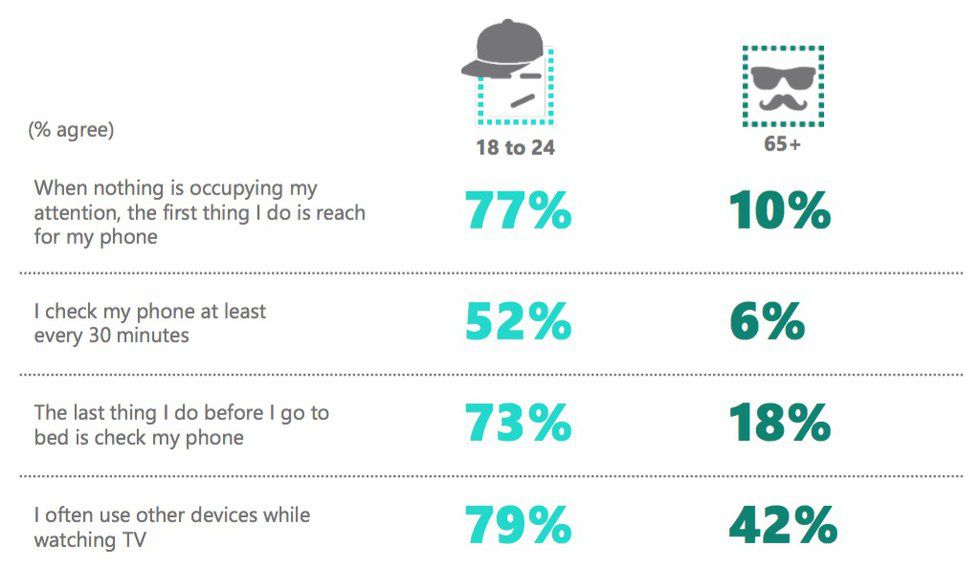
Microsoft did just that in 2013, with a study that compared surveys and EEG scans from 2000 and 2013 to determine the average time that a person could focus on a certain task. In 2000, it was 12 seconds; in 2013 it had dropped to 8 seconds (one second less than that of a goldfish). They also found that young people between 18 – 24 tend to be on their mobile devices about 60 percent more than people older than 65. Starting to think it might not be such a bad thing to unplug yourself from your phone every once and a while...
On the other hand, this relationship we have with technology, our constant stream of information, could be helping us in crucial ways as well. It could mean that we are better equipped to multitask and also to prioritize and analyze vast quantities of data in very short periods of time. What this faster processing ability means for the future of the human race is not predictable, but it doesn't seem to be a bad thing.
No one would agree that a life without cell phones, tablet, or laptops would be better; they have increased our standard of living, our social connectivity, our safety, and they put a world of knowledge in the palm of our hand. However, you might be surprised how easy, and even enjoyable, an “unplugged” day can be. So use this technology wisely and however abundantly you choose, but always remember to appreciate the simpler things in life. You wouldn't want to end up a human goldfish.

















