


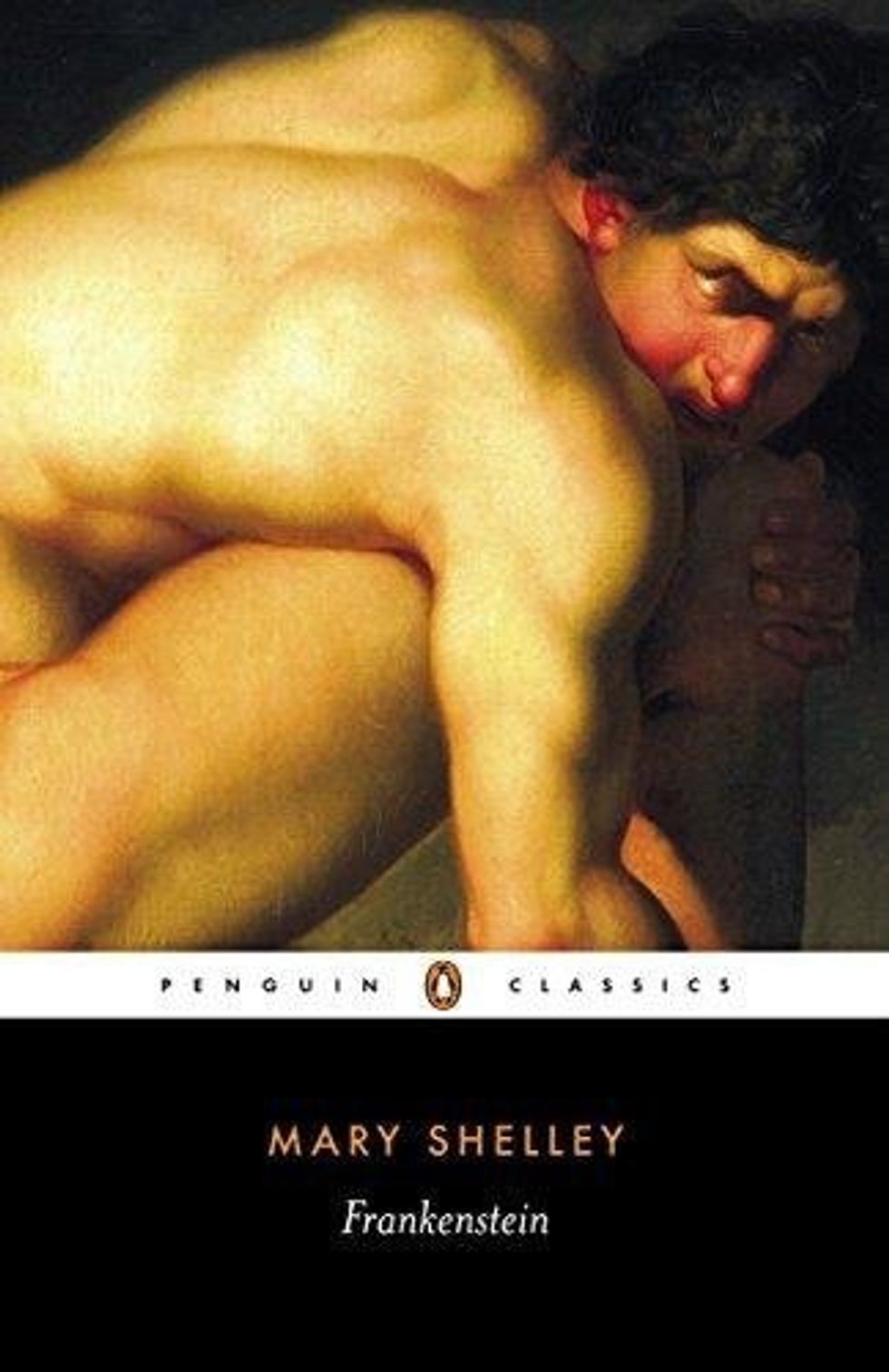
Although much improved in the last few decades, many people still associate Victor Frankenstein's creation (the nameless creature) as Frankenstein himself. It's actually kind of ironic, considering Frankenstein (the human creator) is the true monster of the story. And yet, Victor Frankenstein still seems to somehow pale to near invisibility in relation to his creation.
Oddly enough, the creature is still largely thought of in the classic square-headed, bolt-necked, green-skinned, dull-minded sense. When in the original portrayal (Mary Shelley's novel, "Frankenstein"), he isn't green-skinned or unintelligent at all. Yes, he is rather large and grotesque looking, but he also has the higher thinking processes and emotional capacities of a normal human being. So why is that forgotten? Why is Victor Frankenstein still not seen for his true character?
Frankenstein is no doubt an intelligent man with huge aspirations and most of us understand how the story shows that we shouldn't play god in nature; we shouldn't recreate life from death. But there's an even larger theme at play and it's one about owning up to the consequences of your actions and the knack that human beings have to be unwilling to understand what lies beneath the surface of something.
Victor Frankenstein turns his back on the creature almost immediately, after he realizes what he's done. He hates the creature on the sole ground of it being something he can't immediately understand and yet takes no responsibility for it. The real kicker is, the creature isn't inherently evil. In fact, I'd argue that he's never evil at all. It was a matter the environmental circumstances he was put in that shaped him to be the bitter thing we see at the end, a classic example of nature versus nurture.
Given his mental capacities, the creature feels a desire to be accepted as any human being would. But his creator has abandoned him, leaving the creature to learn how to speak and handle emotions on his own. He learns by hiding out in a lean-to next to a house, in which a family of three lives, where he listens to them speak and gradually picks up the language.
Considering his lack of previous interaction with others, the creature doesn't realize that his gruesome visage matters more than any mental similarities. Despite the creature approaching the family with empathy and kindness, it's their horrified rejection once he reveals himself to them that is the final breaking point for the creature. It's what sends him on a man-hunt for Frankenstein, demanding that the scientist create him an equal partner so he won't have to be alone forever, a fear that we all can relate to. Of course, Frankenstein refuses and continues to try and ignore the consequences of his actions, driving the creature to take some desperate measures.
At this point, I still don't feel that sorry for Frankenstein. I feel sorry for his creation and the way it was treated. Had Frankenstein stuck around, taken responsibility for his actions and his creation, the story might have gone in a whole new direction, one that saves the both of them much grief.
Yes, this novel was meant to be disturbing, it's a Gothic. But we were never meant to look at the creature as the true abomination in this novel. The creature was meant to be the lens through which we see that the real abomination is the man who tried to play god and then ignore the consequences, who couldn't look past differences (in this case, physical and biological differences) and realize that, despite those differences, the creature was essentially nothing but human on the inside, where it truly counts.
No, it wasn't the creature that we are supposed to be afraid of. It's something a little closer to home than that; our ability to turn self-centered backs on the results of our own actions, even if it affects others negatively, and our ability to create "monsters" out of people who were never truly monsters at all, not to begin with.
















