Growing up in Minneapolis, all of my surroundings were flat. Even our cherished ski resort—Buck Hill—was just that: a hill. So anytime I left my Midwestern bubble and ventured westward, my heart inevitably skipped multiple beats as soon as that jaggedly beautiful skyline came into view. And when it came time to choosing a college, while many of my classmates were searching for small class sizes and D1 athletics, I found myself filling out applications based upon proximity to the mountains. Over a year later, as I near the end of my freshman year at the University of Puget Sound, that established sense of awe evoked by the mountains has indisputably stayed the same.
And as a Midwesterner, I’d like to think that I hold a unique perspective on living near the mountains as I am a stranger to this lifestyle. Sociologist George Simmel defines the stranger as the synthesis of one who is both attached and detached: referencing their attachment to a place they no longer inhabit, and their detachment to the place at which they have arrived. Simmel explains that the stranger plays an essential role within their entered society in that they have an incomparable ability to analyze and study the environment that they have entered, while maintaining objectivity and level-headedness (Simmel 1971). So returning to my point, I’d like to think that I hold a distinct perspective as a stranger to the mountains.
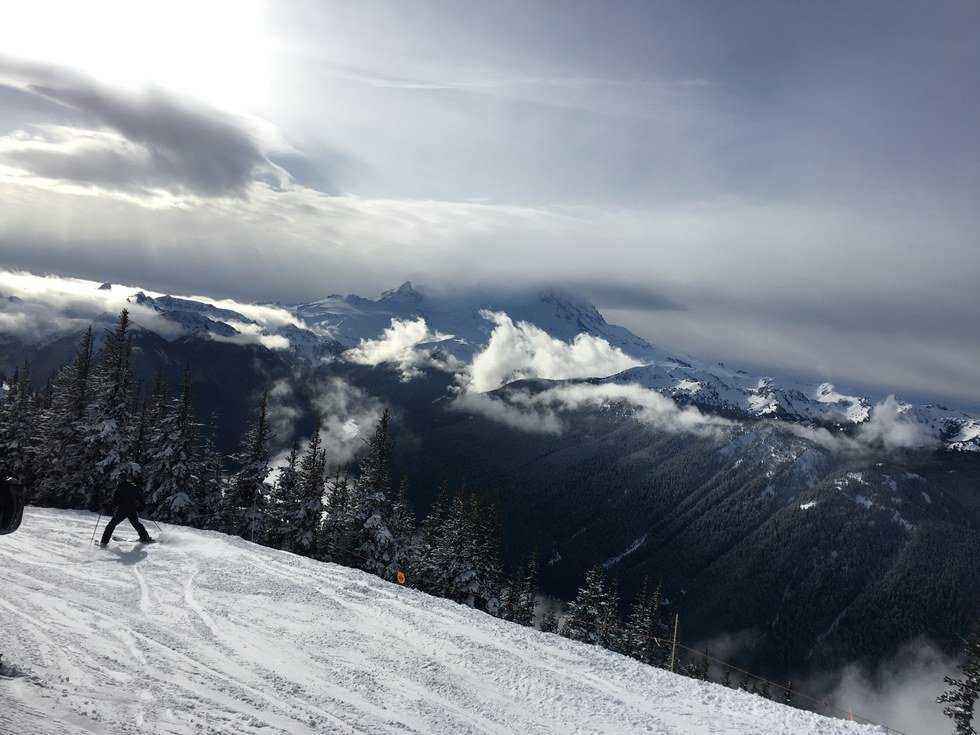
Coincidentally, I have surrounded myself by those who have grown familiar and somewhat jaded to seeing mountains on a day-to-day basis. My roommate is from Boulder, Colorado, my boyfriend lived most of his life on the cusp of the Appalachian Trail and many of my friends have grown up within driving distance of a significant mountain range. And so whenever we catch a glimpse of Mount Rainier while driving, though many comment on its imposing presence, I find that I am one of few that cranes their neck to continue that glimpse as it passes through the rear-window. And just as Simmel’s definition of a stranger entails, I don’t know if I’ll ever get used to seeing the mountains everyday; thus, I am in an essential position to examine certain aspects of the mountain-living lifestyle.
So, in short, what have I found to be most prominent about this society composed of those who live near the mountains?
1. The Attitude
Many of the native mountain-dwellers that I have met have an incredible passion and appreciation for their environment. And this isn’t just a fair-weather love for the mountains—literally speaking—for, especially living in Washington, the weather rarely produces bluebird skies. But it amazes me to the extent of which these individuals are not only able to persevere through any weather condition, but they find the value of that circumstance: the subtle pattern in the clouds, the distinct smell of fresh air, the way snow accumulates on the branches of the conifer trees or when the sun eventually comes out, the incomparable appreciation for that comforting warmth. I find this unconditional appreciation absolutely beautiful, in that spending time outdoors is not always going to be comfortable; yet, when maintaining a positive attitude, doing so makes for a meaningful experience.
2. The Productivity
Rarely does a day go by that I—or someone I’m acquainted with—don't leave the bubble of everyday life in order to take advantage of the opportunities of the mountainous location we live in. And the word “opportunity” is essential when living near the mountains; for, there are so many potential activities and places to explore. My classmates plan their weekends days in advance so that they can snowshoe up a mountain-ridge, organize their class schedules so that they can kayak gorges during the afternoon and as the weather turns sunny, spend each free moment laying in the grass, gazing at a clear view of the Olympic Mountain Range. This is what is truly special about those who live near the mountains, in my opinion: they are productive with their time, as they consistently endeavor to take advantage of these incredible opportunities that the mountains and surrounding wilderness provide.
3. The Awareness
I find that those who have a strong relationship with the natural world are far more likely to protect it. This awareness applies to gas emissions, length of showers, proposed bills affecting the environment and countless others; thus, it is a prominent part of everyday life in this society. Although this concern for the natural world is by no means limited to mountain-dwellers, this concern is a prevalent attribute of many individuals I have met upon moving westward. During an age in which we are increasingly responsible for our actions, as the natural world is dependent on the way we live our lives in the upcoming years, it is hopeful to see how many individuals are taking this concern into account.
I have come to greatly appreciate the culture that surrounds the mountains, as I so admire the attitude, productivity and awareness that I find to be prevalent among many mountain-dwellers that I have encountered. While not everyone has the opportunity to live near the mountains during their lifetime—as I experienced for the first 18 years of my life—these attributes are not solely isolated to mountainous locations; but, can be incorporated into any lifestyle when the natural world is kept close to the heart.