
Let’s talk about a pretension which plagues many who read memes and understand basic English grammar: the Oxford comma.
Somehow, the Oxford comma became the most divisive punctuation mark in the English-speaking world, and people falsely elevate their level of pretension by having a nearly maniacal devotion for the comma.
While nothing is wrong with admiration for grammatical concepts, many Oxford comma fanatics have taken their love for the punctuation mark a bit too far.
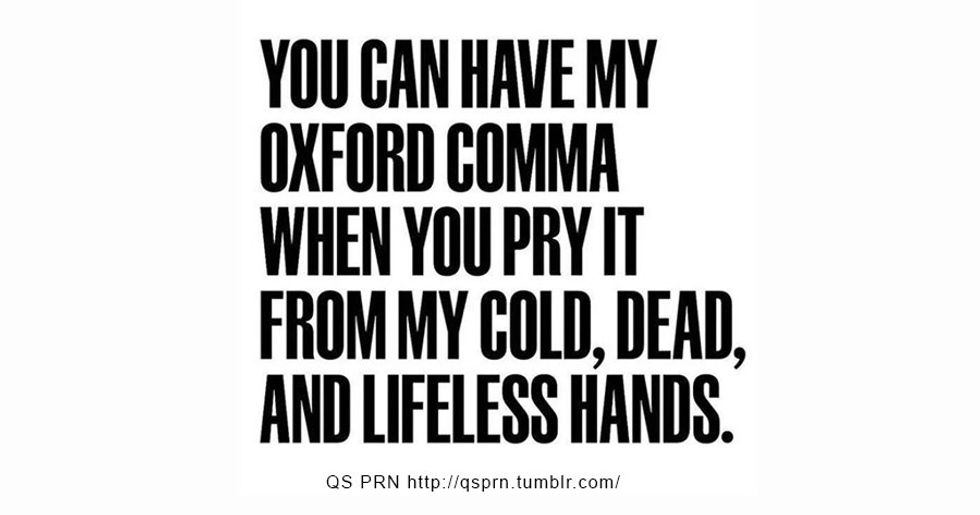
Most of these comma worshipers wouldn’t have even known the proper name for the serial comma had it not been for this meme (below), which was uploaded about four years ago.
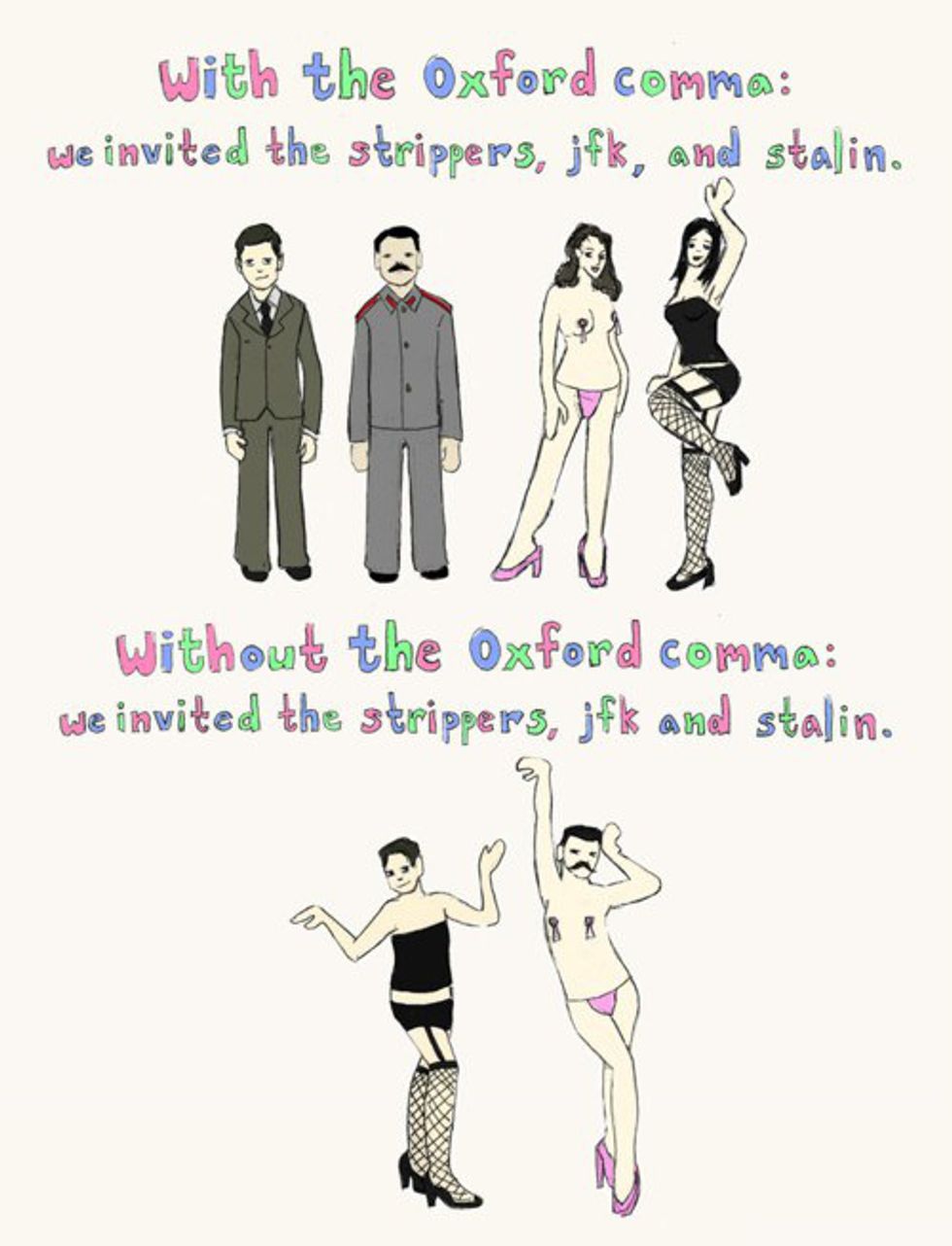
Knowing about the Oxford comma does not make you better, smarter, or cooler than the millions of others who have seen this exact meme.
So let’s chill out about the comma.
Now, you’ll notice I used the Oxford comma above when I said “smarter, better, or cooler,” so you should understand that I don’t hate the Oxford comma. However, I also don’t love it to the point of insanity. The Oxford comma has pros and cons, and depending on the writing style, the comma can be either clarifying or cluttering.
For example, a platform such as Odyssey uses the Oxford comma in its style guide so Odyssey writers mark commas before conjunctions in lists. Also, the Oxford comma is used when college students submit MLA research papers in English classes.
And that’s that.
However, journalism professors will bleed students’ articles with red ink if they use the Oxford comma.
Ultimately, the Oxford comma comes down to style; in some cases, the Oxford comma clarifies meaning, and in others, the Oxford comma is superfluous because the meaning is already clear.
Simply learn which styles demand the Oxford comma, and use it discerningly. Just don’t get caught up in the pretension of knowing a basic grammatical concept.
But…
If you really want to be pretentious about grammar, I got you.
Instead of wasting time and snobbery on the Oxford comma, you should check out these lesser-known grammatical quirks.
1. The Vocative Comma
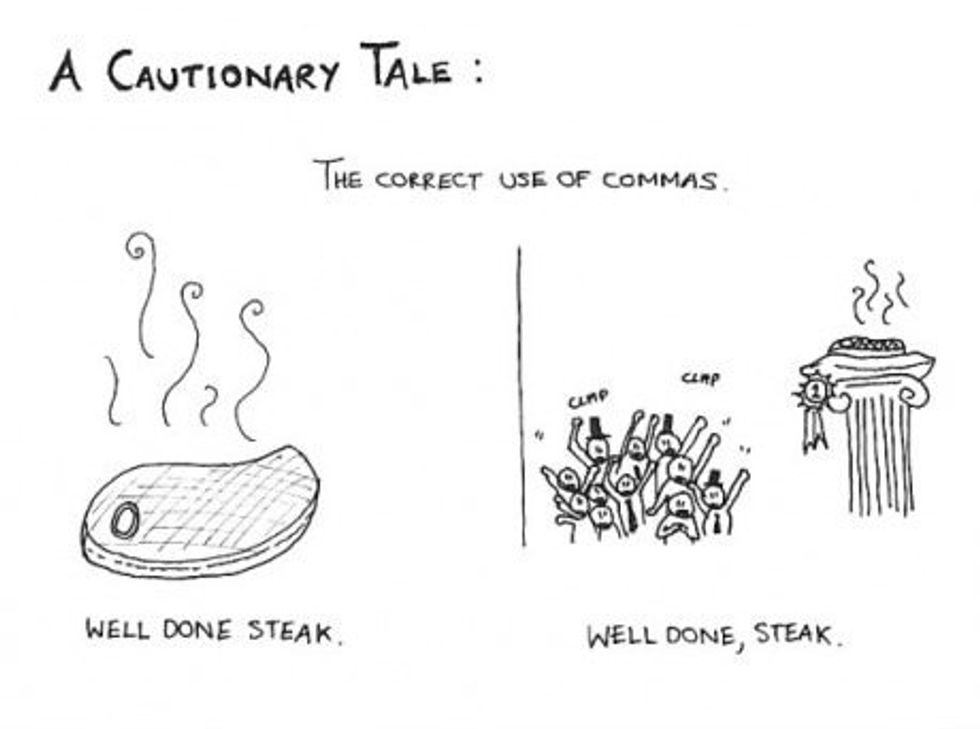
In cases of direct address, the vocative comma offsets the object of the address, usually a name or title.
Come on, Leonard, pick a cookie and go!
Here, the commas around the name Leonard would be vocative.
2. Too Few Commas
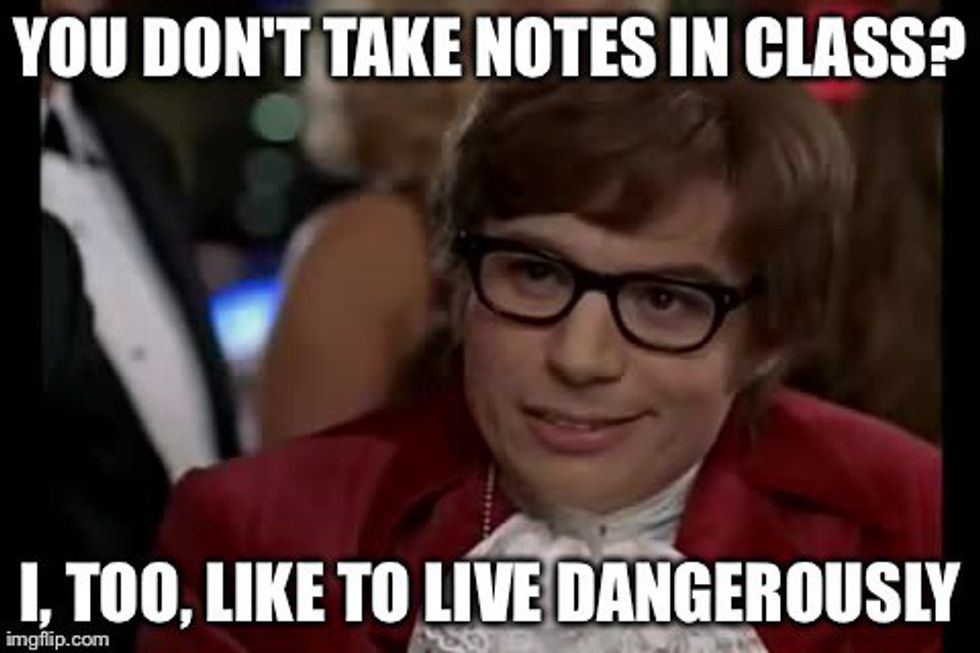
When using the word “too” to indicate “also,” writers should isolate “too” with commas.
I, too, like to eat my weight in cookies, Leonard.
3. An vs. A
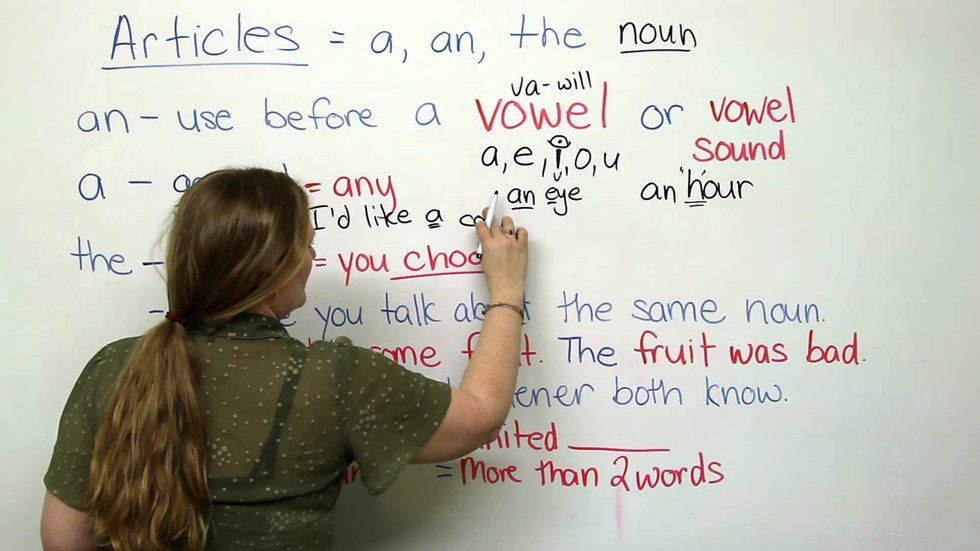
Though the article “an” is usually used before words beginning with a vowel, the rule is split concerning the vowel “u.” When the vowel makes a hard “yoo” sound, use "a," and when the vowel makes a soft “uhh” sound, use "an."
An unusual animal is a unicorn.
4. The Eight Levels of Adjective Order
The English language has eight levels of order for adjectives describing an object. The adjectives follow this order for clarity and readability: determiners, observations, size and shape, age, color, origin, material, and qualifier.
I found an interesting, rounded, old, purple, Italian, crystalline book case.
All that to say, let go of the Oxford comma obsession, and stay pretentious about the right things, my friend.