Earlier this week, as the temperatures began to drop along with the leaves, I was lost with what to wear to still stay ~fashionable~ while simultaneously staying warm. Coming from the Midwest, a coat is way too overboard for temperatures that are still above freezing. I decided to go with a vest my mother had given to me; one she had bought about a decade prior and only ever hung in her closet.
The vest, as it turns out, is made out of real rabbit fur. As I strolled through a high-end mall with one of my closest friends, I remarked that there are currently many other fur vests on display right now, and I joked at how I lead the fashion trends. To that, she responded by shaking her head and calling me a murderer. She then exited the store, with her leather boots stomping out as her large leather purse swung behind her.
Karl Lagerfeld, the head designer at Chanel and Fendi, states that “In a meat-eating world, wearing leather for shoes and clothes and even handbags, the discussion of fur is childish.” He’s not wrong.
According to peta.org, “for the animals involved, leather production is just as violent, painful, and deadly as the fur trade”
According to animalequality.net, “while many people would think twice before wearing fur, they make an exception for leather or sheepskin because it is usually thought to be a 'by-product' of the meat industry. In reality, they are far from being by-products: paying for leather and sheepskin adds substantially to the slaughterhouse value of the dead animal and financially supports the meat industry. The multimillion pound leather industry is such big business it would sustain itself even if the meat industry were to end tomorrow.”
Gary L. Francione, a legal scholar and professor of law, describes it best in a post entitled “Some Thoughts on ‘Fur Shaming;’”
“First, the choice of fur as a target over leather or wool given that there is *no* morally coherent distinction between fur and other animal clothing is itself problematic given that fur is a garment that has traditionally been worn by women and is part of what patriarchal culture dictates as fashion. Anti-fur campaigns have literally demonized women who wear fur and have created the impression that people—almost always women—who wear fur are more morally odious than everyone else. These people regularly use the expression "fur hag." That speaks for itself.
Second, it is tragic that these people think that they should be harassing anyone. We will never change thinking by harassing people. It is fine to have a clear and unequivocal position; it is not fine to "harass" and "shame."
Third, the fact that these people will (so they claim) "harass" and "shame" men as well as women does not mean that the campaign is not sexist any more than PETA using an occasional male in its misogynistic campaigns does not mean that the campaigns are not misogynistic. The anti-fur campaign is and always has been overwhelmingly focused on women.
Fourth, as to why the choice of fur over leather: if these people ever harassed men wearing leather jackets the way that they harass women, they'd get their teeth knocked out. That's the practical reality.
Fifth, it should be noted that the anti-fur campaign, which has been going on for 40 years now, has been a spectacular failure. The fur industry is stronger than it has ever been. Moreover, the anti-fur campaign promotes the idea that people should consume leather and wool instead of fur just as Meatless Monday promotes the view that people should consume dairy and eggs instead of meat. Such campaigns are inherently speciesist and are inconsistent with a vegan framework.”
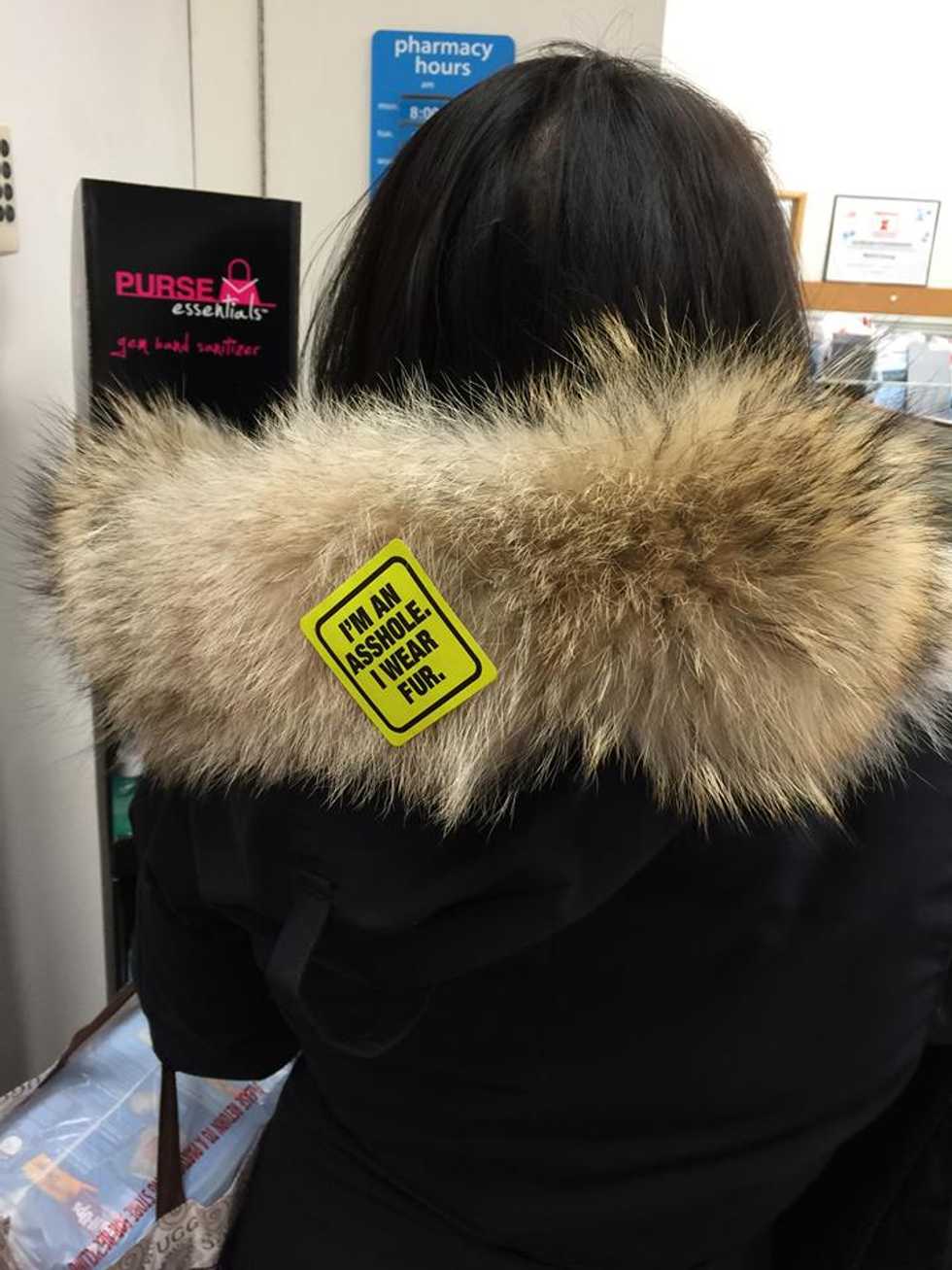
Fur shaming me as you strut around in your leather belt, purse, wallet, and boots does nothing to help the cause you claim to care so desperately about - it only propels the false opinion that you are better than me because you do not wear fur. If you do not make a change, there is no reason that I should, either.