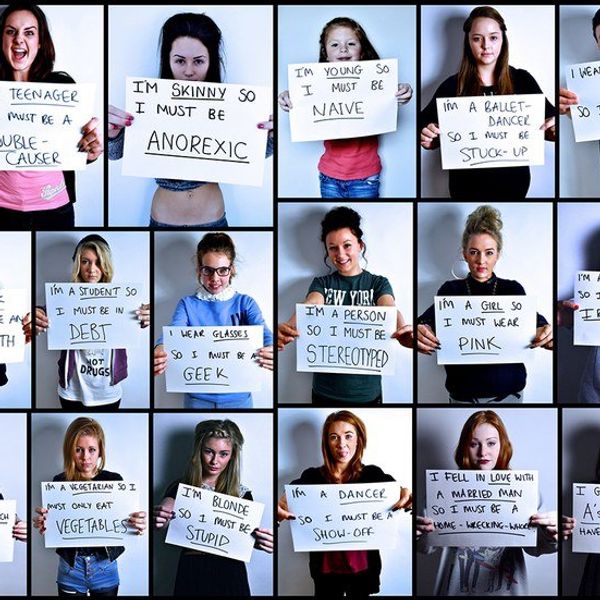

It's something that everyone unconsciously does, whether we like to admit to it or not.
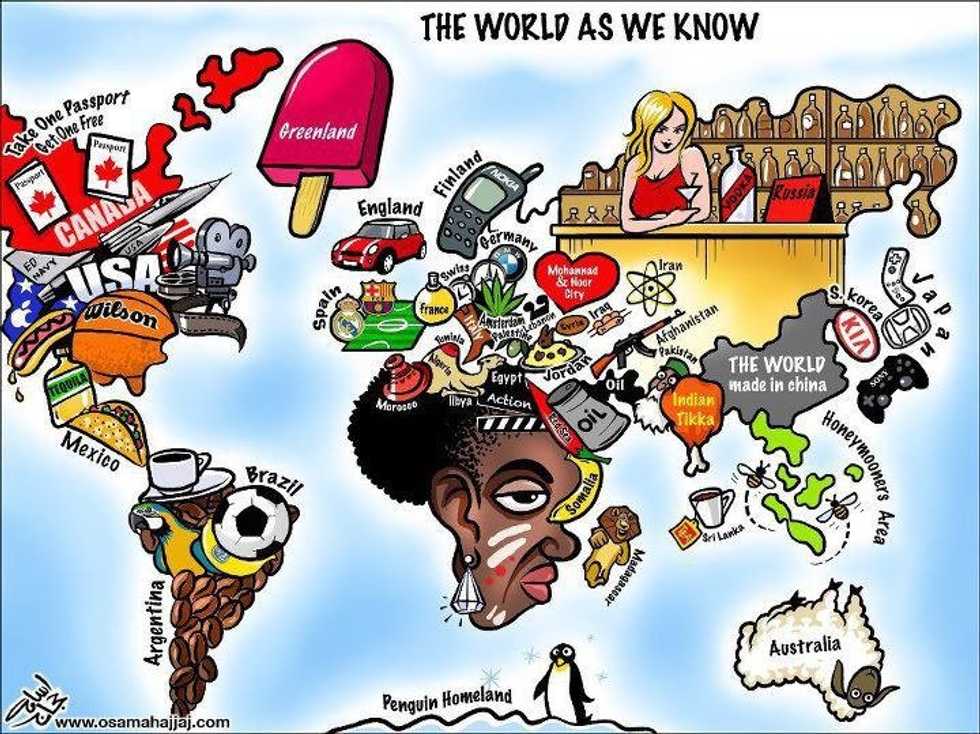
National stereotypes are unavoidable. It's our rule of thumb, our quick judgment call. It allows us to gain our own perception of the world around us.
Germans are known for their majestic soccer skills, the French for their rude cowardliness behavior and the Russians for their love of vodka.
So what’s the issue? Why would I even bring this up?
As someone who has lived abroad most of her life to the point where the "where are you from?" question leads me speechless, I sometimes get annoyed at how stereotypes sometimes get in the way. In the way of people getting to know each other more than their national stereotype. Since I don’t refer myself to a particular country, I take advantage of my multicultural background.
I guess it's not too much of an issue when you live in America where any interaction with a foreigner is cool; unless it's NYC aka, the international port. The foreign accent usually does the trick (can never get enough of the Australian accent, channeling the Hemsworth brothers).
More importantly, I feel that stereotypes get in the way of noticing the beauties of another culture. I know this may sound cheesy, but there are so many things we can learn from one another.
Anytime one of my friends in Switzerland was going anywhere in America, mostly NYC, they'd always mention the obesity rate. How everything in America is big: food portions, TVs, cinemas, grocery stores and the people. I remember during homeroom back in high school when someone mentioned how "everyone" in America was either fat or overweight. Unfortunately there was someone from Massachusetts present and the remark backlashed.
Of course, there is some truth in the ignorance of the person's comment. The US has one of the highest obesity rates worldly. On the other hand, Americans tend to be more open and easy going. I remember coming to college, in an American system for the first time, and being surprised by how nice everyone was. Anyone will easily come up to you at a party and start a conversation. Back home where everything is more exclusive, you'd be better off sitting by yourself if you didn't at least know a mutual friend who you've previously been acquainted with. Americans tend to be more straightforward when communicating. They tend to spark conversations rather than wait on the sidelines until faith might bring you together. Of course, faith isn't in charge of putting us in contact with strangers. So in the end, it all comes down on you.
It can also be applied to positive stereotypes, and one we all know: Asian Americans as the hardworking nerds. Once America’s minority group, they have proven the American Dream. If you work hard, success will come to you. Of course, calling someone smart is better than nagging them that they are fat. Yet again, not only we’d be generalizing 40.6 million Asian-Americans, but also discounting the differences between cultures amongst them. Last summer a collaboration was made between former star from "Made In Chelsea," Phoebe Lettice-Thompson and "Illustrated People," which is a clothing line based in London. She created a line inspired by her high interest in Japanese fashion. Who would of thought? Her clothing line was full of luminescent color and youthful and silly graphics. It was truly amazing. She gave light to an Asian country that had something special to share.
Don’t get me wrong. I like to make silly jokes about how French people love to complain about every aspect of their lives and imitate my Italian friends with their hand gestures when they talk. I can’t help it. We can’t help it.
It is important to realize, however, that cultures are fabricated from historical periods, interactions, traditions and such that we would be limiting ourself to solely stereotypes. Instead, we should try to learn more about another’s cultural history and understand it.
In the end, the world is a small place. We are all living on this small planet that has never been this much interconnected, as a result of the internet and social media. Let’s use our resources to our advantage and learn to appreciate each other. Reach under the surface.