In September 1978, a bag of pistols was discovered in northeast Oklahoma City. The investigators ran the serial numbers on the three weapons to find out that one had been stolen from a pawn shop in Purcell, OK, and that the other two were owned by Melvin Lorenz. Lorenz, his wife, and their son had been killed in June of that year, and their pickup truck was found with two dogs in the back in a parking lot in Oklahoma City. Brand new forensic techniques were employed. Ballistics tests were conducted on the firearms. Forensic specialists tested the bullet fragments collected at the crime scenes to samples generated in the lab. There was a match. The guns had been used in the Sirloin Stockade. And furthermore, those guns had also been used on the Lorenz family. Now the pressure was on to find the people who pulled the triggers. The investigators reasoned that getting to the bottom of the Lorenz murders would unlock the mystery of the Sirloin Stockade.
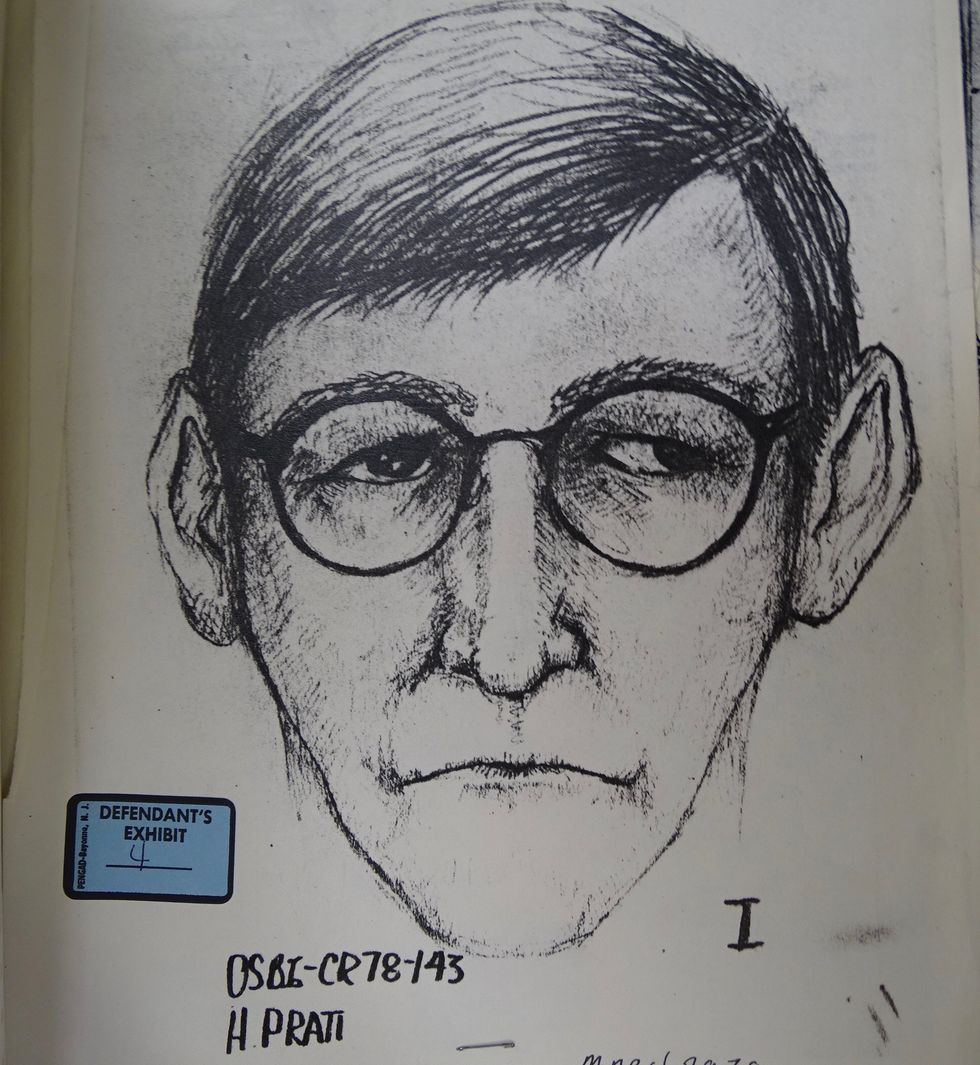
Investigators decided to follow the blue pickup that belonged to Melvin Lorenz that was found by Will Rogers Airport shortly after the discovery of the Lorenz family. They talked with a small town convenience store clerk who recognized the truck. The clerk reported to investigators that there had been three people with it, two men and a woman. One man had curly hair, and the other had glasses with a lazy eye, and the woman wore glasses. Composites were drawn up by Harvey Pratt, a sketch artist for the Oklahoma State Bureau of Investigation. The description of the man with glasses is puzzling because Roger Dale Stafford was not known to wear glasses. However, a variety of composites would be made that would more closely resemble the mustachioed murderer. On January 4, 1979, the three sketches of possible suspects in the Lorenz murders were published in newspapers and broadcasted on T.V. news stations. All of Oklahoma and the country saw the faces of the people wanted for killing upwards of nine victims.
Almost immediately after the composites were released investigators received an anonymous phone call from a trucker who said that he drove two of the people from Oklahoma City to Tulsa. He gave their names. The woman was named Verna, and the man was Harold Stafford. This anonymous caller who provided investigators with case-breaking information was actually a drunk Roger Dale Stafford, calling from a payphone in Chicago.
Harold Stafford was located by the investigators fairly quickly. There was a death certificate issued for Harold Stafford on July 22, 1978. Harold died in a motorcycle crash in Tulsa. He was driving his motorcycle behind Roger and Verna as they made their way out of Oklahoma. As transients always have been and will continue to be, on the move the Staffords did not stick around Oklahoma for a very long time.
By March, Verna Rae Stafford was located by investigators in Chicago. The investigators traveled to Illinois to questioned her about where she had been in June and July of 1978. She told them about the Lorenz family and the Sirloin Stockade. She told them that the other man was Roger Dale Stafford, her husband and that they were no longer seeing each other. Verna was flown down to Oklahoma City and taken to the Oklahoma City Police Department offices. She gave a statement to Detective Harrison and Agent Shields that would turn her from a possible suspect into a star witness. Veran confirmed that Lorenz murders were connected to the Sirloin Stockade killings. She gave information that was so descriptive of the crimes that she had to have been at the scenes when they occurred. The puzzle pieces were falling into place. There were two people still alive who were responsible for the murders, and one of them had already been found.
The investigation became a manhunt. Given the transient lifestyle of the Stafford family, Roger could have been anywhere with a road. Jurisdictions across the country were notified to be on the lookout for the 27-year-old suspect. For five days, the "Daily Oklahoman" ran front page stories about the manhunt. OSBI Agent Phil Stinell and OCPD Detective Bill Cook traveled to seven states, interviewed 68 people in four days in an effort to find physical evidence. On March 13, 1979, Officers from the Chicago Police Department arrested Roger Dale Stafford in the lobby of a YMCA. According to the "Daily Oklahoman" Stafford waived extradition because he wanted to come to Oklahoma to clear his name. Roger Stafford was flown to Oklahoma City where he was arrested for one count of First Degree Murder, and he was issued arrest warrants for the other murders later on.
In the fall of 1979, the trial of State vs. Stafford was held. The State was represented by District Attorney Andrew Coats and Assistant District Attorney James R. McKinney. The State charged Stafford with six counts of First Degree Murder and each count carried with it a death sentence. Roger Dale Stafford was represented by J. Malone Brewer and John T. Hall, defense attorneys in the Oklahoma City area. Verna testified against Roger, her testimony was the crown jewel of the State's case. The story she told to the jury is the same as what was written in part three of this series. During the trial, Stafford took the stand in his defense. The defense strategy was fairly simple: Roger did not do it. Roger's testimony lasted over a day, and in it, he testified that he was at home getting drunk in Tulsa on the night of July 16, 1978. He told the jury that Verna was always putting him down and that she was pinning these murders on him because he left her. The defense contested the accuracy of the composites, telling the jurors that he never wore glasses and had even been thrown out of the eye doctor's office because his eyes were perfect. Mr. Brewer admitted a time card from a factory in Tulsa where Stafford had been working the summer of 1978. This was used to show that he had an income and therefore did not need to rob a restaurant for money. The strategy failed and Stafford was convicted of all six charges.
Roger Dale Stafford faced six sentences of death, and the brief penalty phase of the trial resulted in him receiving the maximum punishment. Six sentences for every person he killed in the Sirloin Stockade. The State's claim that he presented a continuing threat to society, that the murders were especially heinous, that they were committed in order to avoid arrest, and that they were done during the commission of another crime were all unanimously held by all 12 jurors. On the same day, he was convicted and sentenced. Few trials of such magnitude have ever satisfied the right to speedy trial like this one. Upon appeals, Stafford would not be executed for those six murders.
The trial in McClain County, where he was charged with three counts of First Degree Murder, went about the same as the Oklahoma City trial. Verna testified against him a second time, and Roger defended himself on the stand. And again, he was found guilty of all charges, and the jury unanimously approved the aggravating circumstances giving him three additional sentences of death. Roger Dale Stafford, one man, was sentenced to die nine times.
Verna Stafford was convicted of two counts of Second Degree Murder. In 1989, she optimistically appealed her sentence and received a resentencing of two successive life sentences. She was hoping to receive a reduction of punishment, but what she got was a stiff drink of water. The presiding judge told her that "there is one of the hottest corners of hell vacant, with your name above it," she left the courtroom in tears. To this day, Verna is still in the custody of the Department of Corrections.
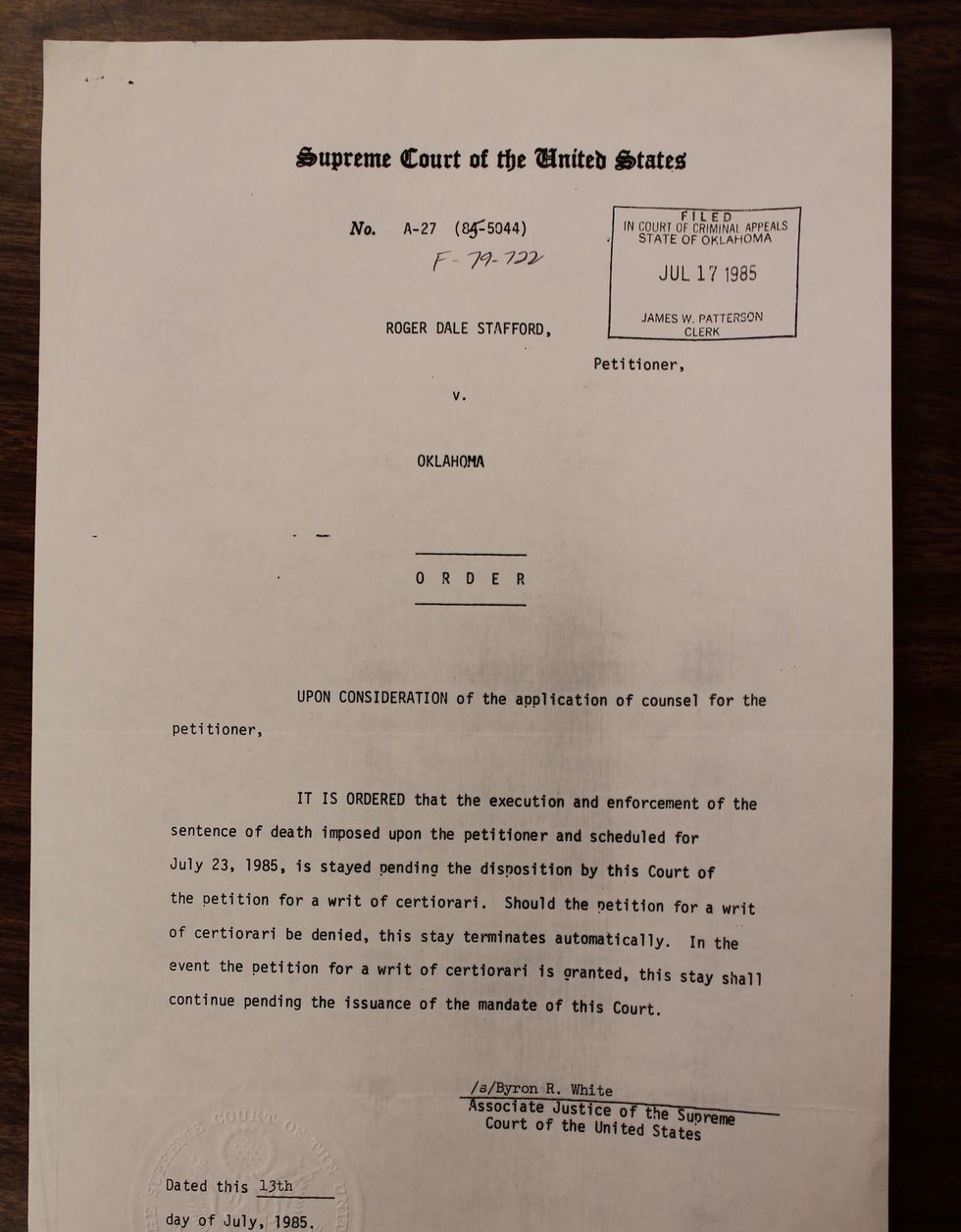
In 1980, Roger Stafford was placed on death row of Oklahoma State Penitentiary in McAlester, OK. The fight in the appeals court would go on for more than 15 years. His execution would even receive a stay from the Supreme Court of the United States. He got remarried and converted to Judaism while awaiting execution. However, Roger Stafford was eventually executed at 12:30 in the morning on July 1, 1995. According to the "Daily Oklahoman," Roger's last meal consisted of two footlong chili cheese hot dogs, two large milk shakes, and a large order of french fries with ketchup and mustard. Outside the prison gates, a group of people stood displaying signs and expressing their support of Stafford's execution