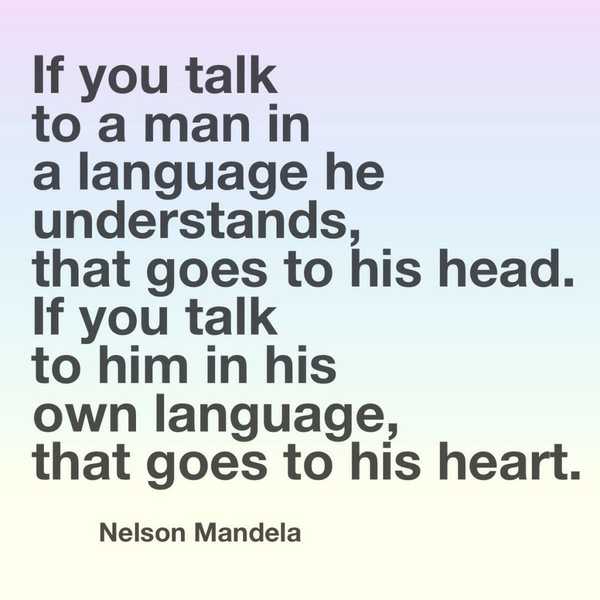


To really immerse yourself in another culture, you should learn how to speak their language.
Recently, I had the pleasure of traveling overseas for the first time in my life. Noting that this would be a once-in-a-lifetime opportunity, I was quick to embark on this journey. I thought I had prepared myself to the best of my ability. I went in with a mindset of wanting to immerse myself in the culture and wishing to make great connections with locals.
Just a few days into my trip, however, the reality hit me. Aside from the brief interactions I had with waiters/waitresses when sitting down to eat or the succinct exchange of greetings with hotel staff, I had not participated in a conversation with a local that had lasted longer than two minutes. Being a person that rejoices in deep conversations with others, I found it difficult to manage being abroad with little contact to most townspeople that were in my vicinity. No longer did I worry about the common issue of pickpocketing. No longer did I have to worry about navigating my way through town. Midway through my trip, most of the worry circulating in my mind now had to do with how I could better connect with the locals.
Perhaps this inner conflict had risen from my expectations vs my reality. Sure, I was traveling abroad to study. However, like any other student who wants to travel abroad, I wanted to travel and learn about a different culture. I wanted to enrich my own life with even just a spec of what the new land would have provided.
Ultimately, I found it hard to achieve my goal of connecting with others since I had never put in the effort to learn the rudimentary tool needed to understand the locals. This tool was the townspeople’s language. Without this, much of what I wanted to do or say was lost in menial attempts at communication.
Countless times, I felt inept—being unable to express even the smallest bit of information. I recall numerous instances when I would encounter a local who would speak to me in Italian, and all I tended to respond with was a blank expression on my face. Having never put in the effort to learn Italian, I found myself stripped of what many of us take for granted daily. Verbal communication. Without the ability to speak to the townspeople, I would continuously attempt to use gestures to point out what I wanted done or said. The problem with this was that I felt incapable of having the in-depth conversations that I wished to have with the locals.
I had traveled abroad to study, yes. But, more importantly, I had traveled abroad to learn about the different culture. Being unable to have a genuine conversation with someone from Italy left me with only my own interpretation of what I was seeing. Unfortunately, it is common knowledge that our minds will try to make sense of the world within the confines of our own biases. Therefore, if we truly want to make the most of our experience abroad, we must try our best to learn the language of the locals. Otherwise, we will come back home with a biased view of how the locals behaved, with little background as to why certain individuals behaved the way they did.