

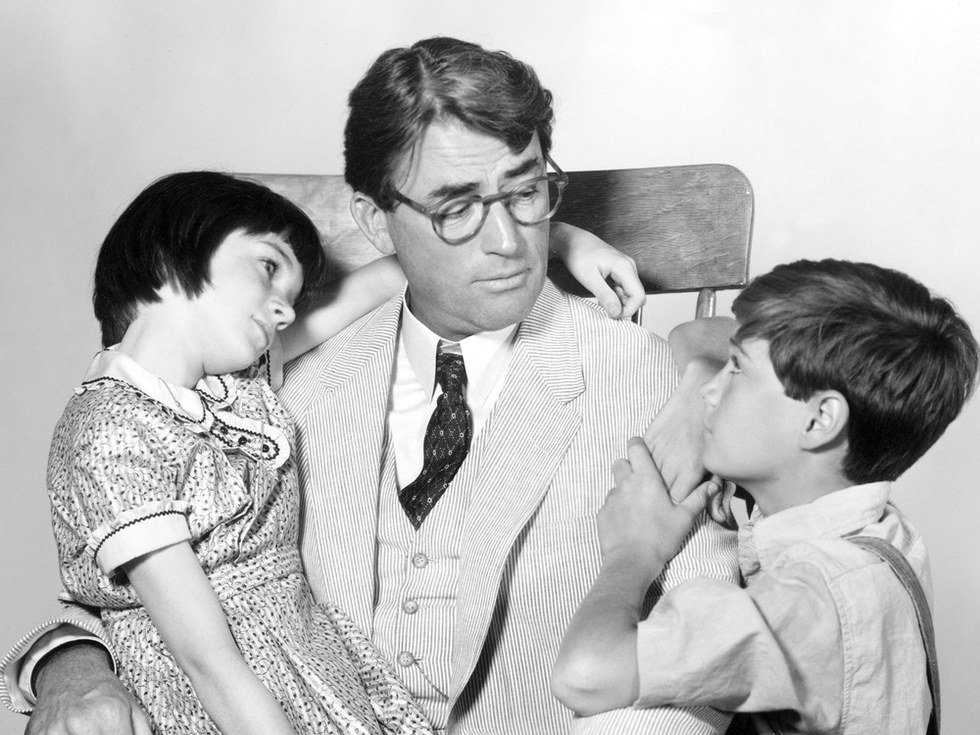
Set during the 1950s, we're finally back in Maycomb, Alabama. With that, we meet an older and wiser Jean Louise Finch as we return to the world of Harper Lee's magnum opus, "To Kill a Mockingbird."
"To Kill a Mockingbird," with its themes on morality, innocence, and an accurate depiction of the Great Depression scares and stresses, is an American classic. "Go Set a Watchman" is Lee's second published novel.
Watchman introduces Jean Louise, her lover Henry Clinton, an older Atticus Finch, and her father's siblings. it involves Jean Louise's return to Maycomb for a week long visit to escape the hustle of New York. Upon her return, she attempts to come to terms with change, as the Maycomb she knew as a child turns out completely different as an adult.
To establish this now: "Watchman" does not take place in the same continuity as it's predecessor - it's a rough draft of the original To Kill a Mockingbird. Thus, there are some major differences and continuity issues. For example, as you may recall: Tom Robinson, the African American man that was accused of rape by a white female in "Mockingbird," was found guilty, jailed, and subsequently killed for attempting to escape at the climax of the novel. In "Watchman," regarding this very same trial, Robinson was acquitted of all charges. "Watchman" makes this subtle mention half-way through the story.
Of course, this isn't bad by any means - just another reason as to why "Watchman" and "Mockingbird" are completely different. Comparisons between the two novels should be kept to a minimum, as both narratives revolve around (arguably) completely different characters. It was this pre-generated hype that enthused me - delving into "Watchman" expecting something on the caliber of "Mockingbird" - which wasn't a very good idea.
"Watchman" still has it's problems: the novel lacks substance. Naturally, as a rough draft, you wouldn't exactly expect clarity, but "Watchman" really seems.. for lack of a better word, pretty boring. It's somewhat sluggish in its delivery; accompanied by a narrative that seems fairly dry and devoid of interest.
Some parts can be rough and hard to digest, as "Watchman" delves into the politics surrounding Maycomb County. There are typos in the narrative, which are pretty obvious to spot. And the plot is fairly confusing at times, switching between the past and the present without properly worded transitions.
Fortunately, the chapters that focus on the past antics of Scout, Jem, and Dill (many of which occur quite frequently) were fun to read.
Despite these faults, "Watchman" can still stand on its own as a novel; it still retains the same prose you would expect from a writer of Lee's caliber (which would've been even better with solid editing), with some enjoyable philosophical and ethical themes to muse over.
"Watchman" executed some things beautifully - other aspects not-so-much.
"Watchman" isn't by any means a bad novel, but, assuming you've read "Mockingbird", you shouldn't go into "Watchman" assuming much of the same. "Watchman" is different in it's own right - it's a good kind of different, and presents a healthy "what-if" to the end of the original "Mockingbird" without infringing on either novel.
















