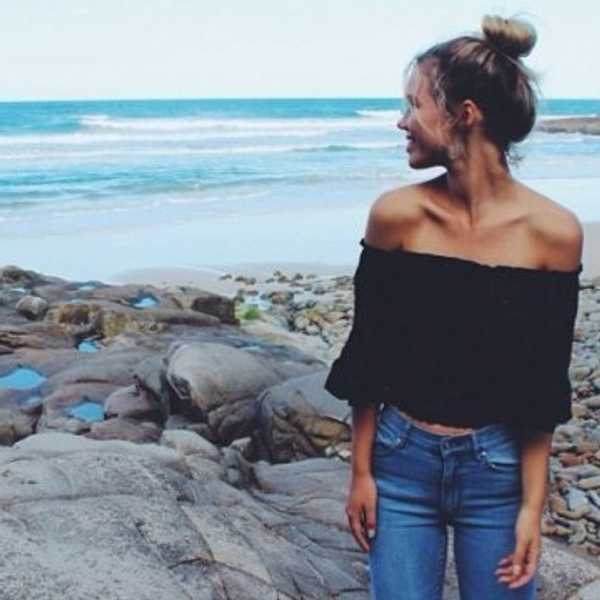
Picture this: a tall, thin girl with effortless blonde beachy waves laying in a bikini in a tropical paradise that you've only seen in pictures. She is Essena O'Neill, an Instagram model and popular vegan lifestyle YouTuber.
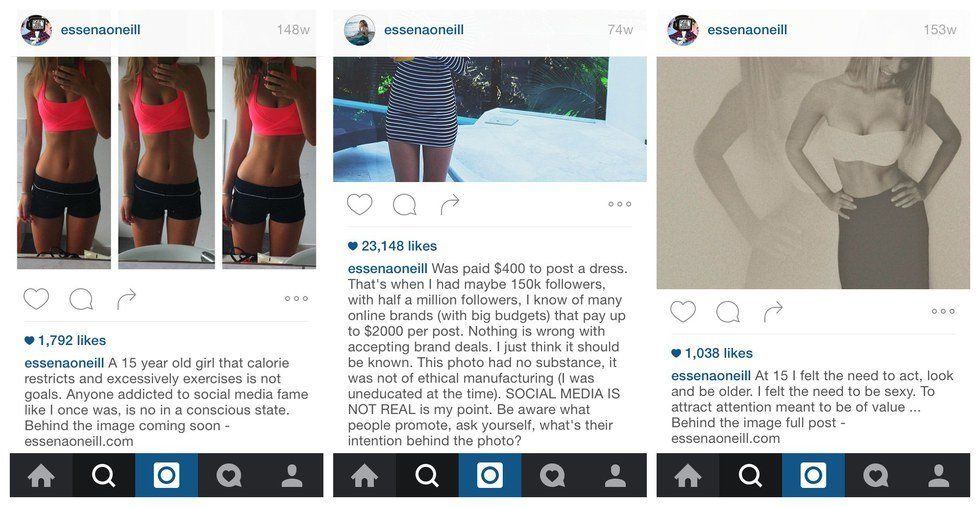
The 19-year-old had over 600,000 followers on Instagram and YouTube before she decided to "quit" social media. In her YouTube videos leading up to her announcement, O'Neill began to open up about the dissatisfaction she felt with social media and was struggling to find a way to authentically promote herself and her brand. In a final act to reveal what she felt was the problem with social media, Essena changed all the captions on her Instagram photos to reveal what was going on behind the scenes in these photographs that people commented things #bodygoals and #inspo.
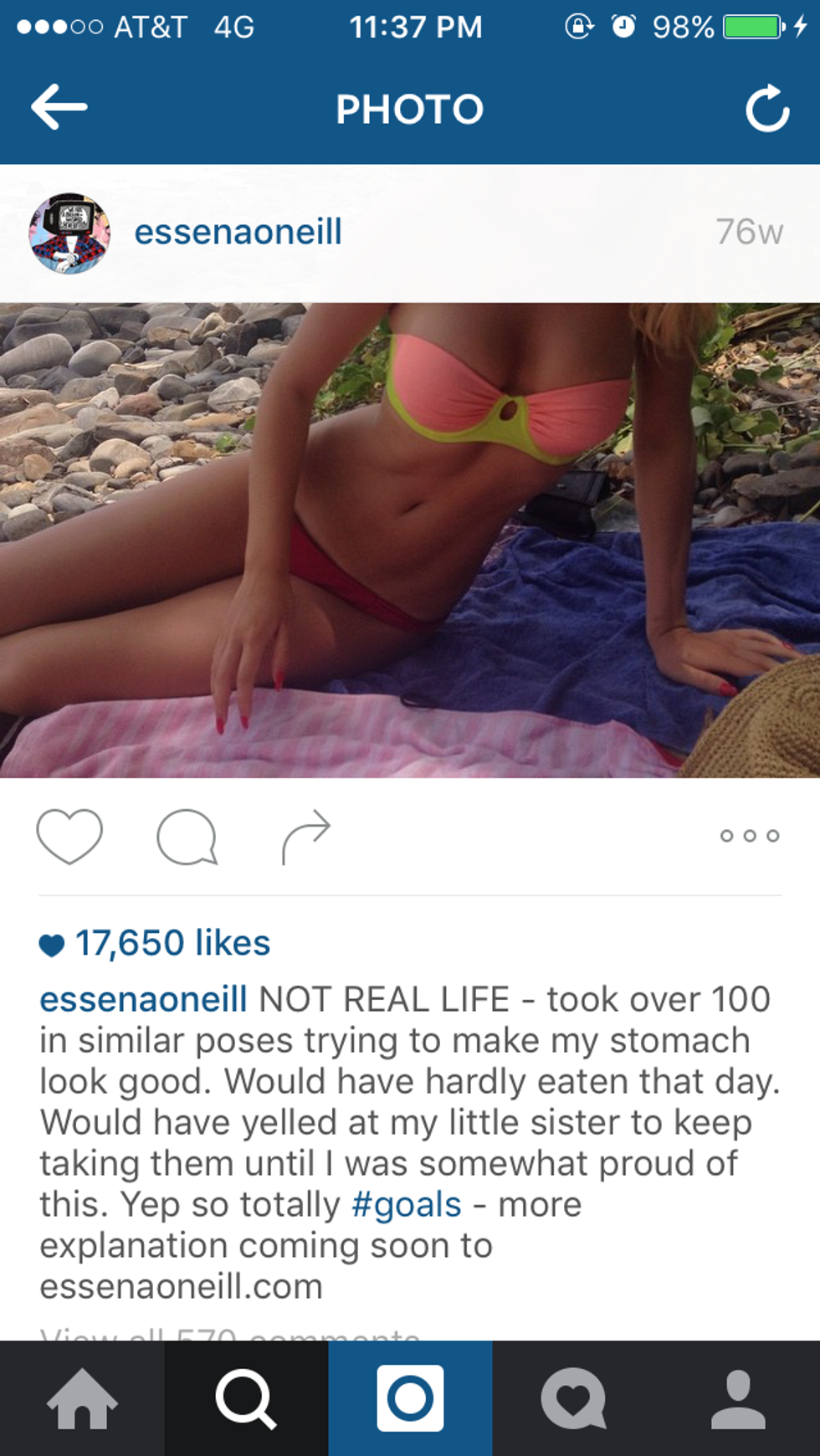
O'Neill has been called everything from inspiring to a fraud. But regardless of whether she is trying to promote her new brand and launch her website, her true-to-life captions remind us of something very important to keep in mind as we scroll through Instagram. Social media is not real life. Whether you follow someone Instagram famous or are just looking through that girl in your biology class with the perfect hair and boyfriend's photos, it is important to keep in mind we all portray ourselves differently on social media than we do in real life.
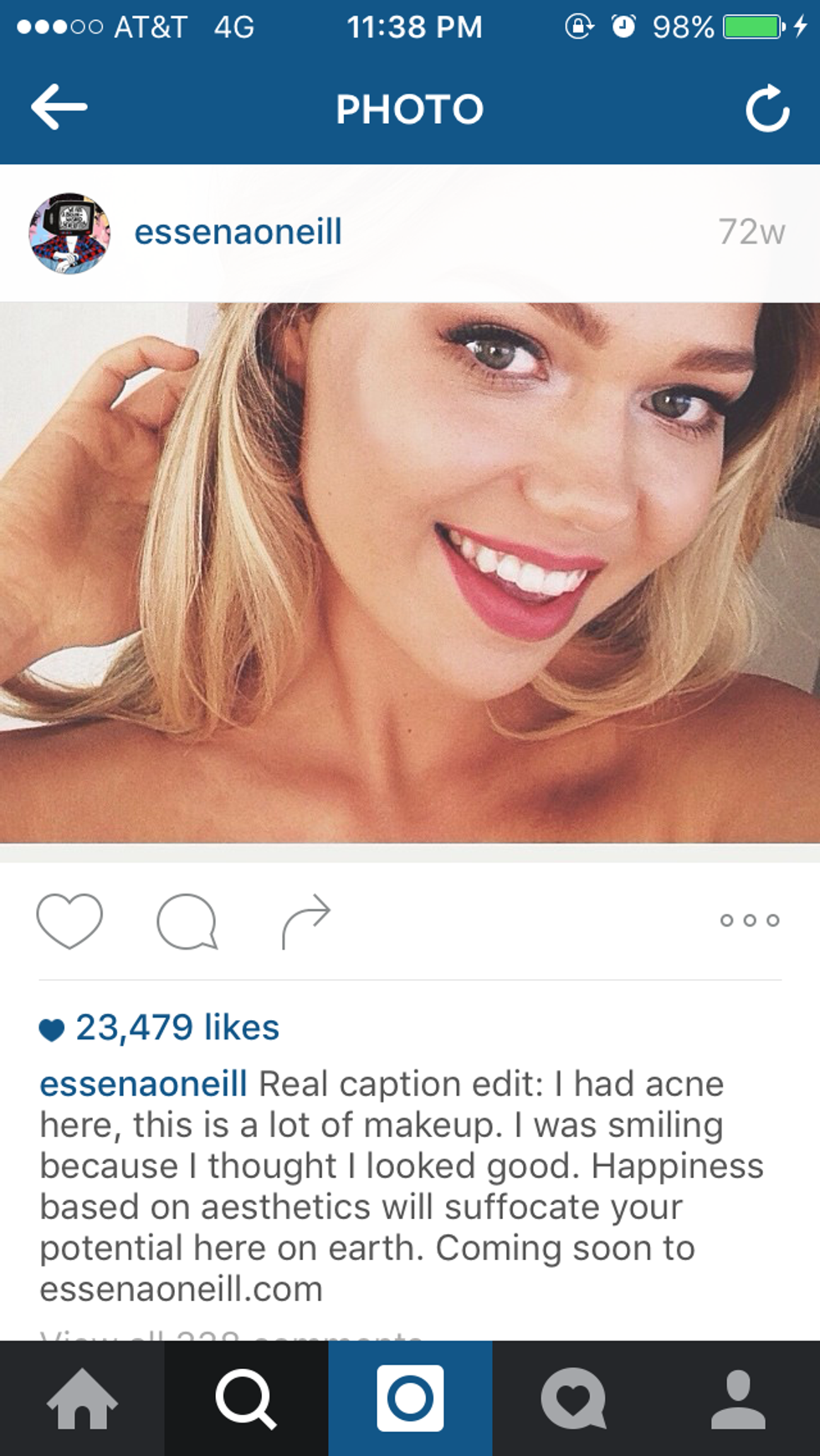
You're going to post the photo of you in a bikini early in the morning after your breakfast of two grapefruits, not after you've eaten an entire Chipotle burrito bowl. You're going to post that photo of you and your group of friends before you go out where your hair and mascara still look perfect, not one after you've taken one too many shots and may or may not have tried dancing on the bar like you're part of the cast of Coyote Ugly.
The moments people share on Instagram and other forms of social media reflect an ideal life. We choose the best photo of ourselves, capturing the happiest moments, put a filter and a clever caption on it. We check our phones, getting notifications of how many people "like" our photo and slowly our self-worth becomes based on the number of likes we get. We look at other people's filtered photos and think why couldn't our life look more like that. We forget that there is a disconnect. That the girl with perfect hair from biology also chose the best photo of herself, put a filter on it and captioned it something witty to reflect her idealized life just like we did.
On Jan. 17, 2014, 19-year-old University of Pennsylvania student Madison Holleran committed suicide. Friends, family and outsiders believed that Madison's Instagram account reflected that of a beautiful, happy and typical freshmen in college. Her Instagram feed confirmed everyone's expectations and left out the picture of a perfectionist struggling to find her place, dealing with her own high expectations and coping with deepening depression. People have always preferred to share only their ideal self and ideal life. Before social media like Facebook and Instagram, people wrote letters and emails sharing only the positive aspects of their lives. Social media hasn't changed the human experience in that way, instead it has changed the amount that we consume images of these ideal lives.
If we are only interacting with these people, our followers, through their social media accounts it is easy to forget they too live lives outside their filtered photographs and happy Facebook statuses. This is not a tirade against social media. Social media allows you to connect with people you might lose touch with normally, it allows you to tag your friends in hilarious memes on Instagram and post that shameless selfie. But if you only feel good about yourself if you reach a certain number of likes and only reach out to your friends by tagging them on Instagram then remember social media isn't real life. Don't let the filtered version of yourself and your friends be the only one that people know.