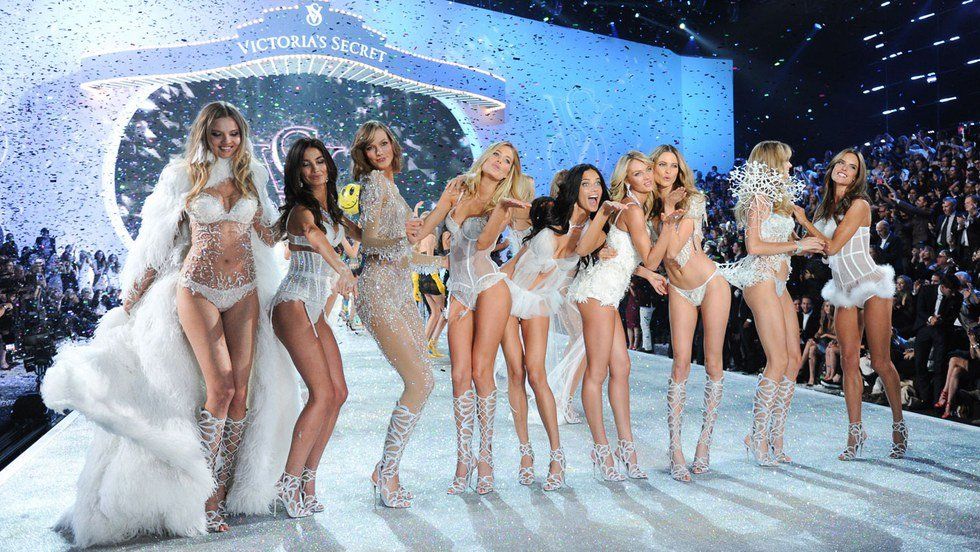
Parading around in lavish lingerie, unthinkably long legged models dominate the runway. Their thin waists and surprisingly large breasts support extravagant costumes, placing them on a high pedestal of perfection. Impressive sets, a high-profile audience, and notable models like Candice Swanepoel, Behati Prinsloo, and Kendall Jenner complete this $22 million production. Every year, Victoria’s Secret angels fall from heaven to rein primetime television and social media. As each model confidently struts down the runway, viewers are glued to their screens. Men drool at sexy eye candy while women mesmerize in awe.
It is remarkable how a lingerie company can epitomize beauty, fitness and seduction in one night. In 2014, extensive praise and media coverage captured 9.23 million viewers. Though the glitz and glam is overwhelming, it is essential to recognize the extreme dedication and self-discipline exhibited by these supermodels. Exercising multiple times a day on a strict nutrition routine, the Victoria’s Secret Fashion Show features the most accomplished models. In fact, the majority of the women consider their participation in the show as the pinnacle of their career. Although Victoria’s Secret has a remarkable collection of models, they receive backlash for the lack of representation of diverse body types.
For a company that built its fortune hoisting up breasts and covering backsides, Victoria’s Secret at times seems to focus more on the women wearing their garments rather than their product. Though this is a renowned advertising tactic, the company has received heavy criticism for the minimal depiction of the realistic bodies. Their distorted body image is deep rooted within the brand’s extremely successful marketing weapon – The Victoria’s Secret Angels. Iconic for their impressive roster of flawlessly fit models, Victoria’s Secret utilizes their label to intrigue their consumer. Substantial billboards, sexual commercials, and magazine ads flood various outlets of media. Studying every contour, curve, and detail of these advertisements, women often marvel the secret to the model’s impeccable figures.
Routinely, respected outlets like Vogue, Cosmopolitan, or The Coveteur release articles highlighting tips from the Victoria’s Secret Angels to appease their curious female audience. “Candice Swanepoel’s Bikini Body Workout”, “A Week with Alessanda Ambrosio: How She Prepares for a Show”, “Gigi Hadid’s Favorite Low-Fat Snacks”. Often, the models hold their intense workouts and “lucky” genes responsible for their thin toned figures. Due to the fact that the average female does not reflect the cookie cutter Victoria’s Secret Angel’s body, they consequently compare themselves to the unobtainable bodies. Through various trials of fad diets and workouts, the female audience persistently searches for the secret ingredient to the perfect frame. Though, what is Victoria’s Secret?
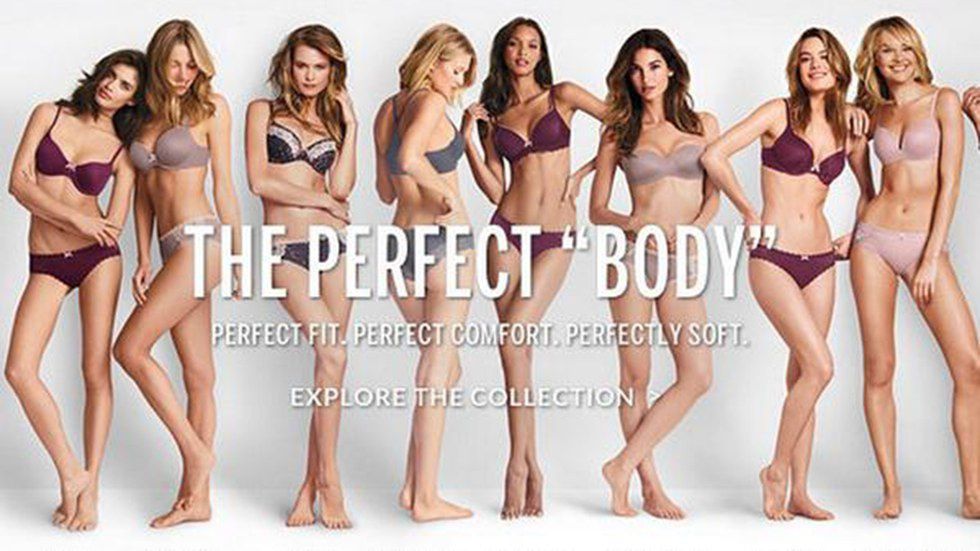
In 2014, Victoria’s Secret faced major backlash for “The Perfect Body” campaign. Illustrating a row of ten tall, lean and busty models, there was an obvious lack of body-type diversity. Many found the ad insulting, implying that women who did not exhibit the model’s exact measurements have “imperfect bodies”. Although the company did make a public apology, the billboards and posters fueled female insecurities. Comparing themselves to the models, the female customer reflects her natural figure to the unobtainable Victoria Secret Angel’s.
Though it is fair to confront the industry as a source of female insecurities, it is essential to separate the Victoria’s Secret Angel unobtainable body from personal expectations. Self-confidence is crucial to overlook the advertisements that unfortunately communicate unhealthy images. Acquiring a secure body image and respect can cease the dissatisfaction from comparing oneself to others. So ladies, quick overthinking this desired attractive appearance in attempt to decrypt Victoria’s Secret.