
Disclaimer: In this article, the term rape is used in context of a cis woman receiving unwanted sexual acts from a cis man. This by no means implies that other individuals are not victims of sexual violence and assault.
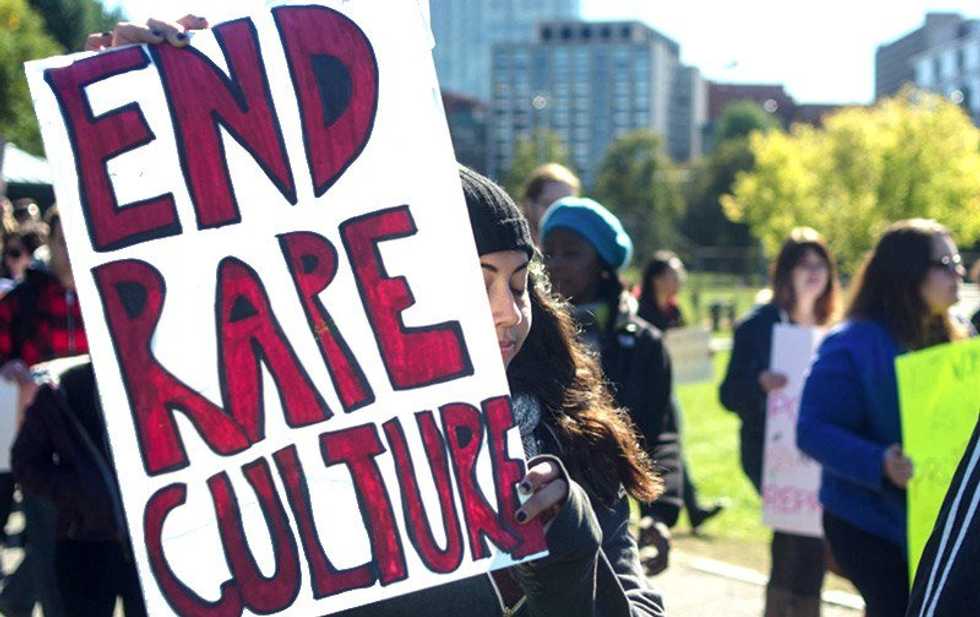
Within the last week or two, chances are, you've probably seen some news about the recent verdict concerning the sexual assault case at Stanford University. Brock Turner, the 20 year old student convicted of sexually assaulting an unconscious woman, is facing only a short time of six months behind bars. On top of that, his father also made an outrageous comment about the assault saying that this punishment was "a steep price to pay for 20 minutes of action." All of this combined is a perfect example of what rape culture looks like in our society. You've probably heard of the term before. You may have even heard people defending it. But the main question I'm going to focus on today is what exactly is rape culture? And how does it look in every day life?
An article I recently read stated that "rape culture exists because we don't believe it does." This seemingly paradoxical statement actually makes sense once you think about it. Simply put, rape culture is the trivialization and normalization of sexual assault and violence in our society where the people do not take the heinous crime as seriously as they should. This can be seen in numerous ways in the U.S. Asking the victim about the clothes she was wearing or making rape jokes are common examples in which sexual assault and violence are taken lightly in today's society. This also includes song lyrics and media representations that promote and glamorize sexual violence. Robin Thicke's "Blurred Lines" received a lot of controversial reviews and criticism in 2013 where throughout the entire video, he is frustrated about a girl's indecisiveness about consent. The iconic scene at the stairwell where Scarlett refuses Rhett from Gone with the Wind is also another example where a woman's resistance to sexual advances is seen as "romantic" and "desirable." Every single one of these things is evidence that rape culture is so internalized into our everyday life, we fail to realize it. The objectification of women in advertisements? Normal. Girls being slut shamed for wearing a short skirt? That's fine. Someone accuses another of rape. Are you sure you're not confused hon? Once you're aware of it, it's everywhere.
So how can you help combat rape culture?
One thing you can do is to spread awareness in our society, and this can be as little as speaking out when someone makes a rape joke (because face it, rape is not funny) or not rushing to victim blaming. Although these acts may seem small and unimportant, believe it or not, it will make a difference. Because every single time you laugh at a rape joke or trivialize a sexual assault, it's sending the message to someone that rape is okay. And even acceptable. Which ends up fueling the dangerous culture we live in today.
Other ways you could help is getting involved in a local community or college campus. Gain knowledge on what counts as consent and don't be a bystander when you see something that makes you uncomfortable, whether this may be a friend receiving unwanted attention at a party or witnessing someone slipping something in a drink. Speak up.
And one step at a time, we can help end rape culture. Together.
"We need to notice this stuff, get outraged, and share our outrage with others. Staying aware of rape culture is painful work, but we can't interrupt the culture of violence unless we are willing to see it for what it is." --Alana Prochuck