The Dakota Access Pipeline is no newcomer to controversy, as from the moment that it was proposed it has been swamped in allegations of violations to the rights of landowners and big oil companies cutting corners in the pursuit of the highest profit margin. The pipeline that was proposed to stretch 1,134 miles from North Dakota to Illinois, is being constructed to carry nearly 470,000 barrels of crude oil a day. This is all being done in an effort to lessen the United States dependence on foreign oil and to promote job growth and development along the pipeline itself. According to the Energy Transfer website here, The Dakota Access Pipeline is a $3.7 billion investment that will create 8,000 to 12,000 local jobs during construction. This investment would also go towards millions in state and local revenues during the construction phase and an estimated $156 million in sales and income taxes. The pipeline will generate an estimated $55-74 million in property taxes to the states of ND, SD, IA, and IL.
So with all these incredible and tangible awards, what is the problem?
The construction itself has become an issue both environmentally and culturally for the members of the Standing Rock Sioux Tribe. The tribe’s basic argument, which it made to a federal judge, is that regulators at the Army Corps of Engineers didn’t give it enough of a chance to assess the pipeline’s impact on cultural sites and the possible effects of a spill along the line. The tribe above all else, argues not only their right to own this land but the right to protect this land. They fear that the safety measure put in place are no longer effective enough to prevent any serious damage to the land surrounding the pipeline. Others raise concern, among other things, about the possibility of leaks. According to CNN, 30 environmental groups, including the Sierra Club and Greenpeace, have slammed the pipeline project, calling it "yet another example of an oil pipeline project being permitted without public engagement or sufficient environmental review.”
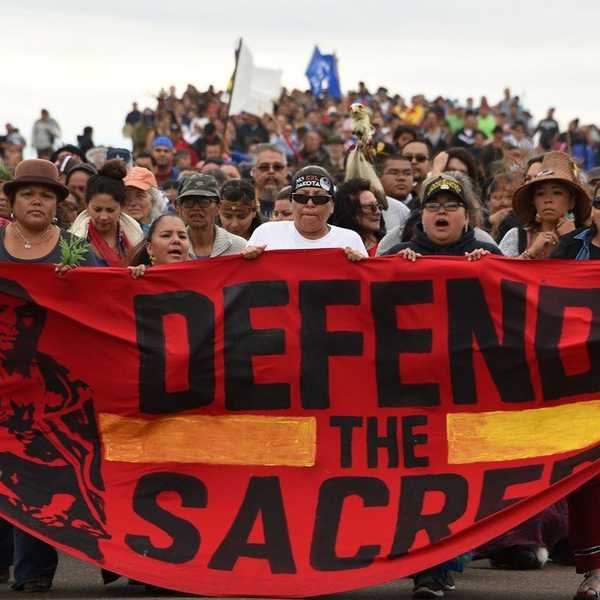
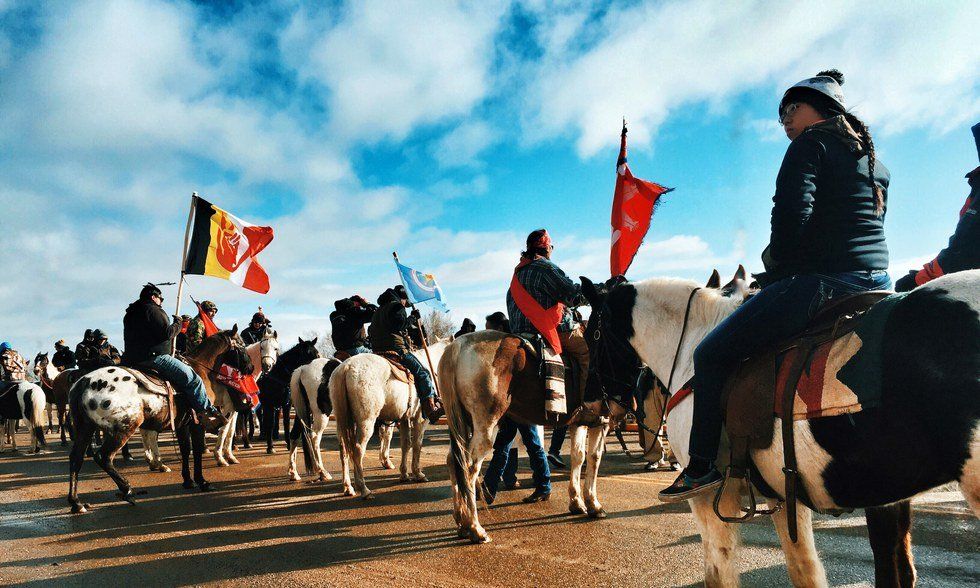
This has led to the largest peaceful protest in the last hundred years, as tribes from all across the Northwest have gathered to argue against the companies disregard for their ancestral claims to the land. More than 1,500 people from 150 tribes and their supporters from around the country have gathered at the confluence of the Cannonball and Missouri rivers, staging a nonviolent protest at what they call a spirit camp.
Hawste Wakiyan Wicasa, a Native American participating in the protest, went on record with BBC.org and stated that he believes the Native American standoff with Dakota Access is the last Great Indian War. He claimed: "This is the first time the seven bands of the Sioux have come together since Little Bighorn, Now, we have no weapons, only prayers…We are here for what our ancestors fought and died for. We have endured 250 years of betrayal by the white man."
This is where companies have come under fire, for when the community is sacrificed for a profit, people take notice.
The problem with arguing anything from a sustainability point of view is making people recognize that there is a problem actually occurring. All of the numbers that I recorded at the beginning of the article sound great and worth the risk when the company is doing everything they can to hide the fact that there is a risk. To hide the fact that at a pipeline carrying 470,000 barrels of oil every day is going to be traveling underneath the Missouri River and even the smallest of spills or leaks could be detrimental to not only the land but the people that depend on that water as the main supply.
This is not the case of a one-time protest or a one-time event that these companies can simply sweep under the rug as soon as the media moves onto the next story. This is an ongoing fight with people still protesting daily against the construction and fighting for their lives. The fight is a long one, full of variables and tricky legislative maneuvering, and that is why we can not let it be shuffled onto a back burner. Big companies have to know that we as people will not stand idly by when they are sacrificing the livelihood of a nation and the well-being of the Earth for a bottom line.
Through continuous peaceful protest, even when facing violent opposition, the Standing Rock Sioux Tribe has made their case known, and just because the news does not cover this story every day does not mean that is should be forgotten. It is the job of the people to make it known that they refuse to be bowled over by companies who have no concern for the land or their own well-being. It is their job to make the world recognize exactly what is happening, and they certainly have. Citing the concerns raised in the lawsuit brought by Standing Rock Sioux Tribe, a joint statement by the Department of Justice, Department of the Army and the Department of the Interior said in part: “This case has highlighted the need for a serious discussion on whether there should be nationwide reform with respect to considering tribes’ views on these types of infrastructure projects."
Statements like these come from when people stand up for what they believe in, even if that means they stand against their own country. Statements like these come from when you force yourself to be listened to, and you force yourself to be understood.
The issue is making the invisible, visible, both in terms of consequences and benefits environmentally. Because in a society based so much on “the now” and driven by the need for self-gratification, it is hard to convince them that pursuing an idea that may be slightly more inconvenient is worth it. It is difficult to look beyond our own lives and see the world around us, but that is what we must do. We must recognize the impact that are actions have or possibly could have, and we must actively work to diminish them as best we can.
Most importantly, we have to care.
We have to care, even when the media doesn't anymore. We have to care about the people protesting this pipeline for the sake of their own lives. We have to care about the habitats that could be destroyed. We have to care that this Earth is not ours to destroy, and we have to work every single day to leave our planet better than we found it. We have to be better than who we are now.
"UNLESS someone like you cares a whole awful lot, nothing is going to get better. It's not. " - Dr. Seuss, The Lorax
For continuous updates on the protest and the construction of the pipeline, visit earthjustice.org.