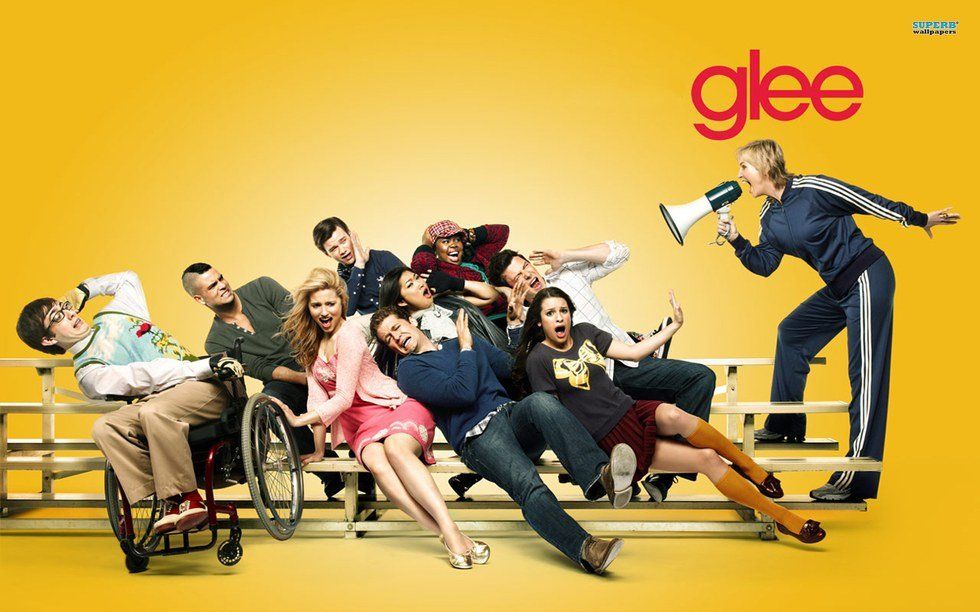
When my family saw the first "Glee" commercial come out, it was 2009 and I was 12 years old. We’re a musical family, so naturally, we were really excited for this new show about a high school show choir. I wasn’t in high school yet, so watching a show about high schoolers seemed really cool. Our family watched the first few seasons devotedly, always catching the new episodes on TV when they first aired, but eventually, we lost interest and moved on to the next show. A few months ago, I got a Netflix account of my own for the first time and decided to re-watch "Glee" to see if it still held up after so much time had passed since I’d watched an episode. But after re-watching only the first few episodes as an adult, I was surprised and kind of horrified to hear some of the things said in the show. Racist and homophobic slurs were thrown around like jokes by characters we were supposed to like or relate to, and it made me really uncomfortable to think that I was watching all this happen as a 12 year old and just accepting it as normal (or not even noticing it at all). I’m trying to write this article without a lens tainted with the death of the male lead actor Cory Monteith, but a tragedy like that shouldn’t negate the seriousness of what this show was feeding to its viewers.
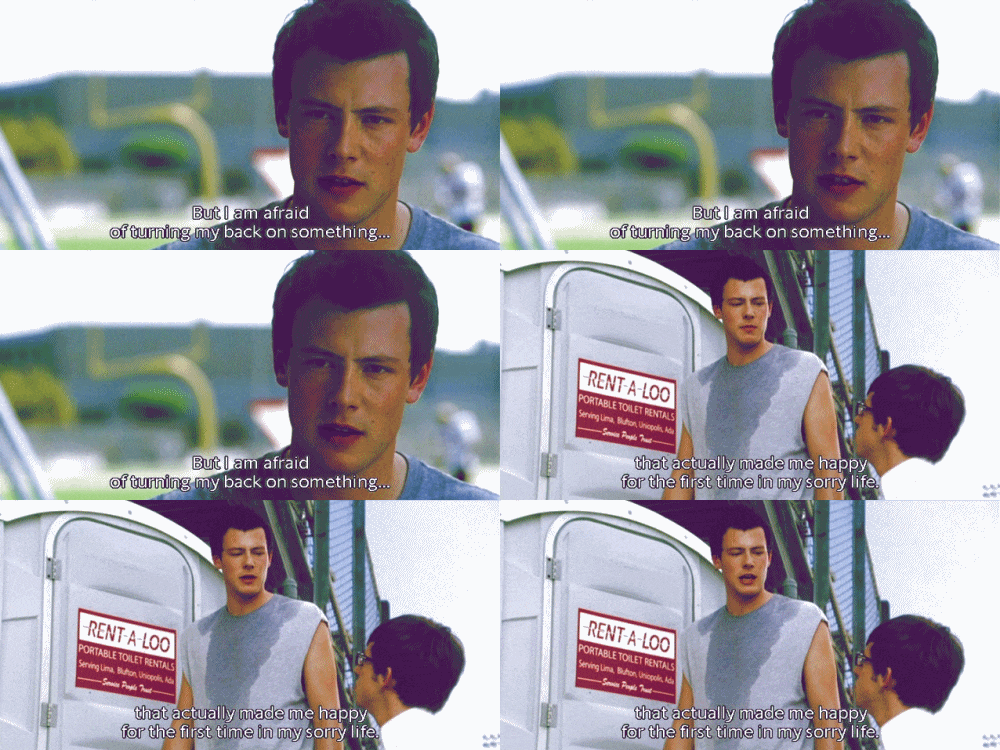
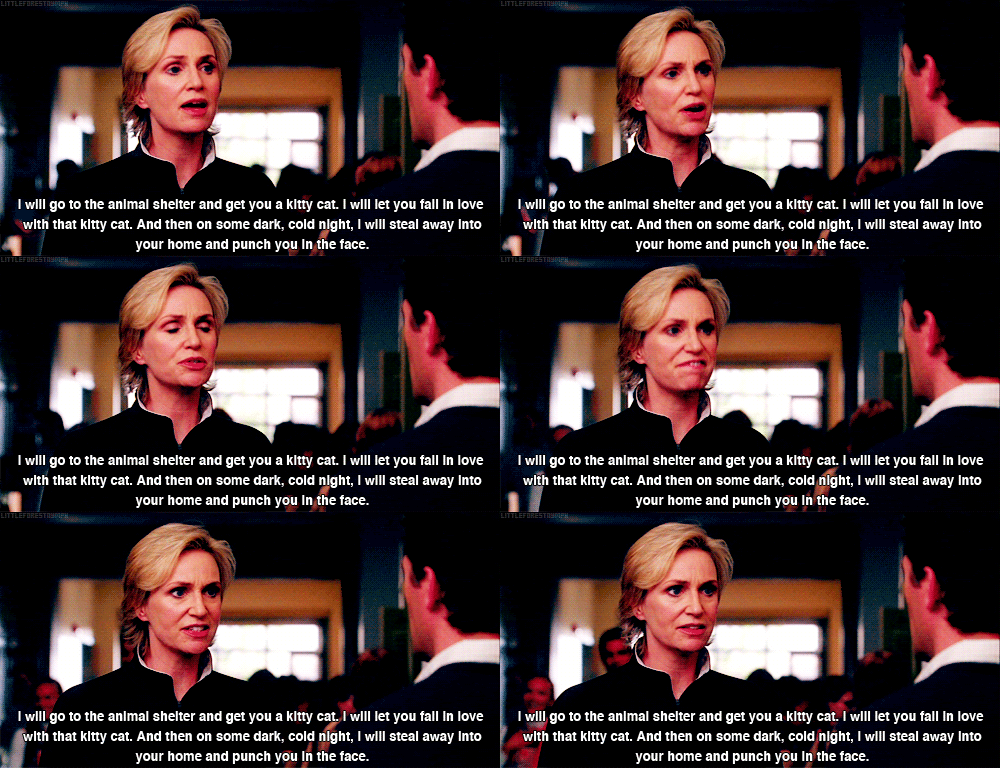
The show Glee was created by three white men: Ian Brennan, Brad Falchuk, and Ryan Murphy. They’ve worked together on other shows more recently like "American Horror Story" and "Scream Queens." These shows are known for being gender, sexuality, and race inclusive with both their actors and their characters, but with a closer look at Glee, it turns out that this show is not as PC as you might have thought. Some of the insults that are thrown around off the bat by some of the main characters we’re supposed to like are as such: “ankle-grabber”, “Lance Bass” (as a reference to a character’s alleged homosexuality), and “Amazonian black women” (a character asks if that’s what he’s supposed to dance like when he’s asked to dance to a Beyonce song). These are pretty offensive, but said by characters we’re supposed to grow to like. Both the principal of the high school where the Glee club takes place and the cheerleading coach Sue Sylvester call one of the students in a wheelchair a “cripple” and “only half a person”. Sue, who is revealed to have a sister with Down Syndrome, also calls another character with severe OCD several degrading nicknames and proceeds to make fun of her for most of the first season. While Sue’s not a character we’re supposed to like, we are supposed to think she’s funny and even endearing at times.
In addition, Mercedes (another Glee club member) says that their group looks like they “just stepped off the short bus” in reference to the group’s fashion choices and Kurt (the “token gay character”) mentions several times that their group is better than the kids in Special Ed. Even Rachel, the show’s leading female character, makes several homophobic comments throughout the first season, though she also says she’s not homophobic because she has two gay dads. Along with the racist/homophobic comments, the show’s characters make lots of references to sex and sexual euphemisms that went right over my head as a 12 year old but now watching it again seem gratuitous and extreme for a show aimed at a younger audience and rated TV-PG. I’ve never before seen a TV show rated TV-PG that has a teacher tell a student that not having a gag reflex will one day “turn out to be a gift” and in the first few episodes shows a teenage boy several times trying (and failing) not to have an orgasm by picturing the time he hit a mailman with his car. I’m usually not a person to shy away from those kinds of jokes in a show, but in this show, it shocked me.