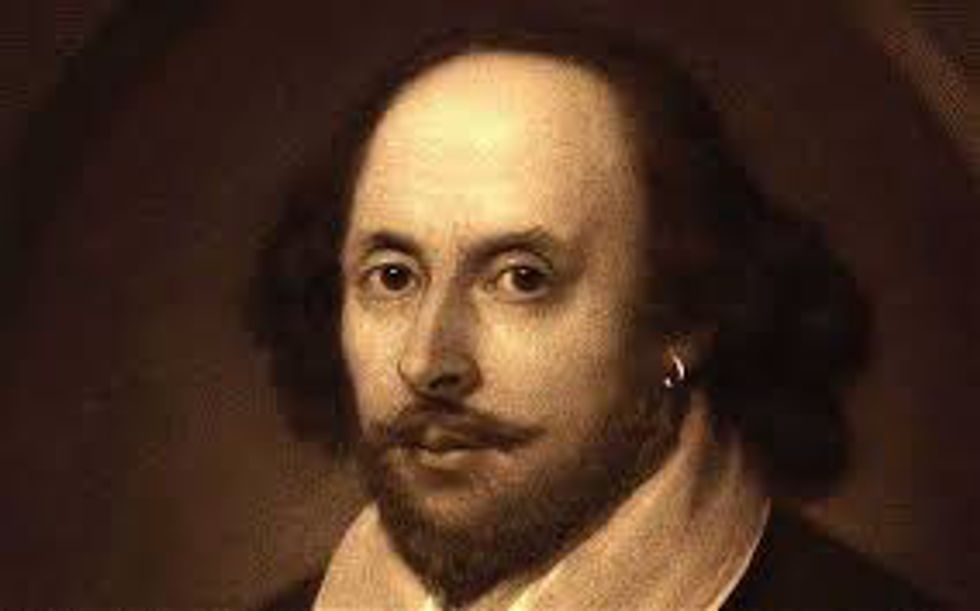
“Parting is such sweet sorrow”, “What’s in a name”, “My only love sprung from my only hate,” “These violent delights have violent ends”.
If one paid a fraction of attention in their freshman year of high school, they’d know that these quotes stem from one of William Shakespeare’s most beloved plays, "Romeo and Juliet." The story is one told since the beginning of time, and its influence incomparable. There have been movie adaptations, ballets, thesis articles, and even anime interpretations (don’t ask how I know, research has its risks). The name Romeo has even become synonymous with a man who is sorely infatuated, and the tragedy of lovers torn apart from society is now a cliche among movie critics.
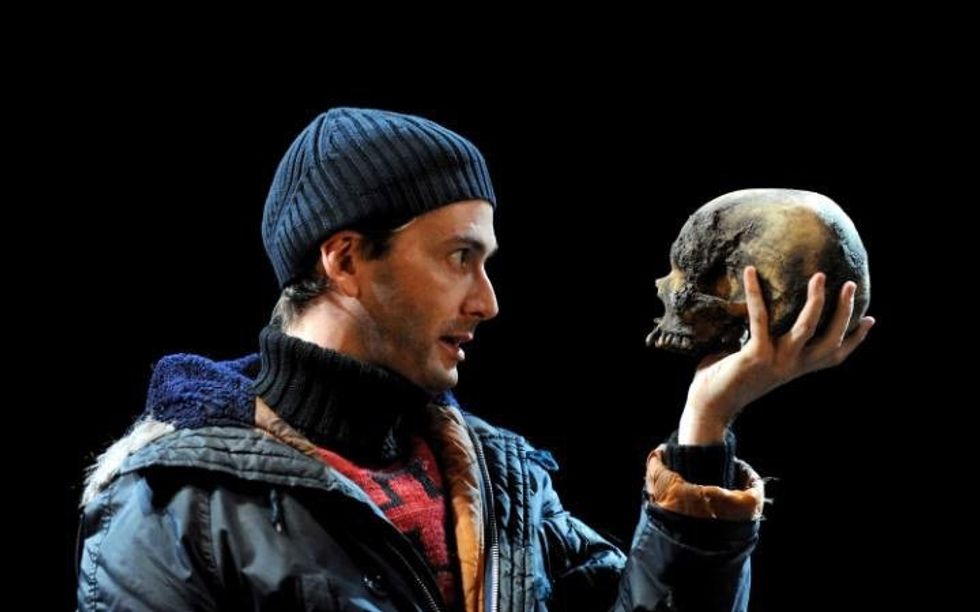
Of course, given the title of this article, "Romeo and Juliet," despite being one of Shakespeare’s most popular plays, is not the topic of this article. That honor goes to the cynical based and mortality questioning "The Tragedy of Hamlet, Prince of Denmark." Like the romantic tragedy, the story of "Hamlet" is incredibly well known; a prince finds that a family member has killed his father, and must seek vengeance so that things can be set right.
Obviously, as is the Shakespearean tragedy, nothing is solved easily and the characters suffer horrible consequences...so what makes this play the one of the most popular, if not, the most popular of Shakespeare’s tragedies?
Like I just said, the tragedies follow a certain plotline, and never really end with a happy ending; "Hamlet" isn’t the only tragedy written by Shakespeare, and many believe that it is the least compelling. "Macbeth" has the questioning of fate and a protagonist whose actions are unbelievably cruel, "Othello" has the deconstruction of a beloved man into a murderer through a simple lie, "King Lear" has an emotional core as it deals with a dysfunctional family, and "Antony and Cleopatra" has a romance that throughout the entire play, is doomed.
These aspects all make a good tragedy, but "Hamlet" stands out, and has continued to stand out to this day as being one of the most complex, philosophical, and intriguing Shakespearean tragedies.
Saddle in, this is Shakespearean Study: "Hamlet."
THE THRONE BELONGS TO WHO?
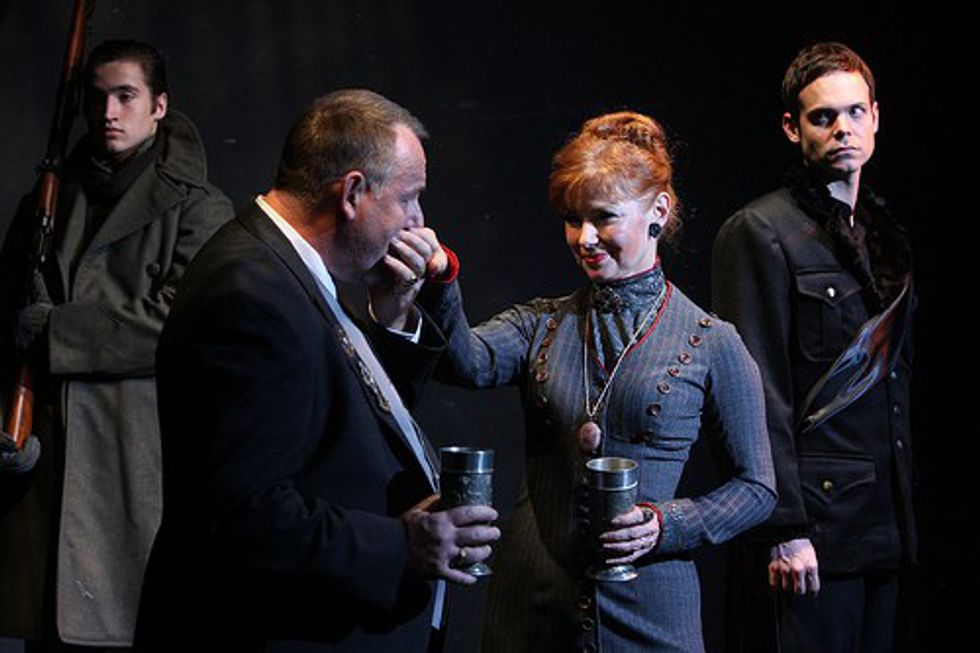
"Hamlet’s" themes are a bit difficult to decipher since there is so much going on, but there can be a set agreement that everything is based upon divine justice, a belief that many monarchs held during Shakespeare’s time--nothing could be set right without the correct king on the throne--and one that has appeared in several other Shakespearean plays, most notably, "Macbeth." However, where Malcolm succeeds the incorrect king Macbeth, Hamlet fails.
At the same time, though, Hamlet is not about preserving the throne; Old King Hamlet has no interest in seeing his son rule, but simply wants revenge on his murderer.
Even then, there is some confusion; with such a strong held belief that things can only get better with the true king on the throne, why does "Hamlet" seem to throw that away?
Simple, because "Hamlet"’ is a revenge, not legacy, story. Everything Hamlet does is not for the sake of Denmark, but for the ghost of his father, who really only wants to see Claudius overthrown and have his own spirit rest. This change of theme creates a more powerful story, especially with the knowledge coming in, that Hamlet will ultimately fail in preserving the throne.
The nation is doomed as soon as Hamlet realizes that Fortinbras is ready to attack for his family’s honor, a decision that the prince of Denmark doesn’t take too much time thinking about. In fact, most of his thoughts go to how impulsive Fortinbras is, and that his reasons (though not the wisest) don’t matter especially when dealing with one’s honor, and unlike Fortinbras, Hamlet spends more time thinking about it rather than acting it all out, which brings us to the second study.
HAMLET THE ENIGMA
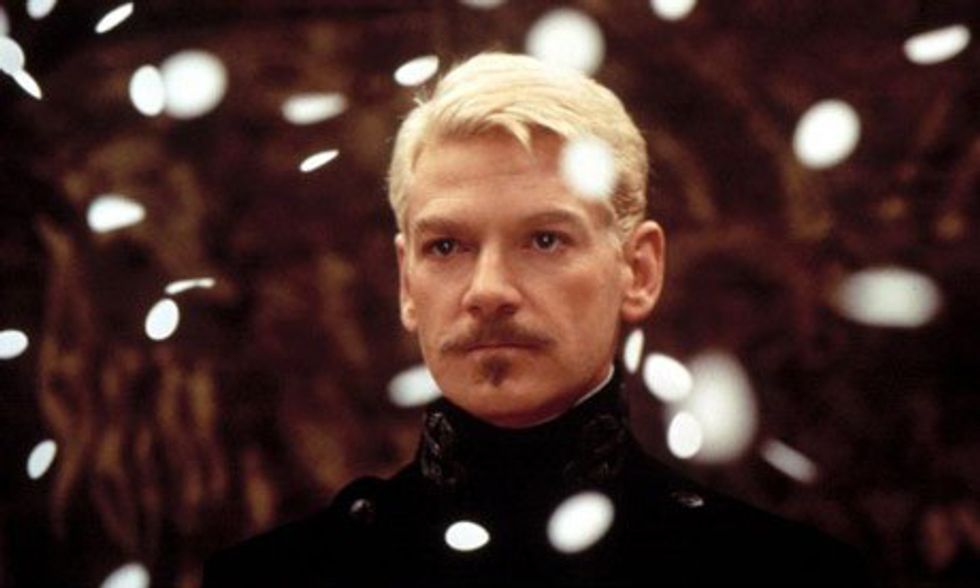
The reason why ‘Hamlet’ is so different from other tragedies, is the fact that there is little action. Yes, there is the climactic scene at the ending where everything comes full circle and death upon death is seen, but before it, most of the driving points are based on questions. Can we trust this ghost? Is a ghost aware of its demise or is it deluding? Are there always witnesses in the scene of a murder? Can behavior be a give away to one’s soul? What do we know about the afterlife? All questions asked in ‘Hamlet’, and most of them asked by Hamlet himself.
The character is enigmatic in the sense that most of what he does are think and question; incredibly contemplative, Hamlet is drawn to asking difficult questions and some almost impossible to answer without a doubt. He spends most of his time wondering about the afterlife, the fate of one’s body, suicide--the list continues, and many believe that Hamlet’s indecisiveness leads to his failure of keeping his head where it needs to be. However, that isn’t to say that he is passive, if anything, he acts rashly in many scenes. His decision to act as if he is losing his mind is not thought out carefully, and while under the act, seems to hurt those who care about him; Gertrude is verbally abused by him and Ophelia’s emotions are tossed around carelessly. He never waits to see who is behind the curtain when speaking to his mother and kills Polonius when thinking that it is Claudius. But what makes Hamlet such a different character from all the rest, is that he seems to be in the wrong place.
Throughout the play, he constantly makes references to Greco-Roman stories and myths, comparing his father and Claudius to Hyperion (a titan) and a satyr, respectively. Alongside this comparison, he also mentions Niobe, Hecuba, and the Nemean Lion, all characters from the classics. Hamlet is also fascinated with suicide, as the Greeks and Romans were, and unlike those in the Catholic religion. Suicide, to them, was seen as a way to create distance between God and go to Hell, but Hamlet doesn’t give it much regard. He questions the afterlife, but for the most part, doesn’t feel any guilt for expressing his questions and curiosity. Simply put, Hamlet is a classics character trapped in a Catholic world.
THE LION KING IS NOT HAMLET (and other adaptations)
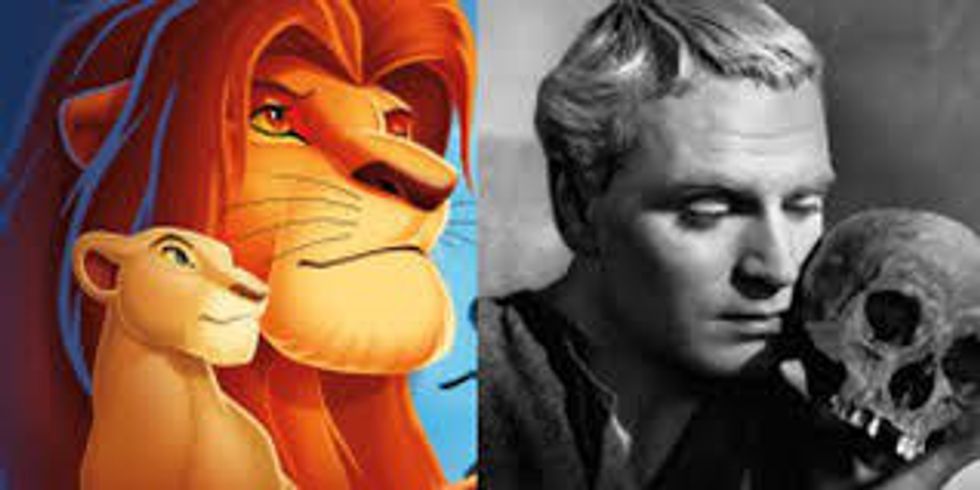
This portion may come as a surprise. From a young age, probably when one was old enough to understand the basic story of ‘Hamlet’, one was told that Disney’s The Lion King was directly based upon it, and yes there are some aspects: a young prince is forced into exile when he realizes that a family member has committed fratricide and regicide and later returns to seek vengeance.
Of course, there are some stark differences, Scar doesn’t kill Sarabi, the lions serving as Fortinbras, Horatio and Laertes are not seen, Simba doesn’t pretend to lose his mind, Timon and Pumbaa aren’t killed in Simba’s place, Nala doesn’t die, and most importantly, Simba not only lives but secures an heir to Pride Rock. These differences can be seen as simple changes to make the movie easier and lighter for children, but even then, the two main characters are nothing alike.
Simba is not contemplative like Hamlet is, rather, he enjoys himself more and readily welcomes the promise of a carefree life. With this characteristic, can it be possible that Simba is more like Hal from "Henry IV?" Hal too is an heir to the throne, but instead, he spends his time with those lower than his status and has fun, and when his father reprimands him for it, Hal shows his father that he is ready and successfully continues the dynasty. This follows Simba’s character growth far better than Hamlet’s, who doesn’t seem to want to continue the lineage, but just seek vengeance for his father.
But because how popular the Shakespearean are, it’s possible that "The Lion King" takes many aspects from all the plays: the plot could be close to "Hamlet," Simba is similar to Hal, Scar is Macbethian, Timon and Pumbaa are like Falstaff—the list goes on and on!
From a less kid friendly point of view, "Hamlet" is (as of 2013) the most adapted Shakespearean play, and it’s very easy to see why! The story is complex, and characters diverse and philosophical, the ending infamous, and the speeches, some of the best. Many have adapted it, and all in different ways; stage productions, heavily cut movie versions, farces and even a version with none of the dialogue cut out...that being Kenneth Branagh’s "Hamlet," the adaptation famously known for not only having some of the best cinematography, but also being the only "Hamlet" with every piece of dialogue kept in, and yes, that does mean the movie is around four hours long.
"Hamlet" is one of the most complex Shakespearean plays, and with a titular character who questions life and death, it’s easy to see why so many brooding high schoolers enjoy it so much. Of course, in a far more serious tone, Shakespeare is important to our society today, and dismissing his writings as passé is a poorly made belief. So many modern works are inspired by his characters, plots, speeches and tropes, and to dismiss his works merely because of its age is to dismiss modern writing as it is today. Which is why Shakespearean Study will analyze his works as well as his ideologies and the controversies surrounding him, as a form of continuing the legacy he gave us.