Ah Pokémon Go, the mobile game that quickly claimed the top spot in the app store and easily surpassed popular applications such as Twitter and Candy Crush. The collaboration between the eminent Pokémon Company and Niantic Inc. was a huge success as it resulted in the product that enabled its users to accomplish their lifelong goals of catching Pokémon in the real world. As a matter of fact, the game even attracted people who have never played a Pokémon game before, thus introducing new Pokemon trainers into the community! Quite amazingly, Niantic Inc. and the Pokemon Company have finally brought the dreams of many Pokémon trainers -- that seemed virtually impossible several years back-- to fruition. However, despite this godsend, we, the users, are frankly never satisfied. Human nature and curiosity are gifts that allow us to not only inquire about how to play the game--which is fairly simple with its basic mechanics -- but also how the game is made. To make this dream into a reality, Niantic Inc. combined a wide array of technologies, but the most notable three are Data Analysis, the Global Positioning System (GPS), and Augmented Reality.
Why is Data Analysis so Important?
Data Analysis is the answer to the question most of you are probably wondering: “how does the game know what is a Pokéstop/Gym and what isn’t?” The game only places Pokéstops and Gyms at historically significant locations such as murals, landmarks, sculptures, and parks, so if you are looking for a Pokéstop or Gym, it’d be wise to stick to these areas. Let’s be honest, most of us probably didn’t know the name of that local mural or park before the game pointed it out (that is a fact for me). It is remarkable to think that Pokémon Go has truly shone light on the places that appeared insignificant to us in the past, and consequently made us realize their significance rather than make us more ignorant to their existence. However, back to the matter at hand, how does the game even differentiate between a Pokéstop and a Gym if they can be found at the same type of places? The truth is that before Pokémon Go was even developed, Niantic Inc. had already analyzed geographical data, so incorporating it into Pokémon Go was not as much of a huge ordeal as it seemed. This is because Niantic Inc.’s previous successful mobile game, Ingress, also made use of geographical data. After analyzing the data, Niantic Inc. created a program to transform all the registered locations into portals, which are locations that can benefit Ingress players who approach them. So in the context of Pokémon Go, because Niantic Inc. had already analyzed geographical data for Ingress, the company only needed to complete the remaining step which was writing a separate program converting the analyzed data into Pokéstops/Gyms. The ultimate factor that decided the difference between Pokéstops and Pokémon Gyms was the popularity of the Ingress portals; the portals that were most often visited by players became Gyms, and those that were less popular became Pokéstops.
How does Pokémon Go make use of the GPS?
The GPS functions via a system of satellites orbiting Earth, and your phone will pick up signals from satellites that are relatively close to you, which subsequently allows it to pinpoint your exact location. This aspect of the mobile game is probably the most important of the three, as the GPS constantly tracks your location to see if you are nearby any Pokémon or Pokéstops. So in reference to catching Pokémon, if you're looking for a nice water type Pokémon, your best bet would be to head over to a river or ocean. Also, how does the game know how many kilometers you’ve traveled to hatch a certain egg? Thank the GPS for that too! By frequently monitoring your location, the GPS can easily track the distance you travel, thus making it essential to the egg hatching process.
What is the role of Augmented Reality in Pokémon Go?
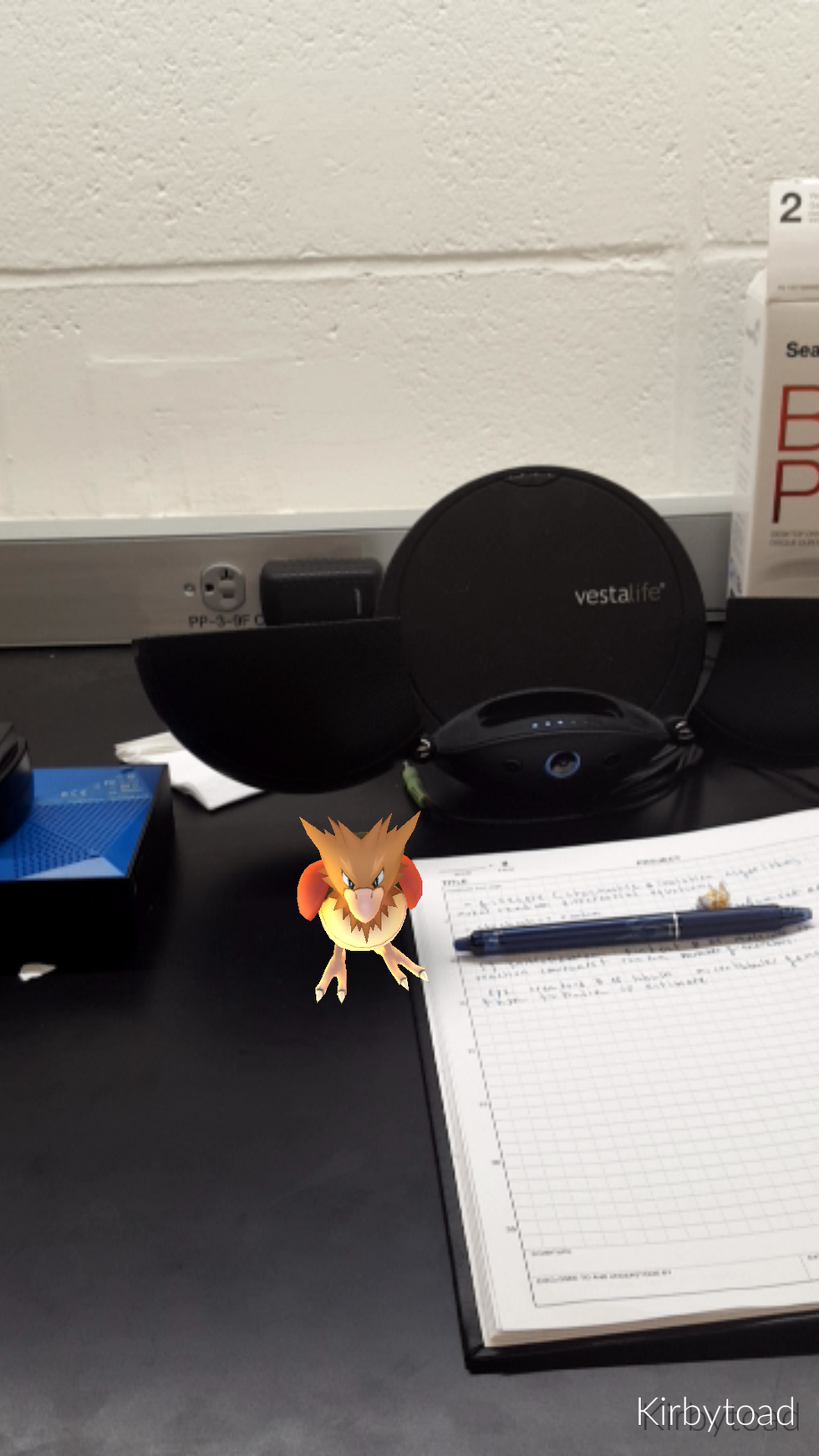
Last but not least, Augmented Reality (AR) is what makes the Pokémon you are trying to catch actually appear in the real world. Unlike virtual reality, augmented reality does not entirely create a simulated environment but rather merges computer generated elements with the environment around you, provided by your camera. In other words, that's how it's possible to catch a Pikachu on top of your office desk or a Charmander happily jumping on top of the homework that you dread to even start. Additionally, AR is used in gym battles too, so you can literally battle Pokémon anywhere as well as catch them anywhere. Although you do have the option to turn off AR, I would definitely advise taking advantage of the chance to snap a picture of your favorite Pokémon first -- or perhaps even take a selfie with it! The types of pictures that you can take using AR in Pokémon Go are virtually endless, so why not snap them all too?
Pokémon Go has become a bridge to the potential multitude of applications that can be created utilizing the same aforementioned technology in the future. The days of catching Rattata in the tall grass on the Nintendo Gameboy Advance or Nintendo DS consoles are over. Put down those systems and go “catch them all” for real, because now you can --brought to you by the wonders of Data Analysis, GPS, Augmented Reality and other varieties of modern technology.
Citations
https://www.surveymonkey.com/business/intelligence/pokemon-go-biggest-mobile-game-ever/
Scishow Video on How to Make Pokémon Go