


"Free speech is extremely important, because me being a Jew, I don't want to have to pay for speech." -Gilbert Gottfried
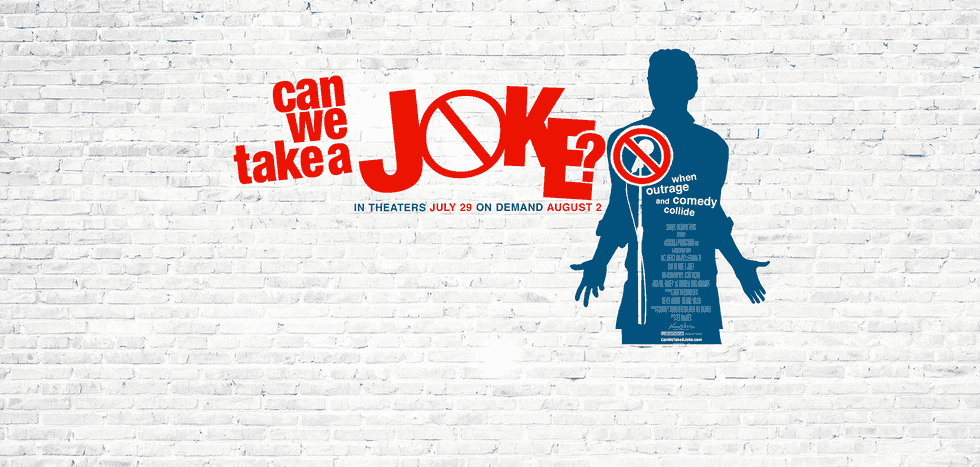
A few weeks ago, I attended an event at the Newseum in Washington, DC to promote the film Can We Take A Joke? The film addresses the rising demand for political correctness in pop culture and especially on college campuses, claiming that if comedians are no longer allowed to make 'offensive' comments, we are at serious risk of losing our first amendment rights. I highly recommend the film, and it's available on iTunes.
(More information on the event can be found here.)
With trigger warnings and micro-aggressions on the rise, Americans across the country are finding themselves afraid of speaking up. The Left is trying to cultivate a 'safe' environment where nobody gets their feelings hurt, but "there is only one way to counter bad ideas, and it is with good ideas" (Jonathan Rauch).
Honestly, I'm more offended by the thought of being censored than by the chances that someone is going to hurt my feelings. I totally understand where people are coming from with trigger warnings. I know that PTSD is a serious disease. But that's why movies have ratings, and that's why we need to discuss issues further. You can't just shut down a conversation (especially in school!) because you don't like it, or want to decide for someone else's sake that it's not acceptable.
Universities have been releasing speech 'codes' and 'initiatives' that are supposed to be protecting their students. I'd like to argue that these are only hurting people. We need to toughen up, not sensitize each other. Instead of telling people that words hurt, we should have open discussions allowing people to talk about issues. That is the purpose of education. School is about learning from other people and formulating your own ideas.
The more sensitive we become, the harder it will be to actually face our problems. All-too-real is this misconstrued concept that once someone's offended, they win the argument.
Gilbert wasn't joking, we Jews have a lot to say. If you don't like my opinion, that's my problem. I will take ownership of my words. That is exactly the point of free speech; you are holding people accountable to the things they say, not only if you don't like those ideas, but also if you agree with them.
I grew up in a household where people said whatever they wanted, and I was raised to be able to effectively make arguments and hold conversations about different kinds of topics. We all have the responsibility to decide what's appropriate to say, but we also have the responsibility to counter hate speech by creating a counter dialogue. What kind of a debate only has one side?