WARNING! Spoilers may follow.
George R. R. Martin has created a unique, vastly compelling world of fantasy in his series "A Song of Ice and Fire." "Game of Thrones" is an extraordinary work of fiction. I might go so far as to compare it to the trilogy of "The Lord of the Rings." In addition to the compelling series of novels, those of us alive today have the unique experience of watching the story play out in live action before the series has even been completed on paper. HBO's TV series "Game of Thrones" is a testament to the magnificence of Martin's writing; however, as is illustrated by the fact that the TV show is progressing through Martin's story faster than he can write it, the show has become somewhat of an entity of its own.
We are now several episodes in to the sixth year of the show. A great deal has changed since the first season: we have watched some of our favorite characters turn into traitors and even watched as some of our most hated characters became conduits for pity and remorse. Now, we find ourselves looking for redeeming qualities in even the most unforgivable characters. In the scenes where we see the most character development this season, I was struck by the subtle, yet powerful symbolism of the character's actions.
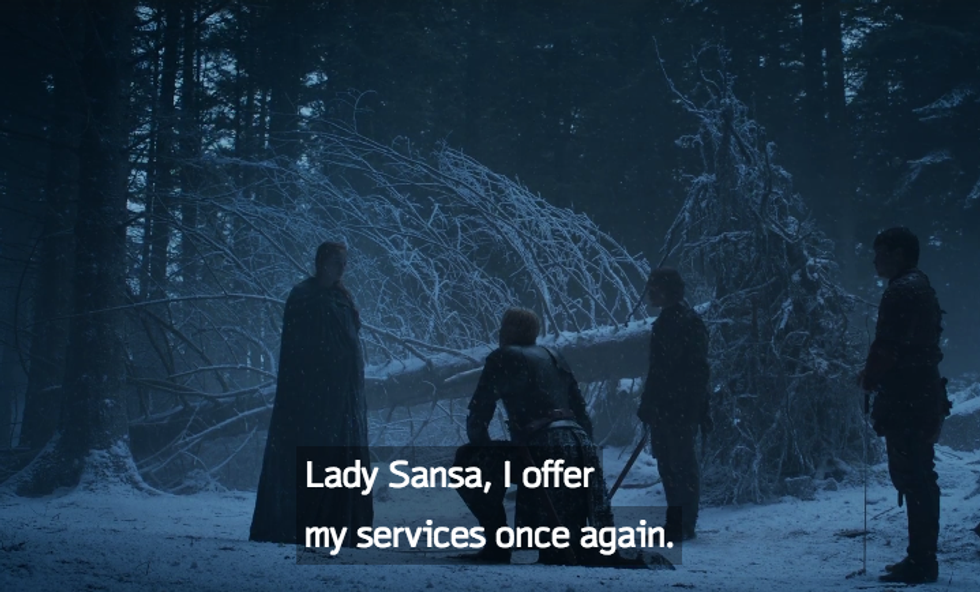
For example, I've watched the first episode, "The Red Woman," twice now, and both times I've experienced the skin on my arms erupting into gooseflesh during the scene between Sansa Stark and Brienne of Tarth.
Sansa is definitely one of the characters in whom we have seen the most growth. She is far from the naive girl we met at Winterfell, fawning over Prince Joffrey and practicing her sewing. From there, to King's Landing, to the Eyrie, and finally back to Winterfell with Ramsay Bolton, Sansa seemed to be simply handed off to one oppressor to the next.
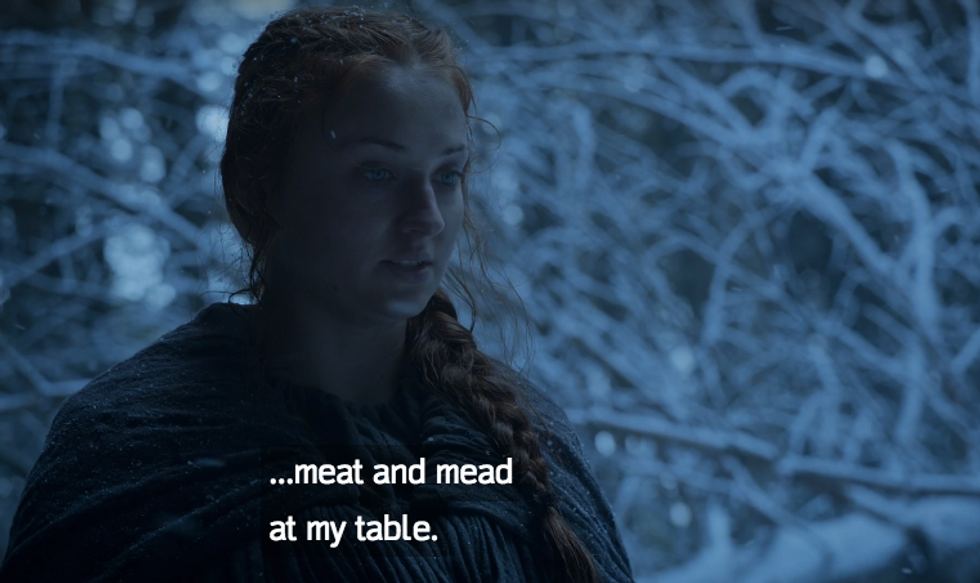
In this scene, Sansa finally excepts Brienne of Tarth's pledge of service after she saves her from Bolton's hounds, yet Sansa forgets the words to the vow she must express in response as a high lady. Podrick Payne has to remind her of the words, and her voice trembles when she speaks them. This part gives me goosebumps because it is such a subtle, yet obvious way of characterizing all of the trauma Sansa has experienced since we first met her.
At Winterfell, she was the picture of a proper lady, practicing her etiquette constantly, but now after all that's happened, she can't even remember the words to a vow she had probably memorized long ago. The writers and directors of the show reveal to us so poignantly here that Sansa is more vulnerable than she has ever been; however, she has escaped the hands of the abusive Lord Bolton, matured, and accepted Brienne of Tarth's protection.
In the second episode, "Home," I was struck by the vulnerability of a character I had never expected to feel pity for: Cersei Lannister. The creators of the show do a fantastic job with character development, in that they can make you really hate a character with your whole being and in the next season make you want to cry for them.
Since her naked parade through the streets of King's Landing, her time locked in the sept, and the shearing of her beautiful golden hair, Cersei has continued to pay for her sins. It's difficult to keep the horrid things that she's done in the forefront of your mind when you're watching her run excitedly to the boat which she believes carries her daughter, Myrcella Baratheon, home safely, but in reality transports her coffin.
She has now experienced the death of two of her children, and apathetically awaits the death of her third and last child as was prophesied by the witch she met long ago as a child. We finally get to see some of Cersei's humanity during this episode. Of course, we had seen small indications of it before, but it was always overshadowed by some evil deed of hers.
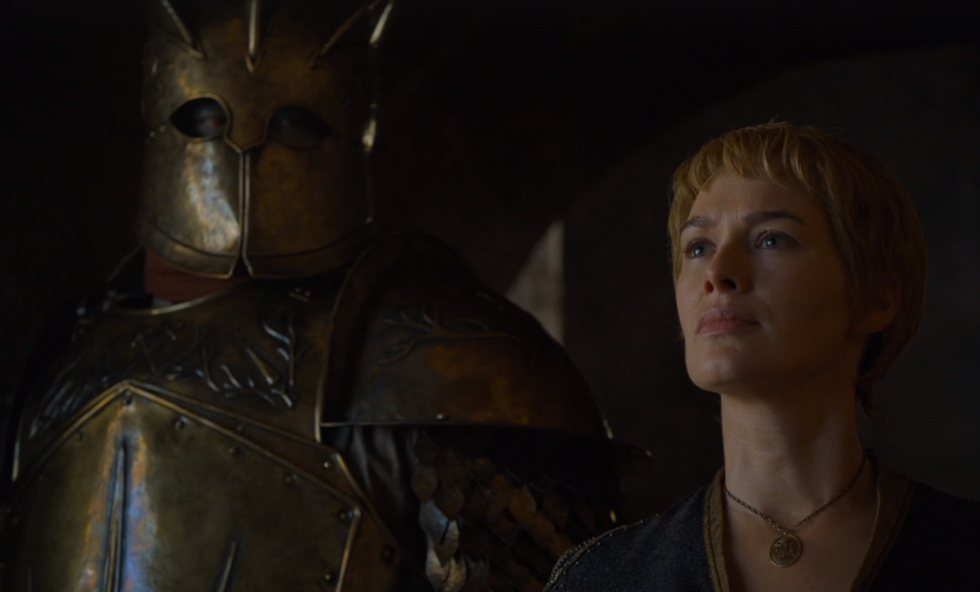
In this episode, we still see a little bit of the same nefarious woman we had grown to hate through her interactions with the recently resurrected Mountain, Ser Gregor Clegane, but she plays a much less active role in the murdering and torment. The Mountain seems to stroll around King's Landing looking for people to kill of his own accord. In fact, it is the scene that takes place while the Mountain is out repairing Cersei's honor (murdering drunks) that really made me reflect on how much Cersei's character had changed.
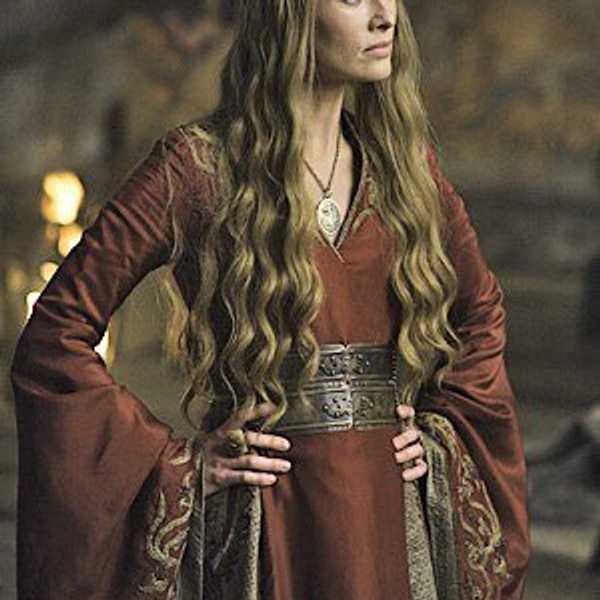
Before Cersei is to attend her daughter's funeral, she waits in her chamber for the Mountain; while she waits, she pulls a long thread from the sleeve of her gown.
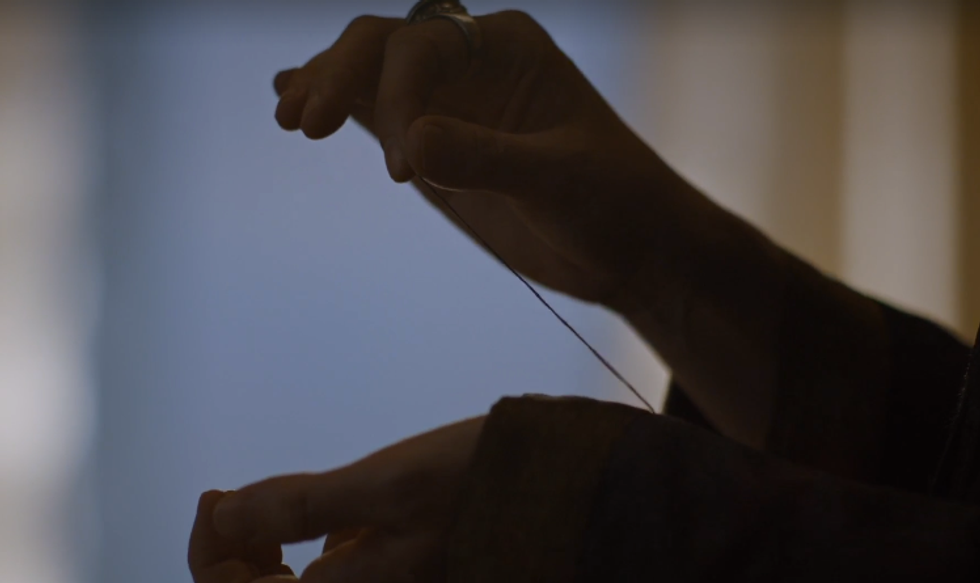
On the surface, it seems an almost insignificant gesture; yet, have we ever been privy to a moment like this with Cersei before? Even in the midst of her darkest plots or most vicious moments, she has always put on a face of poise and grace. She was always "well put together," but now we see that she is literally falling apart after the death of her daughter and the death of her reputation.
In this moment, like the moment between Sansa and Brienne, we see a vulnerability in a character that we may have never thought possible. Also like Sansa, Cersei turns to the arms of a protector, Ser Gregor Clegane; as he enters the room, she tosses the loose thread to the floor as an afterthought. We can deduce that the Mountain will be Cersei's main source of power from here on out.
I look forward to seeing how these characters and others will continue to develop in the show, and I keep my eyes peeled for powerful, symbolic moments like these.