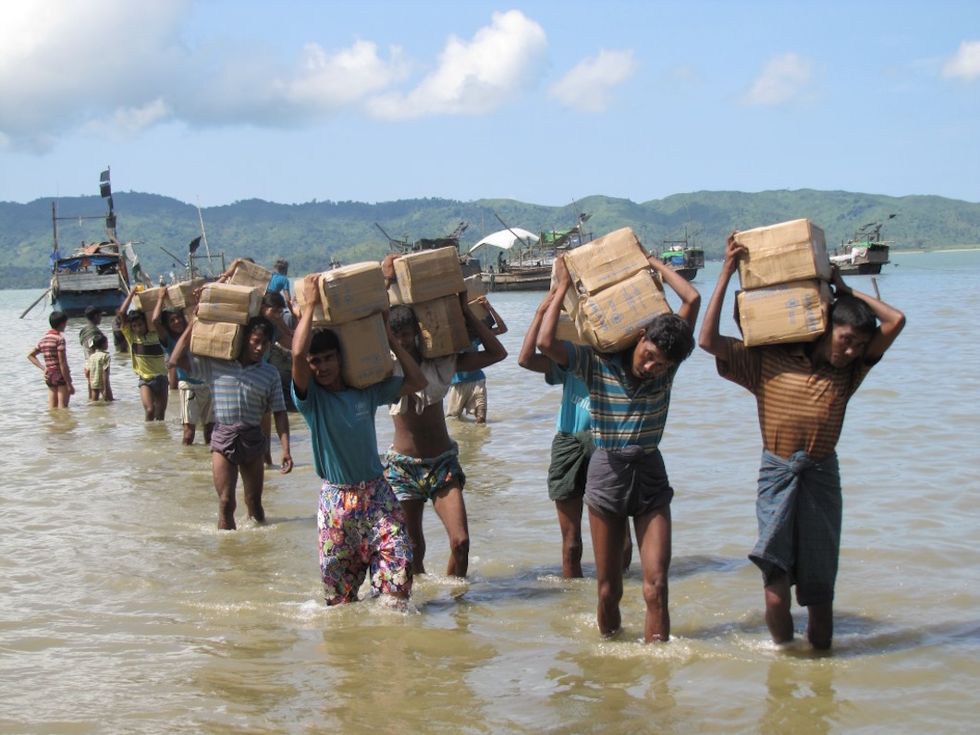
The Rohingya are a Muslim minority group that reside in the Rakhine state of Myanmar (also known as Burma). Though the Rohingya have been living in this area for hundreds of years, they are not considered to be citizens by the government of Myanmar under the 1982 Citizenship Law. Myanmar maintains that they are “illegal immigrants from Bangladesh” because many of them look and speak Bengali due to regional similarities. However, their Burmese roots can be traced back to many generations ago. Because they are not recognized as one of Myanmar’s over 135 ethnic groups, the Rohingya are not given any form of identification, restricting their opportunity for work, education, travel, and access to healthcare, amongst other things.
There have been clashes between the Myanmar government and Rohingya for decades now, but the most recent violence has been going on since August 25th. It is estimated that over 300,000 Rohingya have recently fled to nearby countries, either by foot or on rickety, unstable boats. Most of the Rohingya refugees are in Bangladesh, and others have previously fled to other South Asian countries, including Malaysia, Thailand, and Indonesia. They have left behind burning homes, burning villages, and slain family members in order to save themselves and the rest of their families. The Rohingya people are believed to be the most persecuted minority in the world.
According to the top UN human rights official, the treatment of the Rohingya is the “textbook definition” of ethnic cleansing. They are being targeted and driven away from their homes because of their religious beliefs and minority status. But the de facto leader of Myanmar, Aung San Suu Kyi, who is also a Nobel laureate, claims that there is no such thing happening. She has been increasingly criticized for her handling of the situation, defending the Myanmar military who are responsible for burning the homes and killing the people in Rakhine state.
Among her critics are fellow Nobel laureates Desmond Tutu and Malala Yousafzai, who have condemned the attacks on the Rohingya people and are urging Suu Kyi to do the same. The Dalai Lama has also spoken out against the genocide, stating that the Buddha would have helped the Rohingya as well.
Although this issue is large and on a global scale, there are many things that we can do here to help. You can donate to help aid the refugees at The UN Refugee Agency and Islamic Relief USA, and you can protest Aung San Suu Kyi’s status as a Nobel laureate at Change.org.