
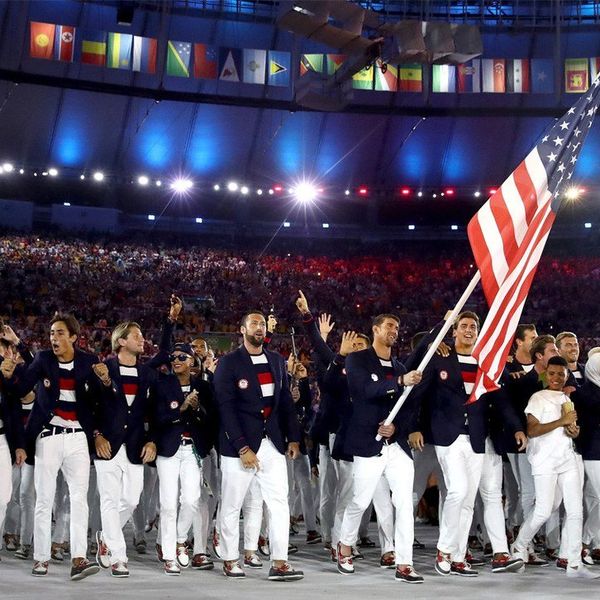

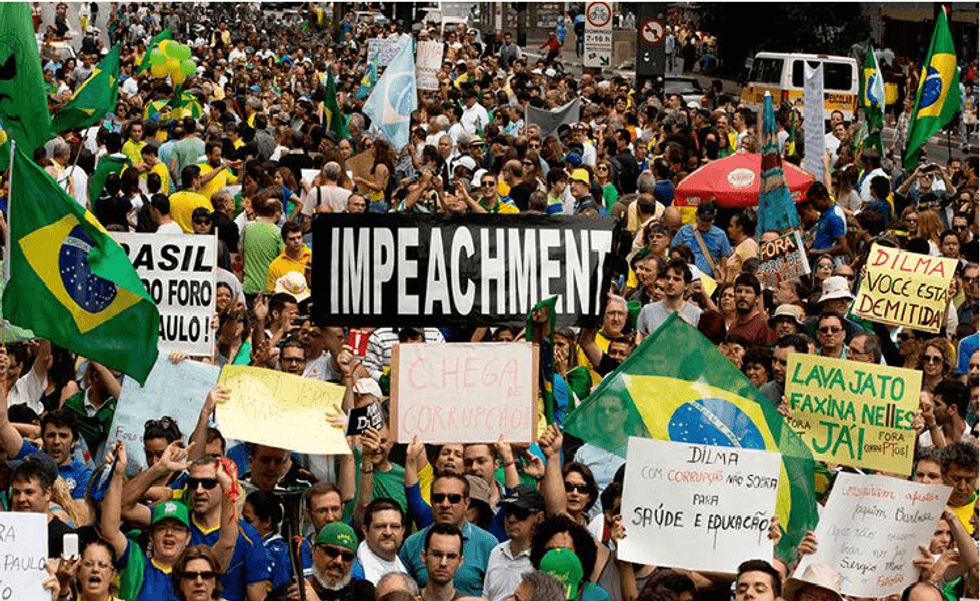
Beginning on August 5, the 2016 Summer Olympic Games will be held in Rio de Janeiro, Brazil. Hundreds of athletes from around the world will flock to Rio, competing in various events on behalf of their country. In addition to athletes, the city hopes to attract thousands of spectators, tourists, and more foreign investment. Recently though, Brazil's current president Dilma Rousseff, has been caught up in a corruption scandal and is facing an impeachment process. With the current political turmoil in Brazil, many are concerned about the impact this will have on the Olympics. Fortunately, the Olympics are still on track to happen in Rio, but with added political tension in the country and without all the promised infrastructure.
The current political situation Dilma Rousseff finds herself in began in 2011 while she was the chairwoman of Petrobas, Brazil's state-run oil company. During her time as chairwoman, CNN reported that there was a "multi million dollar kickback scheme..involving dozens of the country's leading businessmen and politicians". However, talks about impeachment did not begin until this past December. As reported by CNN, it was Eduardo Cunha, speaker of the lower house of Congress at the time, who brought about calls for impeachment. CNN writes that Cunha claimed that Rousseff was "guilty of breaking budgetary laws by borrowing from state banks to cover a shortfall in the deficit".
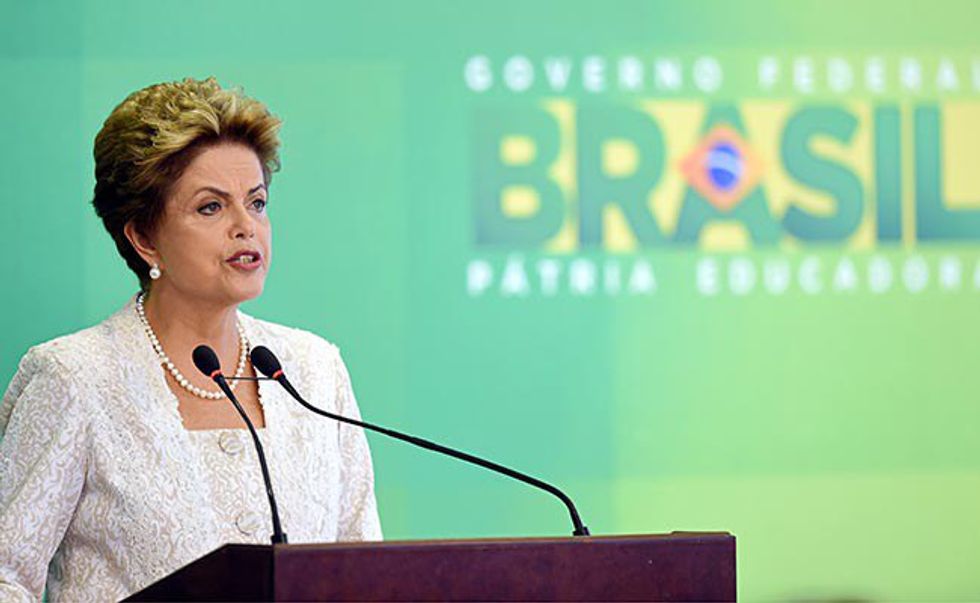
So on May 12, 2016, the Senate voted to move forward with the impeachment process, causing Rousseff to be suspended and the Vice President, Michel Temer, to act as the interim president. Functioning in a similar style as the United States Congess, an impeachment trial is the next step, but as to how long that will take and if a two-thirds majority will be reached in order to officially impeach Rousseff remains to be seen. Since the trial will most likely not finish before the start of the Olympics, Rousseff will not be able to represent Brazil as the president, a disappoint to her as she has been working extensively to prepare for the Olympics.
However uncertain Brazilian politics may be at the moment, the summer 2016 Olympics in Rio still look to start on time. The first obstacle impacting how smoothly the Olympics will run is the uncertainty of who exactly Brazil's president will be when the Games officially start. A heightened sense of political tension will be present around the Rio as both supporters of and protesters against Rousseff will capitalize on this global event. The second obstacle will be evident in the lack of infrastructure in and around the city. The Los Angeles Times writes that Rio's government has not cleaned Guanabara Bay and have not started all of the promised infrastructure and public works projects.

Personally, I do not see any reason why the Olympics in Rio de Janeiro, Brazil, will not proceed as planned. Taking into consideration the example of Sochi, Russia, host of the 2014 Winter Olympic Games, the Games still occurred amidst construction problems, undesirable weather, and Russia's rocky relationship with the West. In Brazil's case, athletes and spectators should still have a great experience participating in and watching the events, but it is clear that there will be political tension on the streets.
The end result of the games will most likely not plan out as a pretty picture as hosting an Olympic Games is a huge cost and many countries lose money. As for the legacy of Rio hosting the 2016 Summer Olympic Games, I do not expect much change in the living conditions of those living in and around Rio de Janeiro, Ultimately, the events leading up to the Olympics and the Games themselves will be interesting to watch.

















