
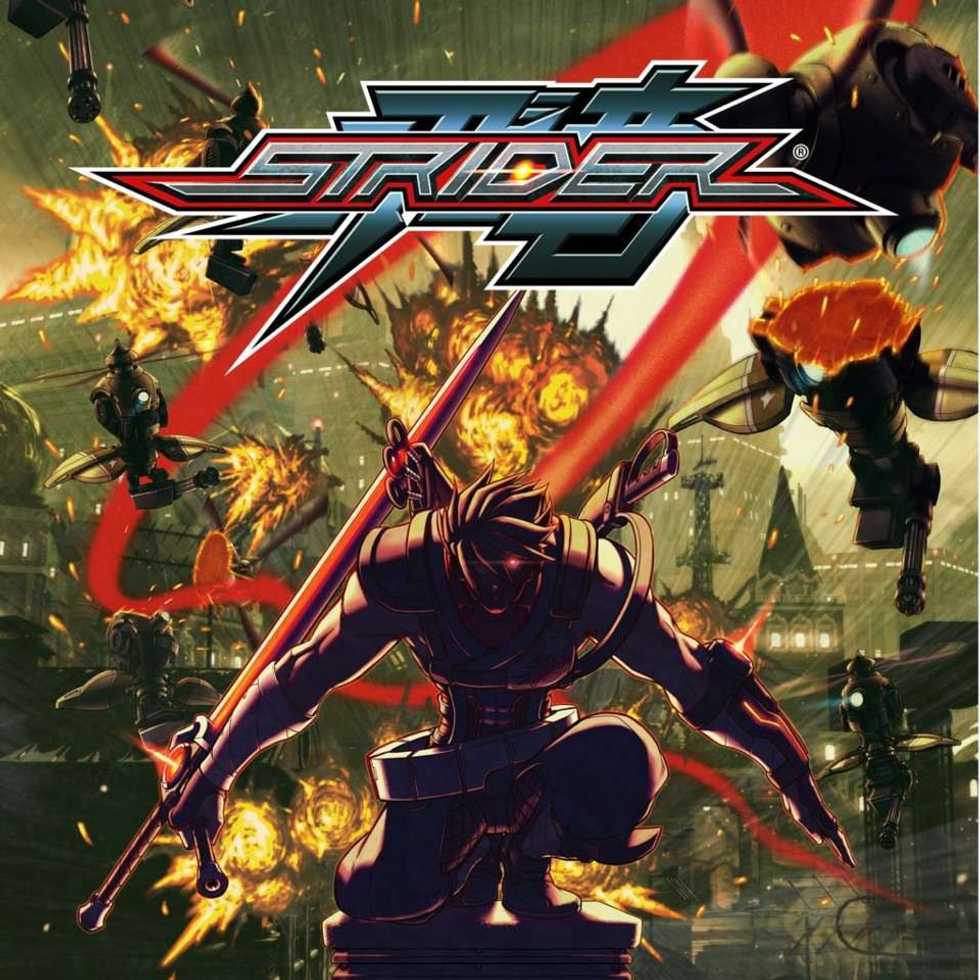
Lights, camera, action-faster-than-you-can-imagine! In 2014, Strider sliced its way onto Steam, Playstation and Xbox stores as one of the most fast-paced, 2D action side-scrollers of our time.

Take charge of the youngest member of the Striders ever to obtain a Special A-Class rank (the highest rank in the secret organization), Hiryu. He’s the best assassin around, sent to defeat Grandmaster Meio and end his reign of terror on earth. With Hiryu’s weapon of choice, the Cypher—a plasma sword that can be swung from any position and in any direction, whether wall-hanging or diving through the air—no fiendish abomination of Meio’s, organic or metallic, stands a chance.

Set in a sci-fi Russian land with an oriental, steam-punk twist, your journey as Strider Hiryu runs the snowy skylines and city innards of the dystopian Khazak City and maybe even beyond. The design is both beautiful and beautifully traversable. Scale the walls of a train station, dodging soldier’s bullets while city inhabitants watch in terror. Sprint above the city along a robot Chinese-dragon’s back, dodging missiles and traps that blast out of its roiling carapace.
All of this running at a glorious 60FPS alongside 4k HD compatibility (30FPS and 1080p for PS3 or Xbox 360 players). Shimmering particle effects with tiny anime twists make for a beautifully presented and dynamic visual experience. The soundtrack too harks back to its predecessors, but pumps through with a great modern edge that calls upon techno, drum and bass, dubstep and other current genres suited to ninjas slicing lazer-firing robots like a farmer cutting through corn with his sickle.

The game made a comeback through popular demand found in surveys distributed by Capcom. The series reboot was originally underway by Grin in 2011. Then Grin went bankrupt during the development, which caused its cancellation. A couple of years later, Capcom picked up the torch again and decided to work with Double Helix games in producing the Strider reboot that exists now.

Due to the solid fanbase behind the Strider series, developers knew that the key abilities, plot-points, and weapons had to remain the same. However, the decision was taken to steer away from the linear, level-based gameplay familiar to the older games and create an intricate ants-nest of a world—like you would find in Metroid, Castlevania or Shadow Complex—that is more suited to exhibit the freedom of Hiryu’s acrobatic potential. They wanted to encourage fans to leap further with Hiryu’s gameplay mechanics by introducing a host of new tools as well. Most of all, Capcom seem to have poured unthinkable amounts of caffeine and Pro-Plus shots down our hero’s throat to crank up gameplay speed.

The result of their work is a 2D hack-‘n’-slash-on-speed that takes platforming and action to a new level. The dynamic combination of fluid controls and jump-tactics creates smooth gameplay that allows you to maneuver effortlessly around environmental obstacles and battle situations alike.
Despite the intense upgrade in pace and adrenaline, the main enemy of the game, the platforming elements, and the baddies you destroy remain largely intact. The lore in this most current revamp of the series is simply redefining what has come before.

Hiryu’s classic weapon of choice, the Cypher, isn’t the only force to be reckoned with in his expansive arsenal. As you journey deeper into the open-world style Khazak city, you will stumble upon a plethora of weapons and abilities that are both new to the series and unmistakable from past editions. Many items are story-linked, though cleverly hidden throughout the map are upgrades for your health, energy and weapons, the hunt for which easily satisfies those that love side-quests, collectables and beefing up your character to the max.

As well as opening up new ways to mutilate your enemies, each weapon and ability you collect also doubles-up as a key, opening up previously inaccessible areas to continue through the game. As is the tradition with such key-based progression games like some of Nintendo’s The Legend of Zelda games, or Vigil’s Darksiders, special items will become available in parts of the map you have already torn through as well. Don’t worry, enemies respawn when you revisit areas, so the carnage never ends. This gives the open-world style of the game meaning and replayability above its previous, level-based incarnates.

The challenges in Strider do not just lie in the lightning-speed fights, but also in the tricky platforming sections. A combination of double jump, air-dash and wall/ceiling-climbing (to name a few of the main abilities) gives huge scope for mind-bending platform puzzles that require timing and skill, as well as a creative imagination for combining Hiryu’s many techniques. Expect frustration in falling down deep caverns you struggled so hard to climb and of course fist-clenching satisfaction when you finally grab that item you’ve just busted every well-timed trick in Hiryu’s skill-set to reach.
Already played Strider? What did you think of it? Let me know below!