
I love being a teacher and working with students of all kind of abilities, but I've found a passion in the special education classroom. Explaining that to other people isn't always easy and if you teach special education then you've probably heard one of these statements one time or another.
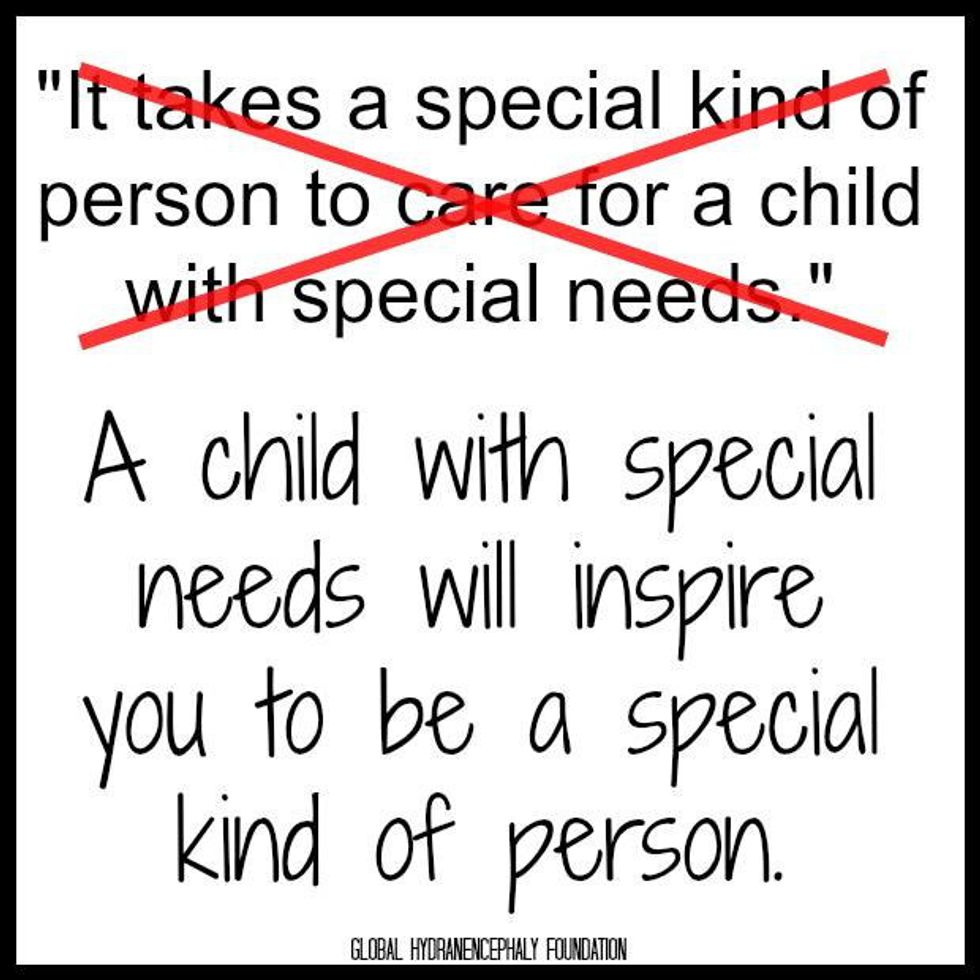
1. “It takes a special kind of person to take care of children with special needs.”
I know that people mean this as a compliment and do not mean it to be derogatory. In fact, while I do not agree with this sentiment, I know what this phrase implies. During my time teaching people with disabilities, I have been urinated on by a 16-year old, bit by a three-year-old, and insulted by a 10-year-old. However, I still feel awkward because I am unsure of how to respond to this comment. I try to explain how my students have taught me way more than I have taught them, but it comes out sounding like a trite platitude. Therefore, an easier response is to say that if there is anything special about me, it has come from spending so much time around people with disabilities.
*Note: I understand that disability is a blanket term for numerous situations. For the purposes of this article, I use disability as defined by the Individuals with Disabilities Education Act of 2004.
2. “How do I talk to someone with ______ disability?”
Once again, I believe that people mean no harm by this question, but are genuinely befuddled as to how they should go about interacting with someone with a disability. My advice is to talk to those with disabilities as you would anyone else. For example, I used to teach fourth-sixth graders with mild/moderate disabilities, and some of their favorite things to talk about with me include what they did that weekend, their pets and their favorite toy/video game/TV show.
You may also know someone that is nonverbal or has speech or language impairments. My advice remains the same: I talk to them the same way I would anyone else. Once you get to know someone who is nonverbal, you can often still tell what he or she likes and does not like via body language and facial expressions. For example, when I was an early intervention therapist, one little boy would stand by the door with his hands pressed against the glass to signal that he wanted to go outside to play. I know this seems like a simple example, but trust me when I say that you can communicate with someone who is nonverbal. Moreover, depending on if it is appropriate for the individual, you can also sing songs and read stories. Basically, just talk! You will be amazed by how much you will bond with the other person.
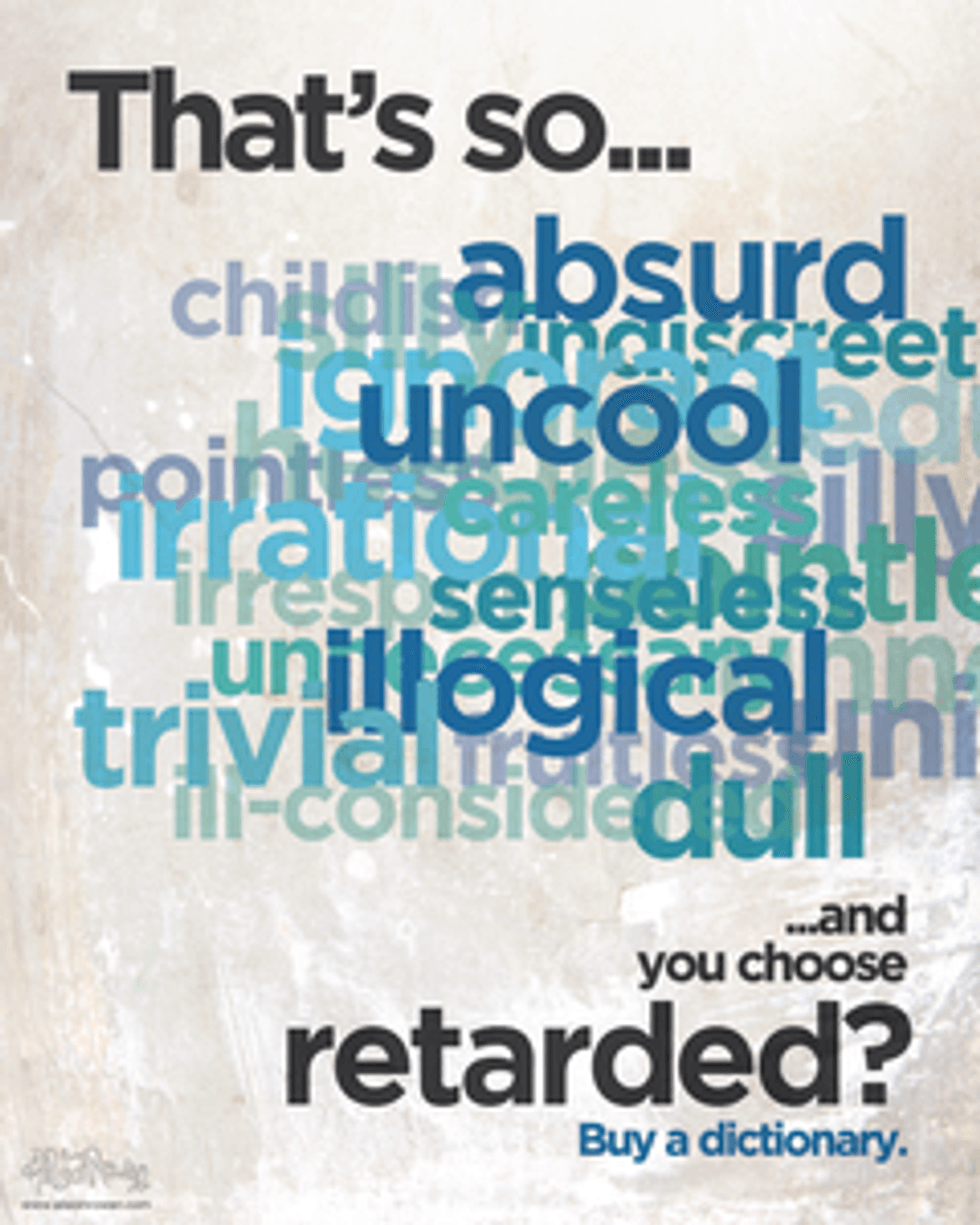
3. “Why can’t I use the “R” word if I do not mean it offensively?”
I have noticed that on both the West coast and East coast, people still say the “R” word. For example, when describing a situation that is undesirable, people commonly say, “that’s r*****ed.” After I hear people use this expression, I ask them not to say that word. They explain that they do not mean it offensively and that they are using it in a context that does not even pertain to individuals with disabilities. The point of the matter is that this word hurts the feelings of those with disabilities as well as their loved ones and demeans their efforts to break down barriers.
4. “What do I do if I think my child has a disability?”
It is important to know that you are not alone in this and that there are many programs set up through the state to receive free and appropriate services for your child. Contact your local school district even if your child is too young to attend school. Many states have free early intervention programs that they provide for children with disabilities that are under the age of six. If your state does not offer early intervention services, the school district should be able to direct you elsewhere. If your child is already in school, talk to his or her general education teacher, the school psychologist, and the special education teacher. These three school personnel will follow their school district’s guidelines for testing and qualifying a student for special education. The legal guardian will need to sign a paper granting permission for the school district to test the child for special education services.
Additionally, set up an appointment with your pediatrician. Many insurances, including Medicaid, will cover or subsidize the cost of private services for children with disabilities (i.e. occupational therapy, physical therapy, speech therapy). It is important to contact both the school and the doctor. Medical practitioners and school district staff members provide different services that are both needed to help your child reach his or her full potential. Remember to advocate for your child because you see your child in different environments than medical professionals and educators.
5. “So you basically just want to be a mom.”
There are so many things offensive about this statement. First, moms are amazing and motherhood should never be degraded with words like “just.” Second, I did not choose to study education in order to have some sort of time filler before entering motherhood. I am actually genuinely passionate about helping people with special needs reach their full potential. Third, teaching is very hard work. My colleagues that are mothers still stress about spending enough quality time with their families just like many other working mothers. Teaching, and motherhood for that matter, is by no means taking the easy road. If you know someone that is a teacher or wants to become a teacher, stay clear from this statement or from even hinting at it.
6. “Teaching special education must be very rewarding.”
It is! Special education teachers are privileged to teach some of the most amazing children in the world. The fact that students with special needs have to work that much harder to master a skill makes it that much more rewarding to watch their growth. I particularly enjoy helping students learn essential life skills such as tying their shoes or learning how to count money. My students are like my oxygen; they give me a breath of fresh air. My students are so incredible to be around that I genuinely miss them over the weekends. In fact, I wish that I could bring some of my students along on my outings with my friends and family because my students would make the experience so much more fun. All of these reasons and much more is why I can confidently say that if there is anything special about me it is because I have had the privilege of spending my days with children with special needs.
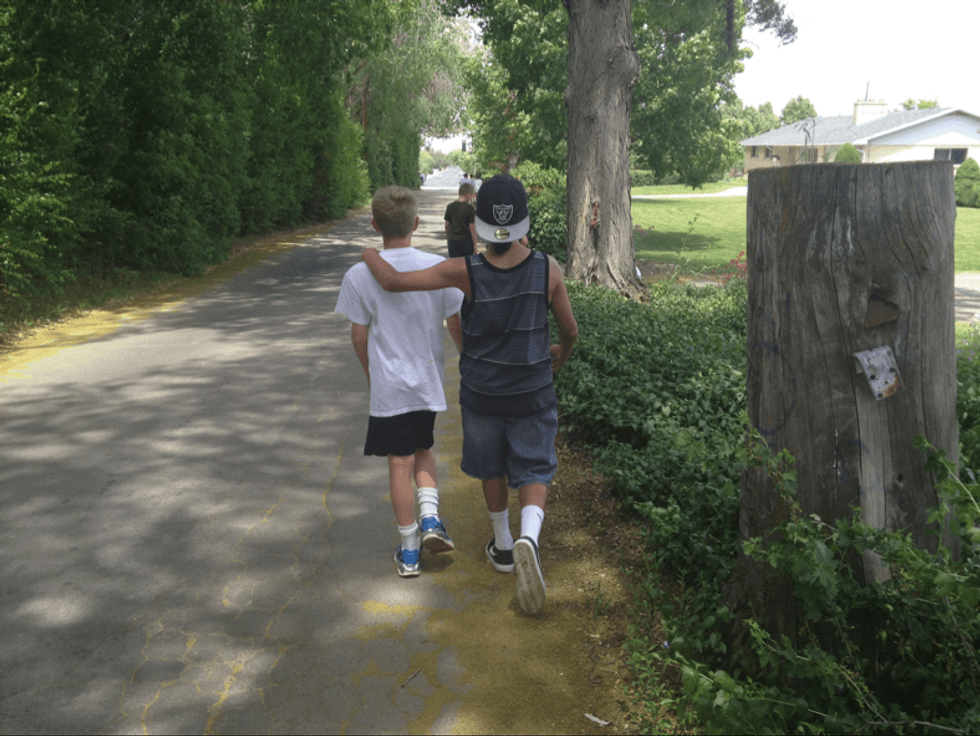
Note: Due to child confidentiality laws I am unable to post pictures of my students' faces or give any identifying information.