On the first day of a film studies class, my professor asked each student to state their favorite or last movie they saw that was directed by a woman. The same three movies were brought up multiple times: Lost in Translation (Sofia Coppola), Winter’s Bone (Debra Granik), and The Hurt Locker (Kathryn Bigelow).
It’s wonderful that these women are recognized and remembered for their work. However, it is unsettling to have three titles repeated as if we were limited. If the question asked about films directed by men, how many titles would be repeated? Considering only 17% of writers, executive producers, and cinematographers of the top 250 grossing films in the United States were women and an overwhelming 93% of the directors in that same category were men, the numbers prove we are indeed limited. Nothing much has changed over the past 20 years.
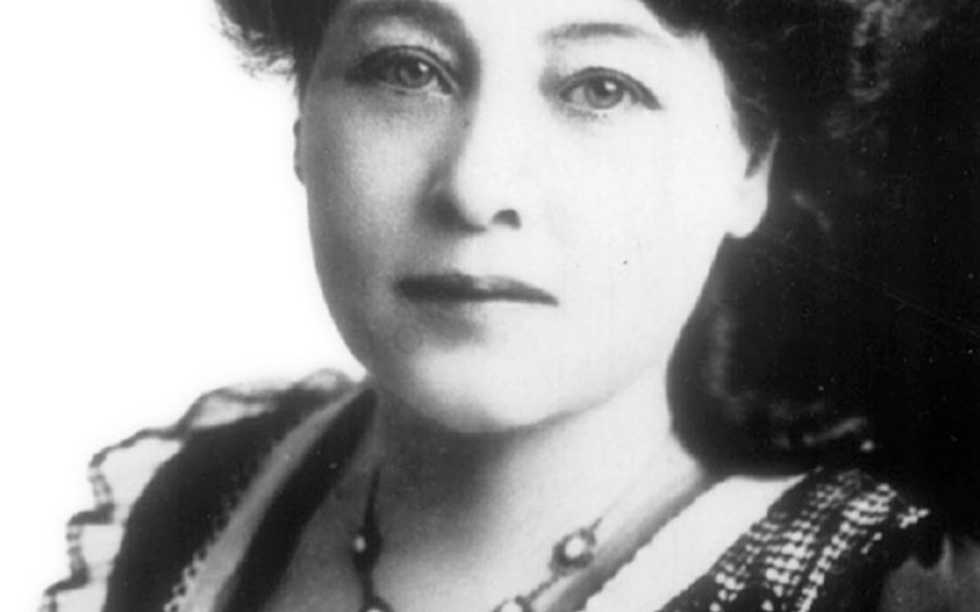
We have to give thanks to one of the first pioneers in film: a French woman named Alice Guy-Blaché. Her name isn’t as commonly known as Thomas Edison or Alfred Hitchcock’s, but it should be.
Guy-Blaché was born in 1873, and when she was 21 years old, she became the secretary to the founder of Gaumont Film Company, Léon Gaumont. The engineer turned inventor produced photography equipment until the famous Lumiere brothers demonstrated a 35 mm camera in a private screening. Watching excitedly was 23-year-old Guy-Blaché who promptly asked Gaumont if she could use one of his cameras to film a movie.
Her first film “La Feé aux choux” (“The Cabbage Fairy”) was released in 1896 and sparked the beginning of her illustrious film career. Gaumont, pleased with her work, named her head of production. With her position, she experimented with color-tinting as well as sound syncing with Gaumont’s Chronophone. She has been credited with the concept of getting out of the studio and going on location to film. With these new skills and ideas, she created over a thousand films, some of which are still hidden in old archives.
On top of being the first female director, she was the first and only woman so far to own and manager her own company. Solax Studios came to be after Guy-Blaché and her husband at the time, Herbert, relocated to New York when Herbert became president of Gaumont’s office location there. Eventually, the building settled in Fort Lee, New Jersey, and Guy-Blaché cranked out a film a week. She wrote the earliest narrative films with clever storytelling. She was beyond her time with technology advancements and interracial casting; “A Fool and His Money” (1912) was the first American film with an all African-American cast.
Eventually, her career came to an end in 1920 when she released her last film “Tarnished Reputations”. She divorced Herbert, auctioned her company, and moved back to France with their two children, Simone and Reginald.
Unfortunately, historical records being written at the time seemed to be missing an important figure of film industry––Alice Guy-Blaché. When she noticed this in the 1940s, she began writing an unpublished memoir her daughter found years later. Turns out Gaumont attempted to write her out of his memoir by not mentioning any production before 1907.
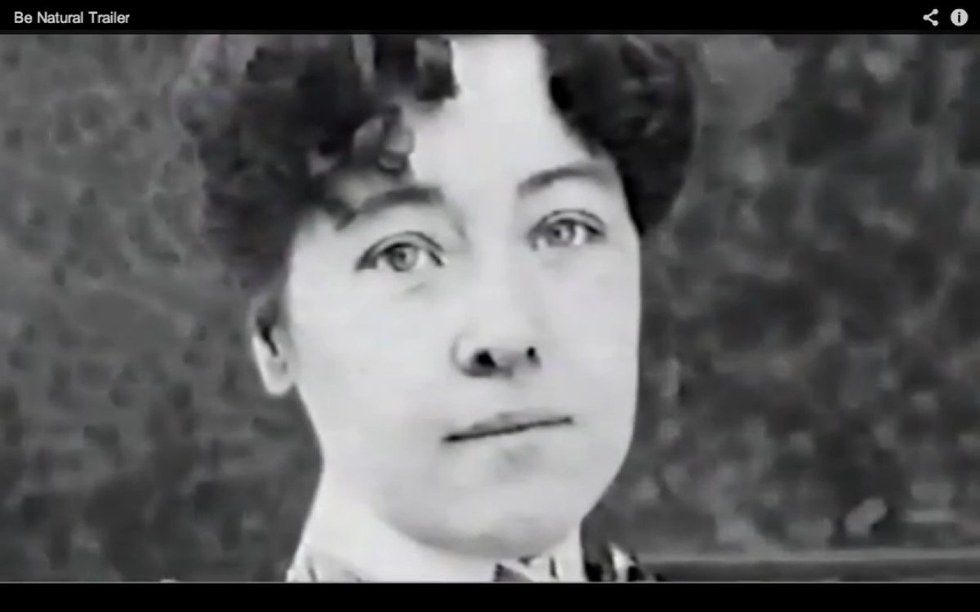
Luckily, directors Pamela Green and Jarik van Sluijs, are determined to give Guy-Blanché the recognition she deserved. Their goal is to create a documentary called “Be Natural” on this groundbreaking director that shows an in-depth exploration of her life, her method, and her accomplishments.“In short, we aim not just to look back at Alice’s past, but to stand next to her and look into her future – our present,” states the approach on the Kickstarter’s page.
They’ve reached their primary goal of $200,000 but now need help reaching their second goal of $240,000 to finish the film and release it in theaters.
Let Alice Guy-Blaché’s name be known among the greats. She paved the way for the film industry we know today. She is the first example that women are more than capable of directing films, and therefore, should have more opportunities and recognition.