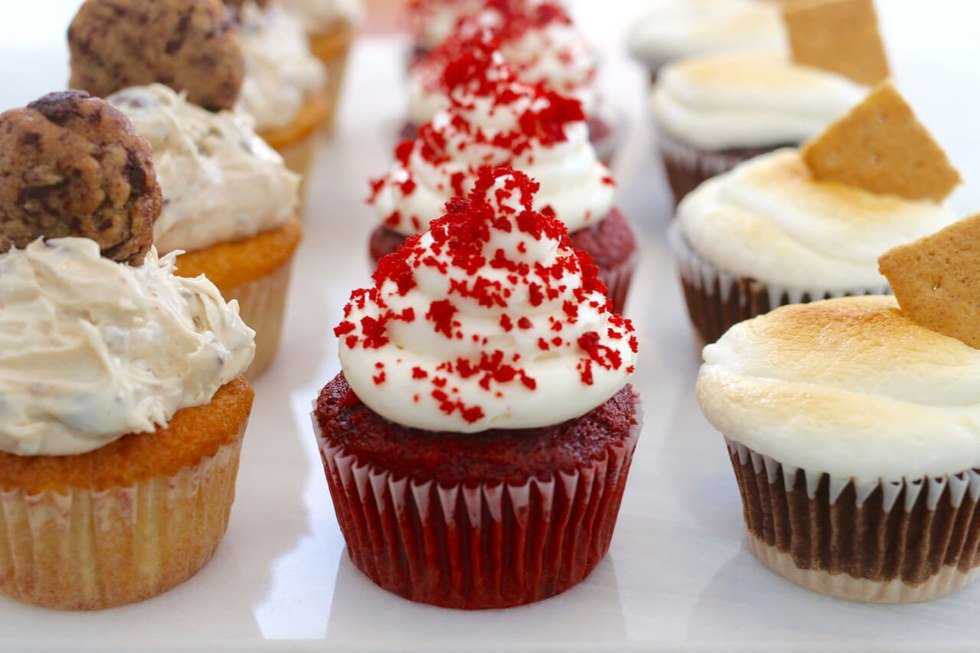
Red velvet cake, more often than not, is the slightest bit disappointing.
It is not that I "don't like" red velvet: I enjoy a good red velvet cake, cupcake, etc. just as much as the next lover of dessert. As a matter of fact, I even have a sentimental connection with the crimson sweets.
Growing up, I didn't like cake at all, of any kind; this was a very odd and, yes, very scandalous aspect of my youthful self. At every occasion, I would forgo the star of the dessert show for a bowl of fruit salad. I was like a 7-year-old hipster disillusioned with the mainstream. "Cake is too sweet," I would say, taking a sassy bite of honey dew.
My views, however, were not very well-founded because my exposure to cake took place exclusively at kid birthday parties. There, I found enormous layer cakes, purchased solely to satisfy the intensely sweet teeth of raucous toddlers, and this is all I thought the dessert could be. I had never tasted any cake made at home with, for lack of a less cheesy word, love.
As a preteen (probably of 11 or 12 years of age), everything changed.
Determined to change my relationship with cake for the better, my stepmom decided one weekend to prepare me a red velvet layer cake from scratch. She used a Paula Deen recipe, so it looked a little something like this:
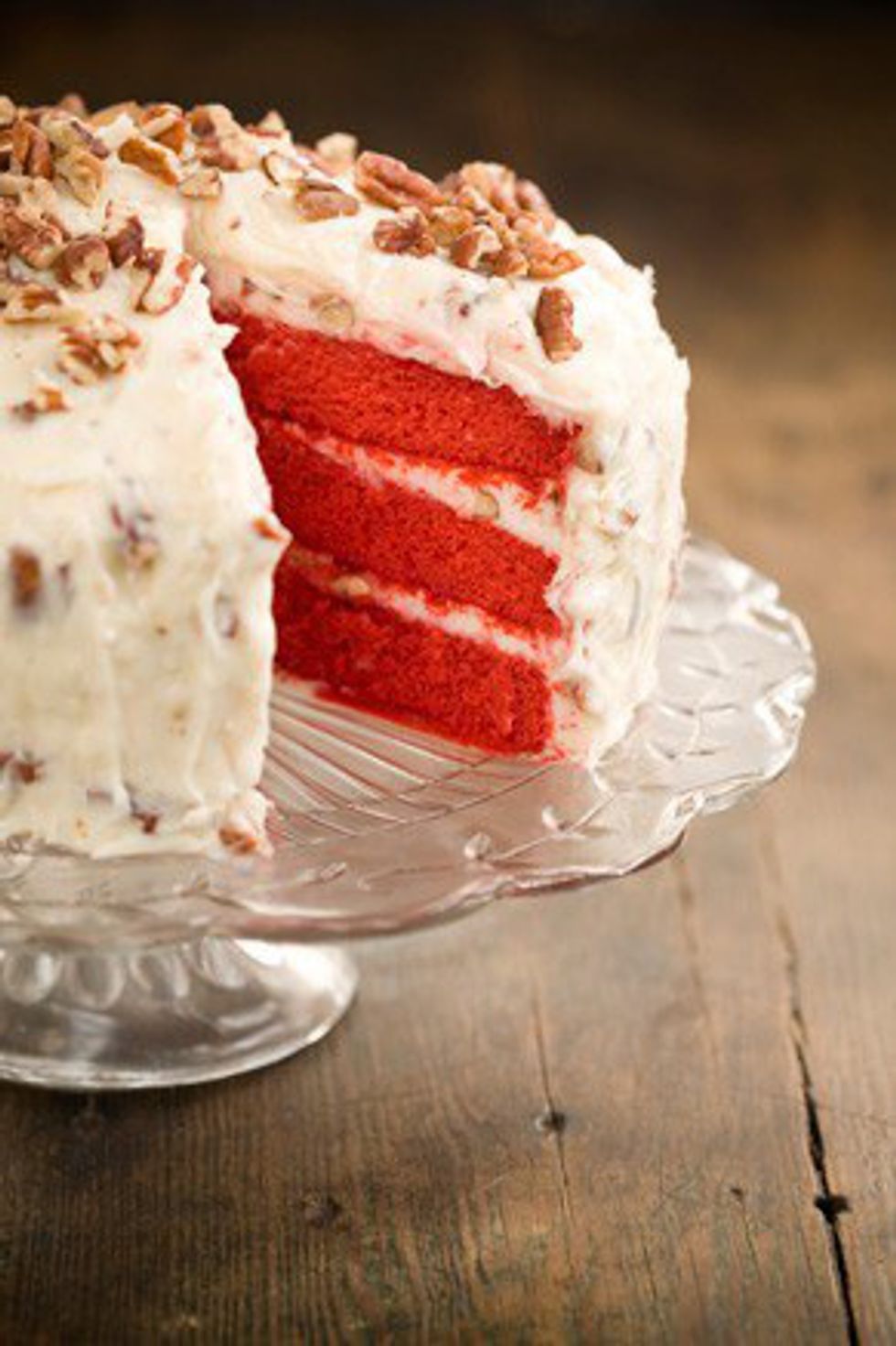
I remember being particularly moved by the cake's texture because there were various kinds that came into play with their own distinct qualities. The cake itself was fluffier and, dare I say, velvetier than any I had ever experienced, but this sensation did not hog the spotlight; it existed in balance with creamy frosting, crunchy pecans, and chewy toasted coconut.
With this interplay of texture, there also came a diversity of flavors. The birthday cakes of my recent past had been sweet and nothing more, but the Deen red velvet satisfied a number of my taste buds. The cake was sweet, to be sure. However, it was rounded about by a tang from the cream cheese frosting, even a nuttiness from the pecans and coconut.
With my current vocabulary, I would describe the whole creation as nuanced. But at the time I probably reacted to the cake with something simple and positive: "This is good!"
After that first positive cake experience, there was no turning back. I fell easily under the influence of the cupcake trend. Once, I got into baking I even began to experiment with different cake-based recipes in my spare time.
But as I delved deeper, something ironic happened: in a wide new world, filled with so many different kinds of cake that I enjoyed, the allure of the red velvet, the cake that had opened my eyes, wore off.
In one respect, I had come to terms with the culinary facts: red velvet is essentially a myth of a flavor. If you examine a red velvet cupcake recipe alongside a regular chocolate cupcake recipe, you will notice that the essential ingredients are (more or less) identical. The only real difference is food dye, and when used excessively in a red velvet it can actually mar the taste of the chocolaty base. Cream cheese frosting is also a difference in the sense of traditional recipes, but this could also easily be placed on a chocolate cupcake.
Even more so, red velvet's loss of allure is a testament to its banality.
When I ate that first delicious slice of Paula Deen cake way back when, red velvet seemed a delicacy. True, I may have very well overlooked the actual magnitude of its popularity. (With my distaste for cake and all, there wasn't much reason for to be on pulse with the associated trends in any case.) But still, at the time I felt like I had come upon something special, and that is surely a valid enough reaction.
But now red velvet is everywhere.

The "signature" of every cupcake gourmand, it seems, is red velvet. And countless people (namely "the Basics") eat the classic up fanatically, unaware that they are just consuming a chocolate cupcake with a salon-style treatment. Beyond cake, red velvet has even edged its way into the realm of ice cream, yogurt (both frozen and otherwise), pancakes, whoopie pies, waffles, truffles, brownies, and practically every other sweet thing in between.
In such a state of excess, it is rare that I come across a red velvet that really "does it" for me, as did my stepmother's preparation. But I guess this is just a natural outcome of said excess. Red velvet cake is what the people want, so it is produced en-masse in more or less the same way, to varying degrees of success. There is no creativity, no ingenuity, no loving motivation to win someone over and open their eyes. Even in the most successful product, these missing ingredients leave some sort of hole.