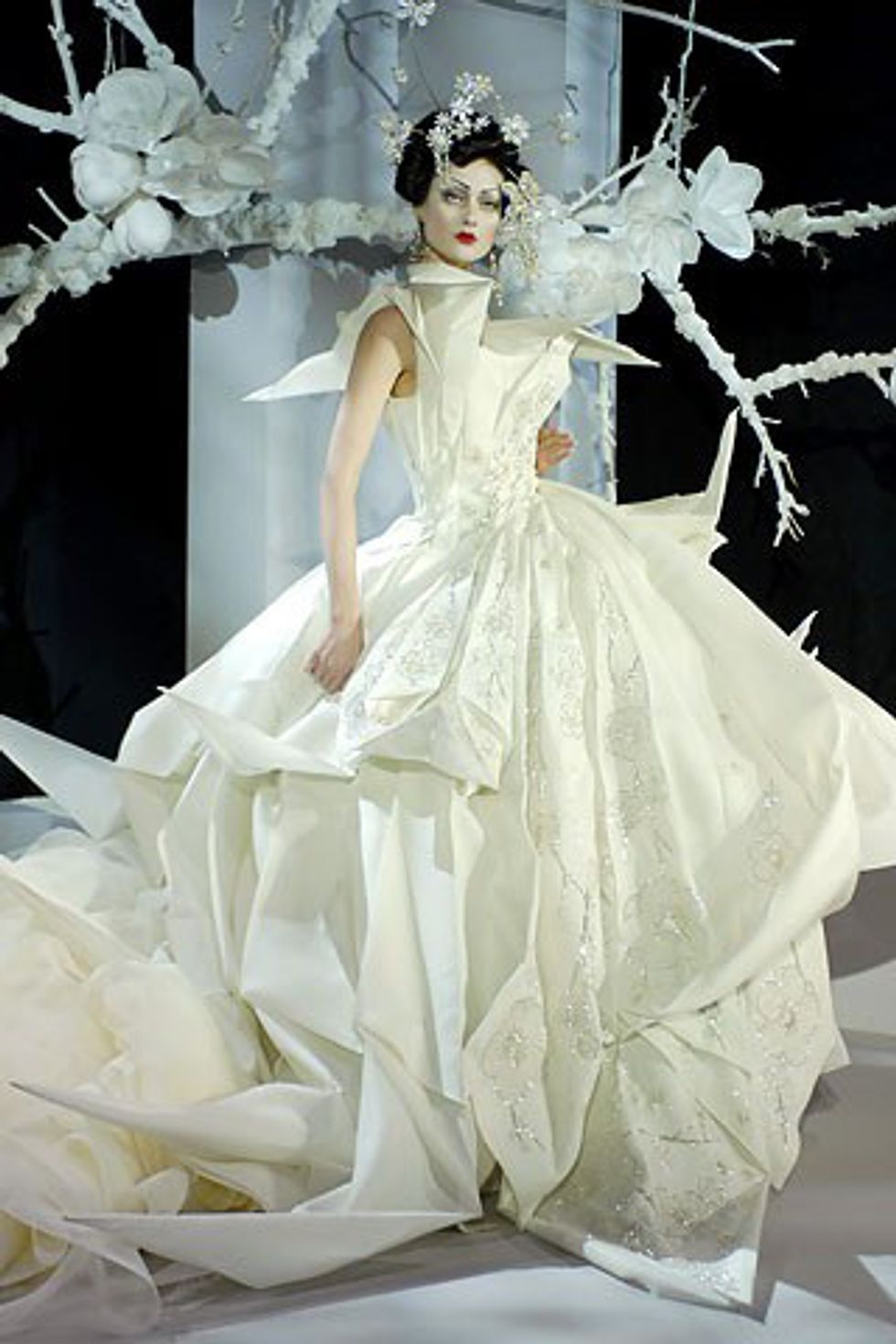
I was 12 years old when I first discovered Dior through the Spring 2007 Couture collection by, then designer, John Galliano. Of course, my experience was only secondhand and through a computer screen and not that of a pulsing runway show, but I can remember the awe I felt as a child when I saw the final look, an origami swan dress with structured folds that tipped out and the pearly-hued floral embellishments on it. It was in this moment I realize that couture was just as much as an art form as anything else.
Life went on, I grew up, and Raf Simons was named the new creative director of Dior in 2012. I knew briefly of Simons from his swan song at Jil Sanders, his oeuvre also being called the couture trilogy, before his dismissal. I didn’t know at the time that he was a revolutionary in menswear, too, under his own eponymous line. It was at the same time of Simons’s appointment that my interest in fashion faded and what collections I did skim through were with just a passing glance.
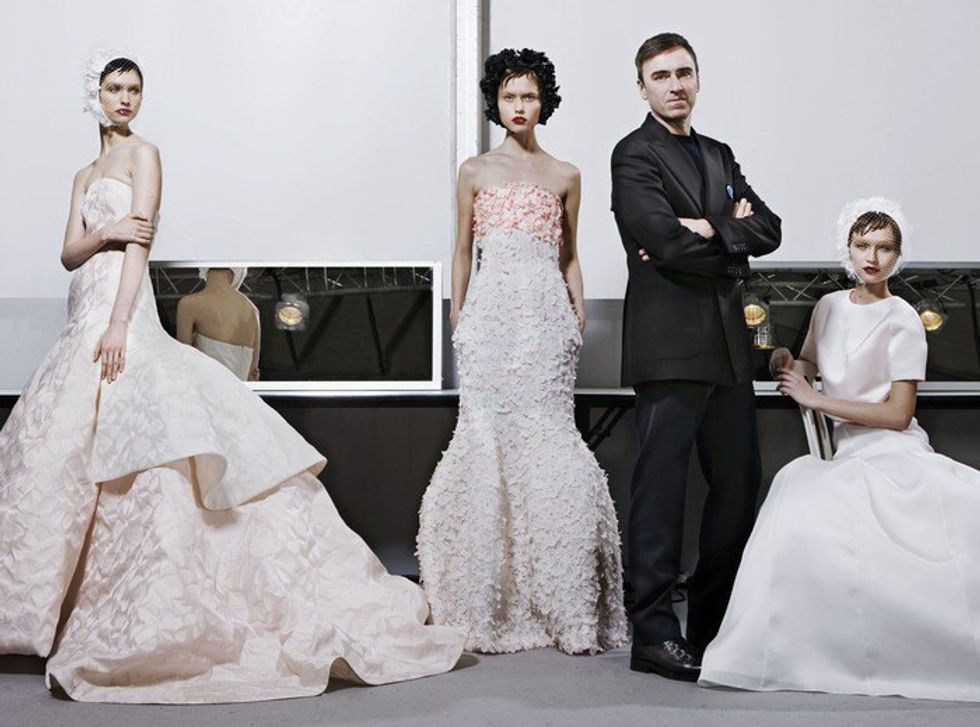
I saw Dior and I with a close friend last Wednesday. It was her suggestion, somehow, I had not heard anything about the movie, but it was a reintroduction to fashion for me. The most appealing part of Dior and I was the inside look at the atelier and the pair of premières, Monique and Florence, and “les petites mains” (the little hands), whom are the bones of the couture business. Simons and the atelier have eight weeks, compared to four and six months, to complete a haute couture collection. The budding relationships between the mains, Pieter Mulier (Simon’s right-hand man), and Simons bloom despite the tension and stress and it is the heart of the film. Throughout all of the film, Simons is an enigma of sorts, he is quiet, but eloquent and remarkably intelligent, passionate, and imaginative. It’s easy to wax poetics about him, but his work and the film itself makes me question what couture is today. I know for sure it’s not the opulent, theatrical dresses I’d seen as a child.
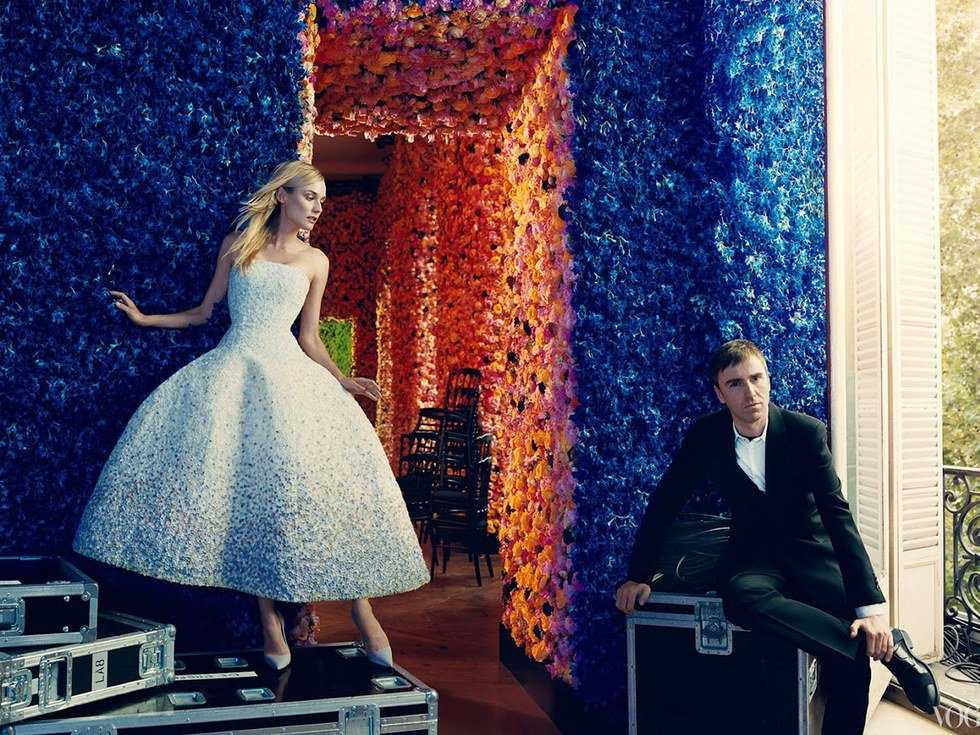
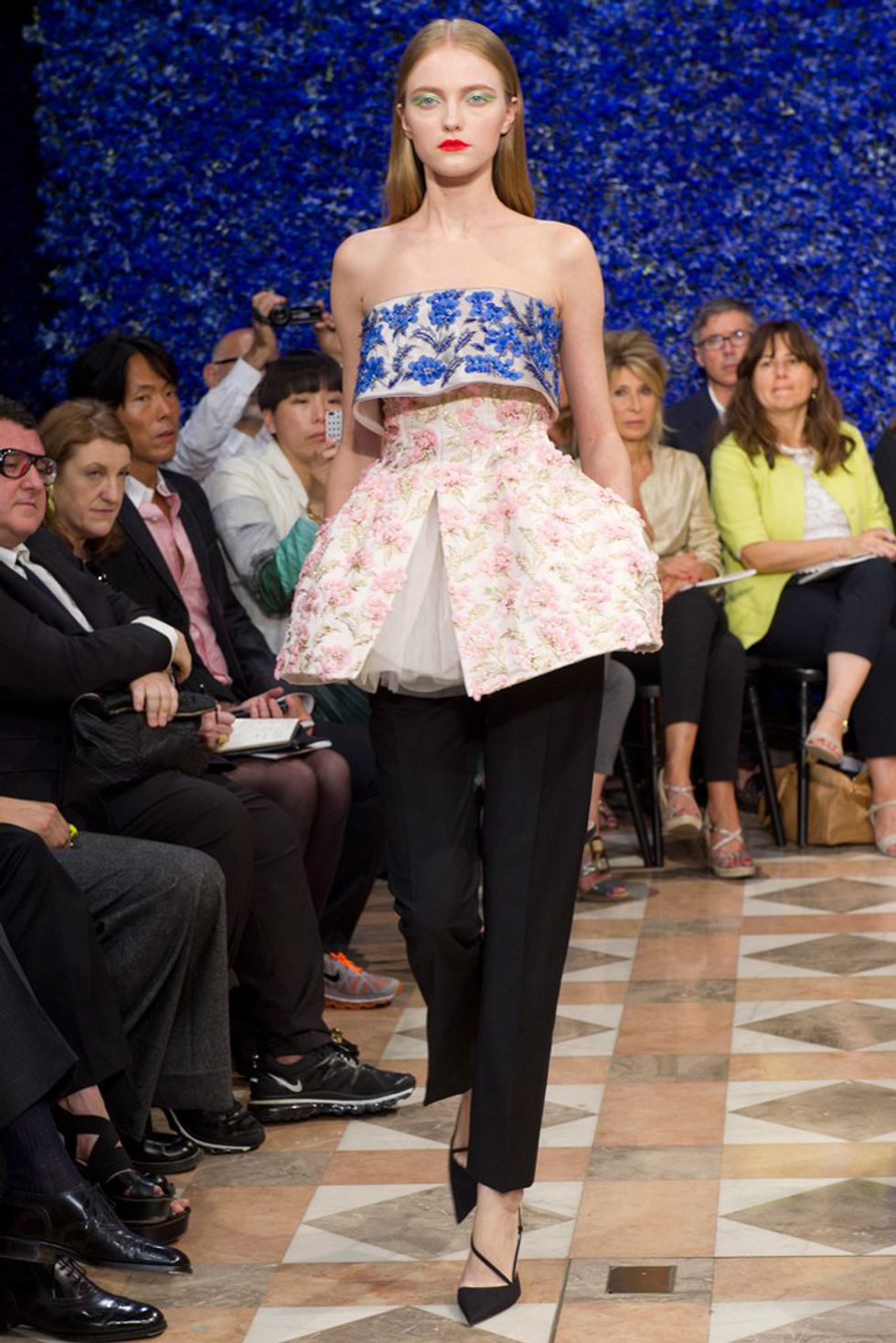
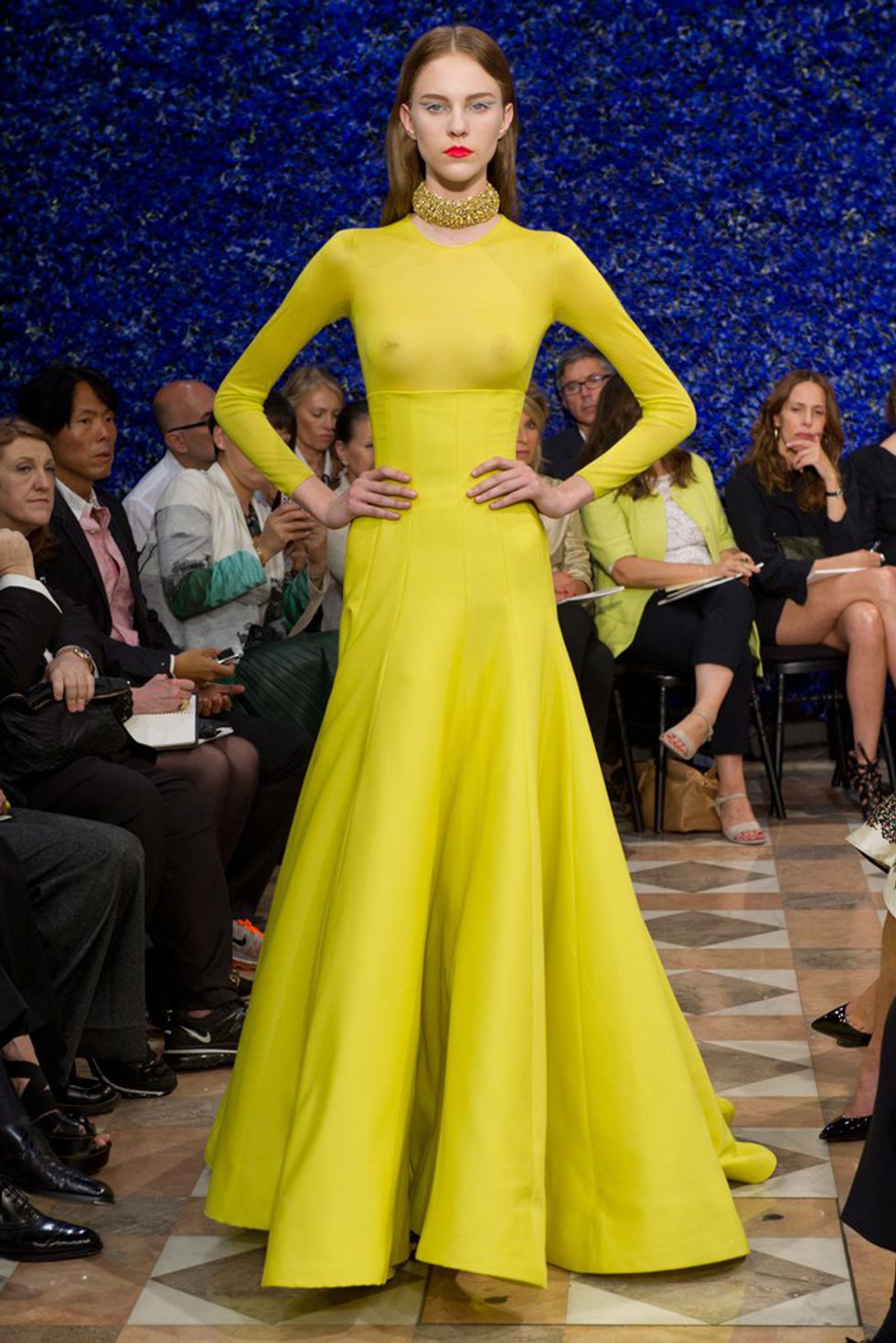
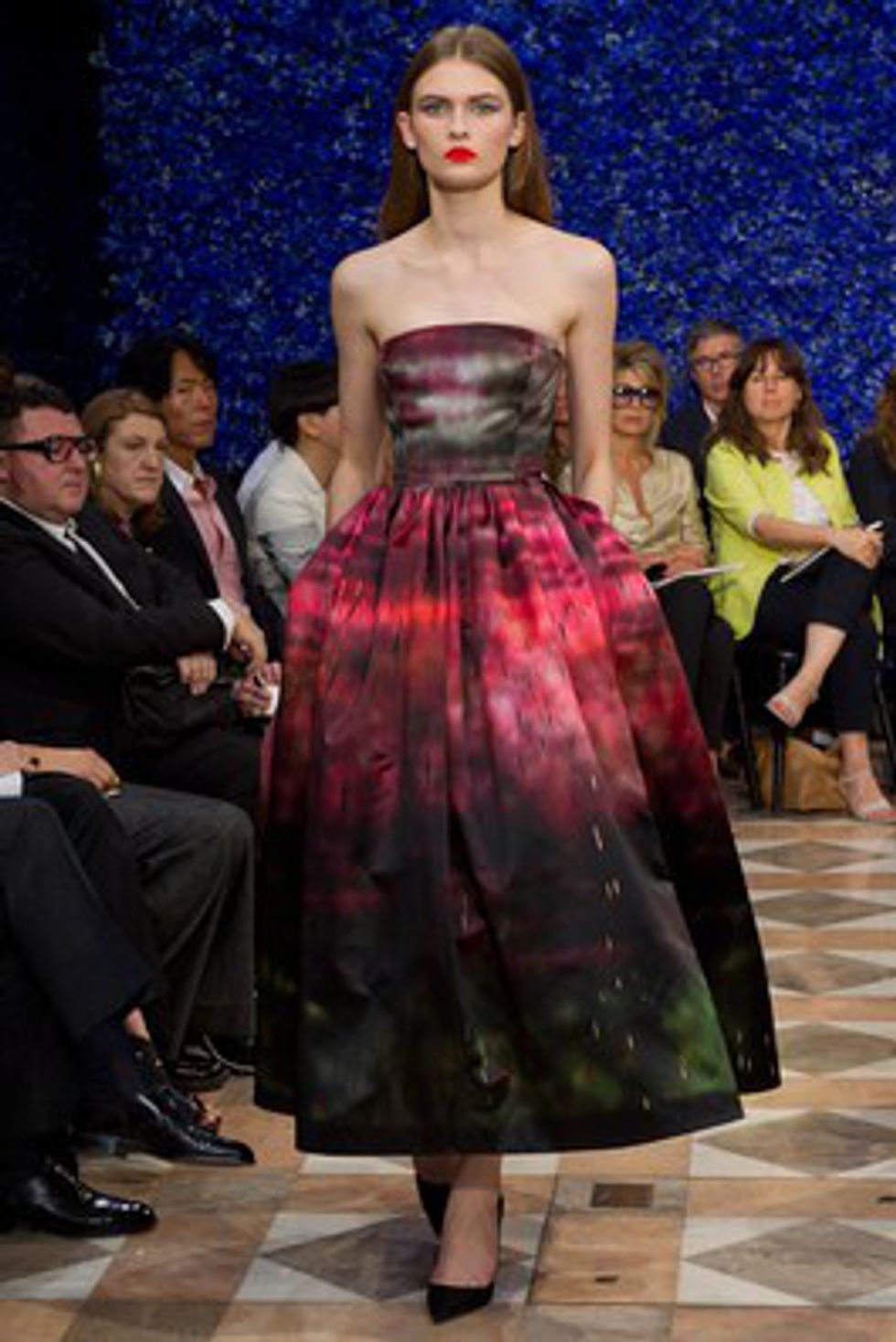
I find the answer in Simons’s vision, spending the next four days after the movie immersing myself in all things Dior under Simons’s reign including the pret-a-porter (ready to wear) and Dior campaign ads and videos. Simons is redefining the notion of luxury and with it, couture. His direction is less about the styling, wealth status, flashy designer labels, and more of women’s relationship to clothes. His approach to fashion is restrained and softened clothing that speaks more of the craftsmanship than the label. Subtle details like pockets and clean lines leads eyes to the atelier’s precise work. In the Fall 2012 line that launched Simons to national fame, he blends both the past and present to create modern looks like classic Dior ball gowns that are cut at the peplum and paired with black cigarette pants. Simons reenergizes classic silhouettes with juxtaposing colors like neon yellow or Sterling Ruby prints and bright cobalt blue flowers. My favorite look is a navy gauzy dress with a split in the skirt so that black cigarette pants peek up underneath. I can relate to today’s Dior unlike its past pieces, which were works of fiction—completely out of reach.
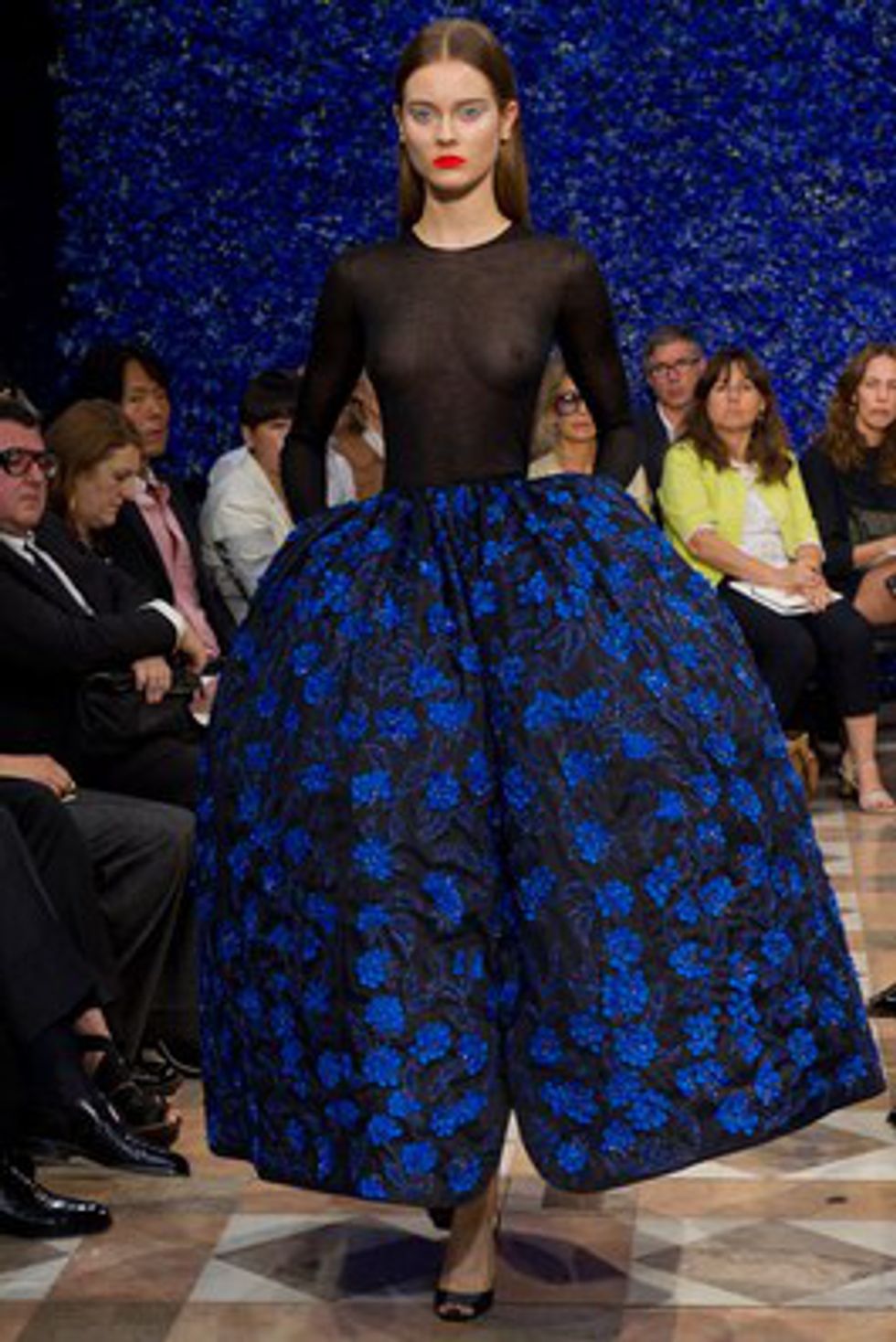
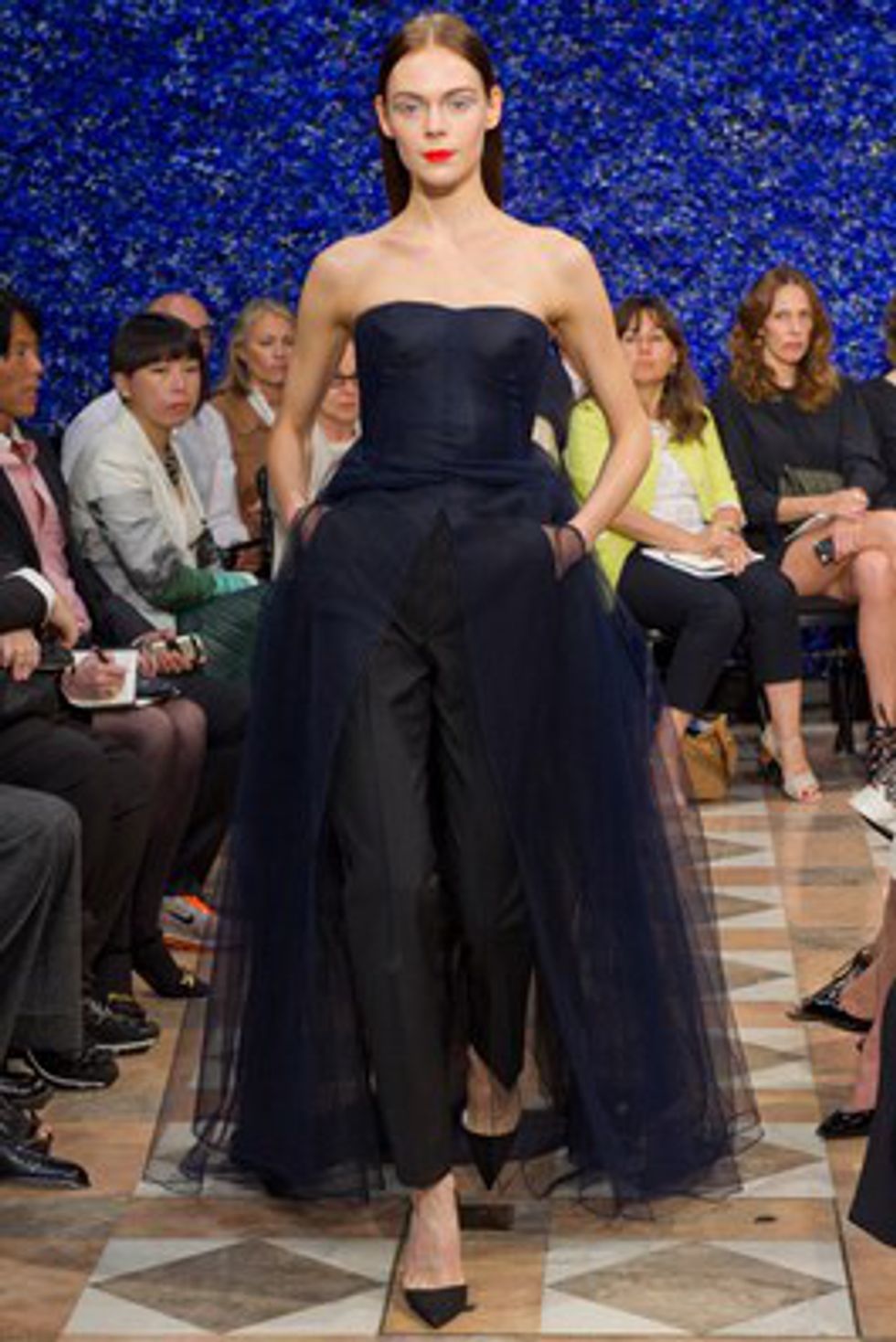
I admire Raf Simons, much like how the fashion world does, but I do not want to romanticize him as this larger than life, glamorous figure. (It’s hard not to.) Instead, I want Simons’ to be as accessible as his clothes so I can somehow, possibly, figure out his mind and how he creates such interesting pieces. A highly private person, this is unlikely ever possible for me, but deep within the pages of Google results, I manage to find a intimate piece written in 2005 by Cathy Horyn on Simons that gives some insight. It’s an old piece, but Horyn captures the essence of Simons who I think is very much the same today as he was then. In the article, Horyn and Simons spend part of the day walking through the beach at Westende and she describes Simons as “almost ideally, a blank—a person without surface in a superficial world.” Simons himself comments in the article that, “people who don’t know me look at my world as something very hard-core, and I don’t feel it that way. It’s not what attracts me. We go to the sea, 5 or 6 of us, and we’re all in pajamas with candles around and watching movies. O.K, maybe we’re watching a good movie, but we also watch trash movies. We’ve never really been that kind of group that goes to the scenes where all the cool people hang out.” Simons is extraordinary, he will continue to redefine couture and refashion Dior, but the article is a reminder that he is ordinary all the same.