
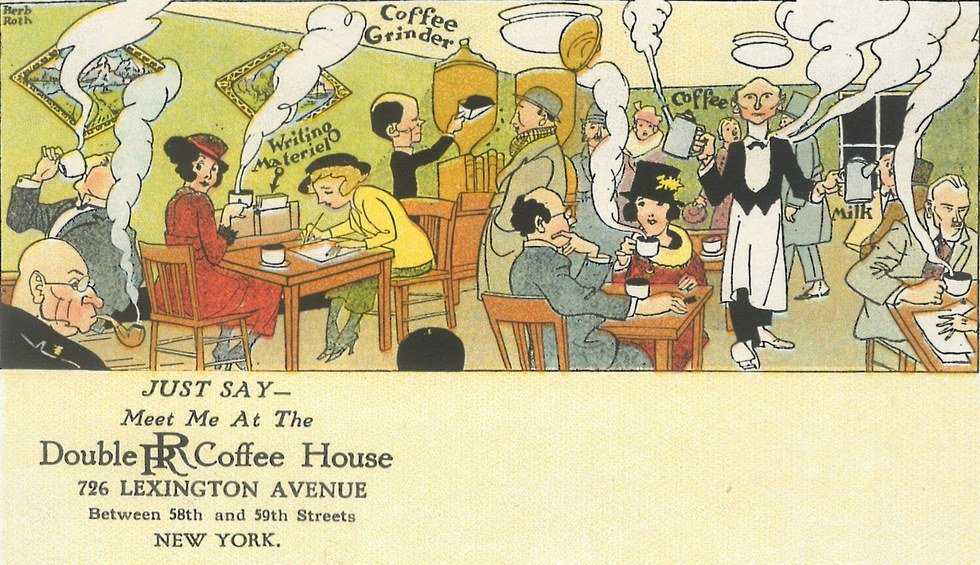
Sitting in a coffee shop is something that pretty much everyone experiences on a fairly regular basis. It provides the perfect amount of ambiance and seclusion to allow our brains to concentrate on whatever it is that we need to get done- particularly when it comes to writing. I'm sitting proof of this: I'm sipping my favorite light roast in one right now.
But how did the modern coffee shop come to be?
For starters, coffee as we know it in America is very specific to our culture. Pretty much any other country takes their coffee in espresso shots, and even the bean quality is generally much better. Americans got used to, frankly, shitty coffee during the second World War and never switched back.
I love with the history of coffee nearly as much as I love the drink itself. Coffee was discovered by a group of monks in Ethiopia in the 11th century, and was used to help them stay awake during their meditations. Turkish merchants took the plant and created their own version of the drink, setting up coffee houses to enjoy them in. Of course, Europeans found these cafes and did their best to recreate them during their obsession with anything they deemed "exotic" and "Oriental", despite not being able to grow the arabica coffee beans on their continent.
The reactions to the new European coffeehouses were split dramatically. Many conservatives pushed to ban these new cafes, some even going as far as to suggest the drink itself be outlawed. This was a very real fear for them since the coffeehouses were a new, affordable place for the working class to hang out with each other, especially since coffee is incredibly good at stimulating conversation. Many were afraid that coups and the downfall of the bourgeoisie would be plotted in these little respites from daily life. And, well, they were kind of right. The coffee shops gave the revolutionaries an inconspicuous place to gather and discuss ideas and plans in hushed tones, without fear of retribution.
Nowadays, most no longer go to coffee shops to discuss - just to sit and decompress or work. Conversation between strangers is generally kept to a minimum. But now, just as much as before, the exchange of ideas and unification of the working class is necessary to protect our country. So next time you find yourself with your earbuds in, sipping your favorite bean juice, take a moment to reflect on the history of coffee shops and maybe turn to your neighbor to say a few words- you never know what you could start.