

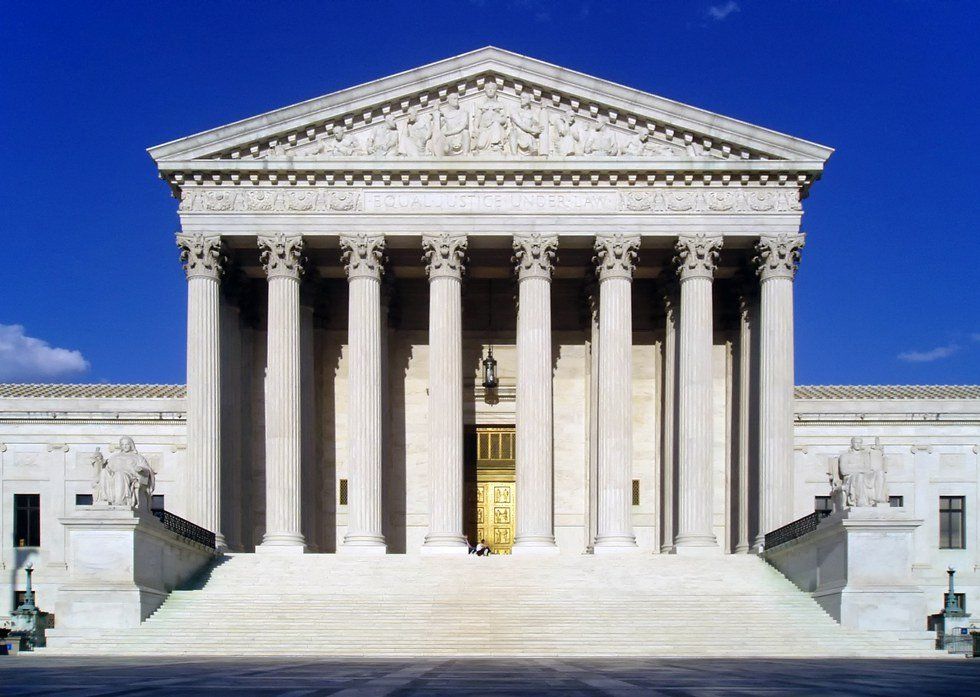
Recently the Supreme Court heard the arguments for the case of Pena-Rodriguez v. Colorado dealing with a hot button issue in our political climate: racial bias in the jury room. In the case of Pena-Rodriguez v. Colorado, Petitioner Miguel Angel Pena-Rodriguez was arrested and charged with sexual assault of a child and two counts of harassment towards two young girls in the bathroom. At the start of the trial, the jury was asked standard voir dire and given the standard instructions to search for general bias, to which the jury returned no racial bias of any kind at such time. The jury judged the man guilty of harassment, but not on sexual assault. Weeks later, the defense filed an appeal on the basis that two jury members signed affidavits that one of the jury, known as H.C from court documents, used several racial epithets in describing both the key witness and the defendant in the case including “I think he did it because he’s Mexican and Mexican men take whatever they want.” H. The defense attorneys alleged that H.C.’s conduct warranted enough to note a violation Pena-Rodriguez’s 6th amendment, and filed an appeal to the court to impeach the verdict based on this evidence. However Colorado is a jury protected by CRE 606, a law that prohibits any juror member from testifying to anyone about anything that is said during the course of a jury deliberation, with few exceptions to the rule, like if the juror used an outside source to come to his conclusion, extraneous prejudicial information was used for consideration, or even if the verdict was simply misreported. The defense team fought to have the jurors affidavits into the record as they believed that H.C.’s comments about his bias were the result of extraneous prejudicial information improperly brought up in the deliberation.
At this point, the courts disagreed and allowed the verdict to stand, however the Supreme Court took up the issue as it provides an interesting question, does one’s obvious and obnoxious bias, of any type racial, gender, or religious threaten one’s right to an impartial jury to the point that it is necessary to impeach the verdict? Should the court return with a verdict to reverse the lower court the implications would be far reaching, opening up the sacred practice of serving on a jury to close scrutiny and subjecting the jury themselves to campaigns against them for “racial bias” where none could exist. Similarly, allowing the verdict to stand would protect jurors from such scrutiny, but also possibly contaminate the jury pool with biases that are allowed to stand and jurors could use said biases to try and justify false conclusions or sway other members based on “experience.” Unfortunately, there is no easy way to determine the consequences of allowing or reversing the decision as of yet as many of the consequences are too far reaching and understandably complicated. In spite of this, this particular decision is important to follow as it will be a test of the 6th Amendment freedom vs. the liberties a jury is given to discuss and render verdicts in cases where racial tensions run high and individuals may or may not have significant impacts in the future of law.
To read the case yourself click here and be sure to follow it on the SCOTUS blog

















