
Interviewer: “So, it’s obvious to you, but you have quite a strong cult following.”
Daniel Johnston: “Well, occult? You mean like the occult, like the devil-worshipers?”
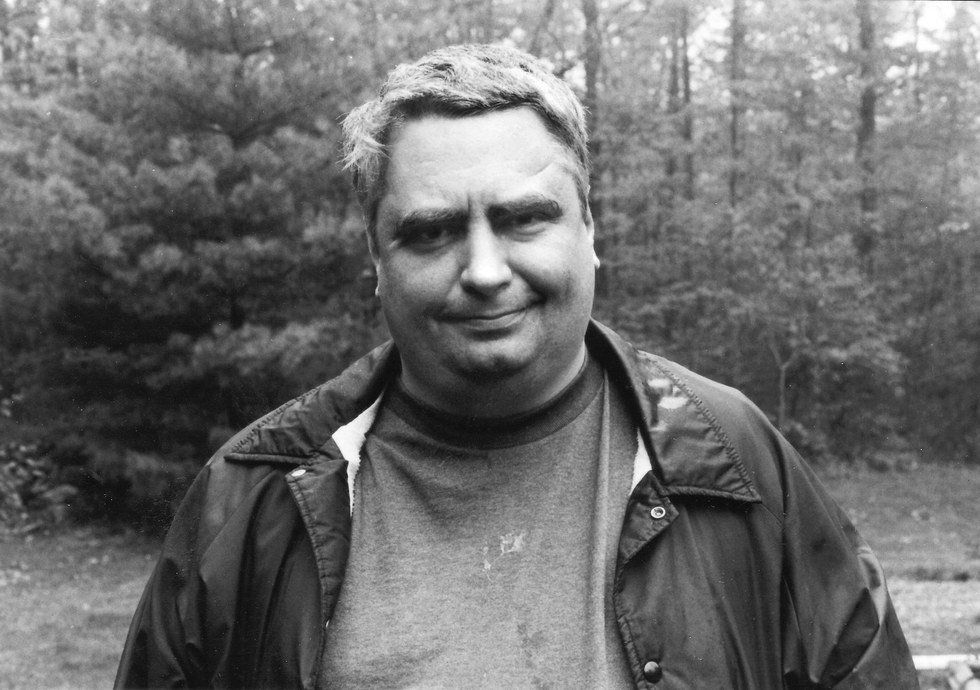
The words tumble out of Daniel Johnston’s mouth clumsily, just barely audible over the buzz of microphone feedback. The interviewer, an obvious fan from the Public Access channel in Seattle, seems just as shaky as the interviewee. Johnson’s words, naive and humorous, yet awkwardly dark, are a perfect beginning to understanding both his music and his story.
Hailing from West Virginia, he began his career in the late 70s and early 80s. Even though I say “music career,” it might not entail what you would imagine. There were no jam sessions, no groupies, no contract deals (yet); only him, a Sanyo tape recorder and a piano, sometimes accompanied by the sound of an out-of-tune guitar and he and his mother arguing with each other.
Johnston has been diagnosed with severe schizophrenia and bipolar disorder, which explains many of his music’s qualities. There are multiple phases when listening to a Daniel Johnston song. First comes the piano: it’s usually simple with common pop chord progressions, but then there’s the tight punchy sound whenever he hits the plastic keys with his fingertips. That along with the fuzzy recording quality creates somewhat of an eerie aura, almost a voyeuristic, private, I-shouldn’t-be-listening-to-this type feeling.
Then, he starts singing the childlike, out of tune vocals. You can hear his voice box strain every time he rises even a little bit above his speaking range. At some points he croons, whoops and hollers “thank you!” and other ad libs as if there’s an entire crowd sitting in front of him, while we know that it’s just Daniel sitting in a basement by himself trying to be the Beatles (which he even admits on many of his tracks).
Lastly come the lyrics, which can be all over the place at times. The main dichotomy in Johnston’s lyrics are between disturbing and childlike. A huge chunk of Johnston’s songs are love songs, and most, if not all, are about a girl, Laurie, that he became obsessed with while at Kent State. Although Johnston and Laurie became good friends during his time at Kent, the woman actually married an undertaker, inspiring many of these love songs to actually be about his beloved marrying the Grim Reaper.
And even after these seemingly upbeat love songs, there are a large amount of tracks in Johnston’s discography purely about the devil (his many trips to mental hospitals throughout his life are due mainly to his obsession with Satan). In the song “Casper the Friendly Ghost,” it seems as though Johnston is playfully singing about his favorite comic book character, until you learn that he’s actually singing about the time he pulled out the keys to his father’s plane on the way back from an Austin, Texas, music festival believing to be Casper himself and causing the plane to crash. He and his father came out fine, but the event led Johnston to be instituted into a mental hospital for one of his first of many times.
Johnston’s condition wasn't diagnosed until the latter part of his youth. Growing up in a somewhat fundamentalist Christian household, Johnston, though a black-sheep in his family, lived a relatively normal life. He was always the main attraction: being the artistic one in school and coddled at home (the youngest of the family). Coddled in most regards with the exception of his music. A number of Johnston’s cassette tracks include his mother screaming at him, saying that he “isn’t contributing” to God by making his music and should therefore give it up. This was back in the earliest days of his recordings, and Johnston, always stubborn, didn’t listen. Not in the least bit.
Johnston’s mental issues became apparent only in the beginning of college, when he went to Abilene Christian University in Abilene, Texas. He was found wandering aimlessly on campus, standing still for long periods of time staring at nothing and not going to any of his classes. Johnston came back home to be examined at the local mental hospital, checked out “fine” and transferred to Kent State University in the art department.
After more manic episodes, Johnston dropped out again and began focusing on his music. His mother, still displeased with his lack of monetary contribution to the family or the church, kicked him out of the house. He still made music after moving into his brother’s house (specifically the fantastic album “Yip Jump Music”), but he was kicked out again only to move in with his sister. After recording some more music in her basement, Daniel disappeared one night to join a carnival which took him to Austin, Texas.
Once in Austin, Johnston tirelessly distributed his cassettes to everyone he came into contact with, until Louis Black, the founder of the Austin Chronicle, found the tapes. Once Black listened to “Hi, How Are You,” “Yip Jump Music” and “Don’t Be Scared,” he likened Johnston to the names of Lennon and Dylan in a raving review, launching Johnston’s name to the masses.
Johnston’s success just kept snowballing after Black’s review. Once Johnston was featured on MTV’s “The Cutting Edge”, even Kurt Cobain, at the peak of his fame at the time, began wearing the cover of “Hi, How Are You” on a t-shirt to virtually every one of his public appearances. Beck, David Bowie and Dave Grohl all became huge fans of Johnston’s, and he was given a multi-hundred-thousand dollar deal with Atlantic Records for his album “Fun.”
Even though “Fun” sold very poorly, and Johnston was dropped from the label, his music has reached even further lengths now that it doesn’t have to be passed around by cassett. Especially in the underground scene, Johnston is seen as one of the greatest living songwriters of his day, and his aforementioned album “Yip Jump Music” was at number 35 on Cobain’s list of favorite albums.
While the success story of Daniel Johnston might be optimistic, outsider music isn’t always as cheery as his example. Charles Manson (yes, that Charles Manson) made a jangly-folk album that falls into the outsider music category. Many people actually seek out Manson’s music, and honestly, it has some gravitas. His song “Look at Your Game Girl” is a fantastic piece of folk, and the darkness that the context gives to his music adds an alluring pull. Many of the examples in outsider music are profound because of its back story. Even if you don’t like the music of Johnston, Manson, Tiny Tim or Jandek, it’s hard to argue that they aren’t unique in the world of music for their contexts.
This seems troubling at the same time though. On his review of Johnston’s 2003 album “Fear Yourself,” Pitchfork reviewer Michael Idov writes “Even if his celebrity fans are truly interested in giving Daniel exposure rather than spritzing their own images with outsider chic, all they accomplish is forever interlocking Johnston's music (simple and lovely and undeserving of any awe) with his famed manic depression.” The question is this: do the fans of Daniel love Daniel for his music or for a pet cause? Do fans of outsider music enjoy the genre for its music or for its back story? And is one reason truly better than the other?
Johnston still tours every once in awhile with his father as tour manager (now on commercial airlines of course). More artists have come out to support both Johnston and his music, even huge pop artists like Lana Del Ray covered his songs in recent years. A narrative film titled “Hi, How Are You” (starring Johnston) has just finished a successful Kickstarter campaign. The trailer is narrated by director Gabriel Sunday, stating: “The goal of the movie is to get inside of Daniel’s mind. It feels like a documentary, but as Daniel tells his stories, the rabbit hole gets deeper and deeper, and time and reality begin to bend.” Later in the trailer, Johnston is prompted by the interviewer to have conversation with his former self. Sitting on a leather seat, surrounded in mostly darkness, Daniel holds a cigarette in his left hand and gently brings his tape recorder to his mouth. Slowly, he mumbles the lisped words. “Choose to live and not to die, because you have a chance, as Daniel Johnston, to go wherever you want.”