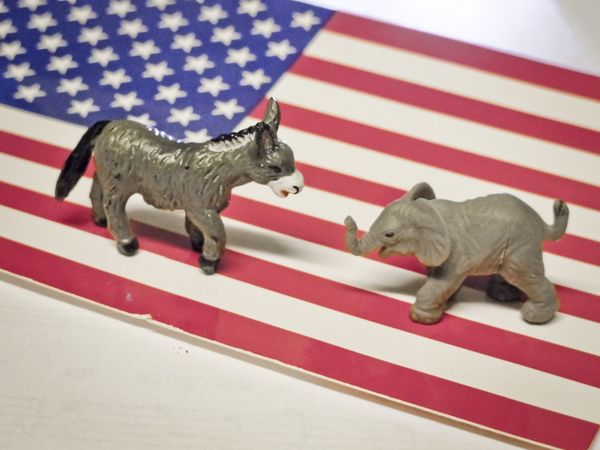

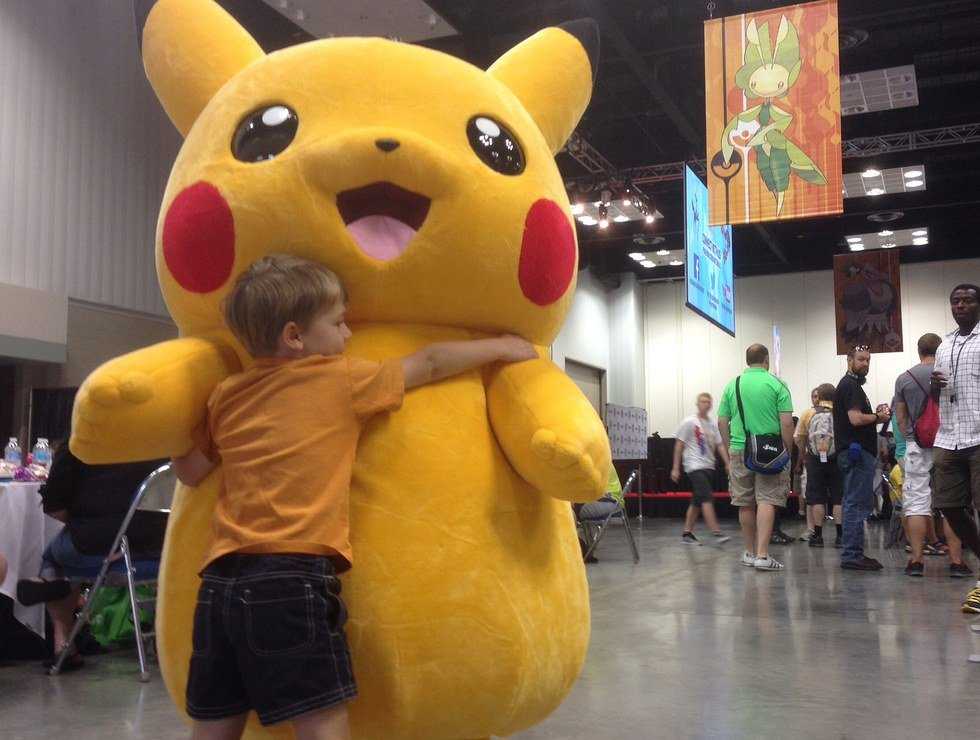
Admit it, you and I are both Pokémon addicts at this point. And if you proudly refuse to play, just let people enjoy it: stop flooding my news feed with complaints about it. Although, I should probably reserve judgement because I am the complainer in chief of politics as my previous articles show. U.S. politics is ugly, and making sense of it is hard. But believe it or not, sometimes, a little Pikachu can clarify it better than we can.
Unless you live in Canada, you know how this game works. However, for those who live under a Snorlax, Pokémon Go is an augmented reality game in which users move around the real world looking for Pokémon to capture. This quest for little monsters to dominate could be a commentary on imperialism, but my Pokémon-political epiphany came to me at a Pokémon “gym.”

When players reach a certain level, they choose a certain “team:” Valor (red), Instinct (yellow), and Mystic (blue). Players then battle others of different teams at gyms (a specific location for Pokémon to fight) and attempt to claim the gym for their team.
As I was choosing my team, I asked for my brother’s advice, to which he instantly said “red.” So with no other criteria, I chose team Valor. Of course, this arbitrary choice has no meaning in the real world. No one had any connection to any team before the game was released a week ago. In fact, my friend chose a team because blue is his favorite color. Yet, these random teams have quickly become political parties.
All three teams have devout and vocal followings. Hundreds of Internet memes now exist that trash-talk and insult the intelligence of the other teams. Last night, I also walked by two Pokémon players wearing matching team T-shirts. Keep in mind, these teams did not exist last week. This passion and division mirrors the polarization of the Republican and Democratic party.
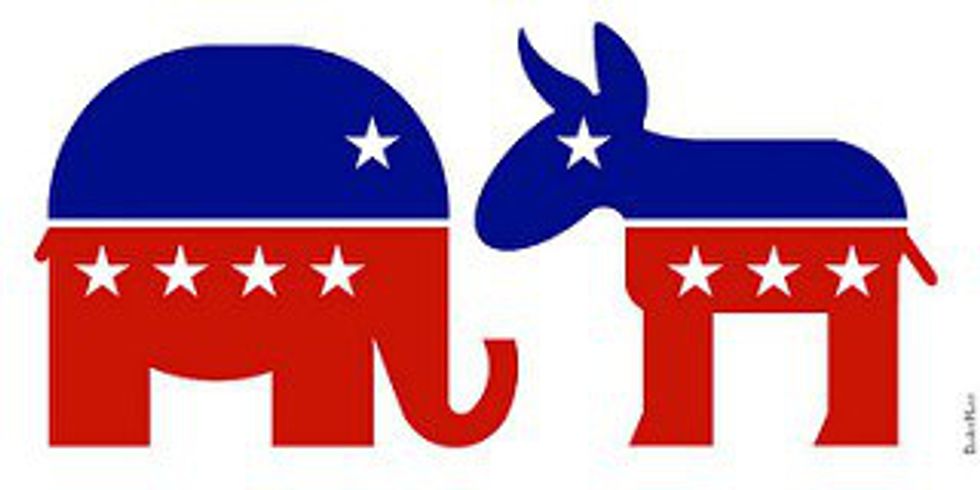
As in the world of Pokémon, people typically choose their political affiliation on arbitrary factors, such as what their parents believe. And each party believes the other is stupid. Individuals actually align with their party so passionately that they cannot compromise with those who support the other.
However, unlike Pokémon Go, this political climate significantly impacts people’s lives. Inter-team hatred in Pokémon Go does not send us to war, cut welfare funding, or fail to fund Zika research. Political hatred does all of this.
Pokémon Go has taught me that progress can only be achieved when we look past what team we play for. Similarly, issues on the national stage must be solved quickly, and this outcome is only possible through bipartisan effort.
Soon, Pokémon Go will institute a trading system in which players can trade Pokémon with other players, regardless of their team. Players will literally make deals with opposing team players. The U.S. political system could learn from this system. Too often, people get lost in their identity as a Republican or Democrat. In the future, though, we must look past these identities, whether red or blue (or yellow), to achieve our collective goal, whether it be policy or catching them all.