


I am an unashamed romantic. I don’t just say this in the candlelit dinners and "The Notebook" sense, though they have their merits. I simply claim that I love. I love that which is around me: The people, the art, and the ideas. Don’t misunderstand me, I do look forward to that powerful love which exists in marriage and family, I see that as one of the most exciting and powerful moments in life. However, I see the world and that which is around me, both the visible and the invisible, as a thing to be loved—within reason. I remember the first time I was introduced to the concept of "Ordo Amoris" a term coined by Augustine meaning, “rightly ordered love.” So here I am, the romantic with the great goal of ordering that which is often without order—love.
So, what is it that I find so lovely about life? We look around us and often see pain, sadness, deprivation. Where’s the joy or love in that? That’s a question I ask myself all the time. However, just when I’m in the midst of such sadness, I hear a Vivaldi concerto, see a Rembrandt painting, or meet a beautiful person. In the same way that there is much that saddens me, there is perhaps more to give me joy. This is the epic romance of life.
I do not say this to wax philosophically per se, but because I must remind myself of this fact. There is love, beauty, and truth in the world and I cannot fail to see it. When thinking of the romance of life, I can be caught up in the idea that, for it to be a romance, all must go well. But think to yourself of the great Romances: "Romeo and Juliet," "Pride and Prejudice," or even "The Notebook," trouble plagued them, making the ending that much more significant.
I may have drawn myself off-topic, but I believe it was worth saying.
The great burden upon myself is this: How do I order my loves correctly? What should matter more than others? To do this, one must give deference to the individual. We each do have our priorities, but it would also be folly to ignore the objective truth and value behind different ideas.
Robert Capon tells a story that best exemplifies this in his magnificent work "The Supper of the Lamb." He talks of a woman who visits the Louvre and tells a worker that she’s unsure of whether the art is good. The attendant responds telling her, “The paintings are not on trial ma’am, you are.”
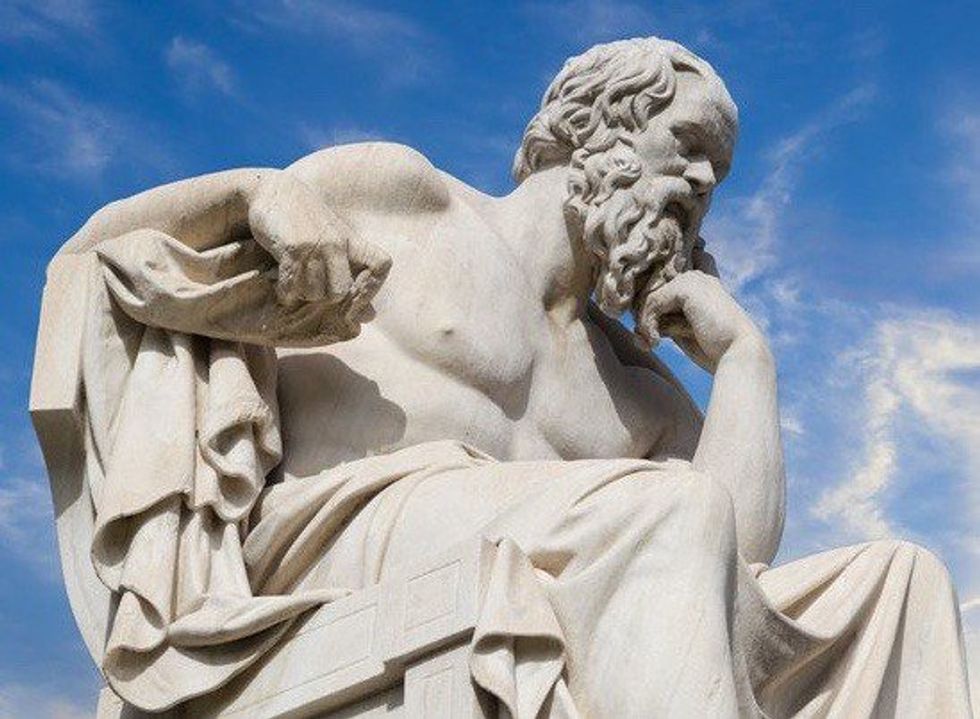
Objective value exists, and this must order my loves. At the same time, each of us may have individual priorities. For me, my faith is valued above all: Giving the ultimate romance to life. After this comes personal relationship, and following that the beauty of art and thought. Socrates tells us, "the unexamined life is not worth living." Whether or not you entirely agree with this statement, I think you could at least admire this version of it: The unordered love is not worth loving. For I wholly believe the ordered love gives the romance to life. That is good.
















