

My perspective of this issue comes as a low-income, white female. The school that I attend is highly coveted by its students for its co-op program. It's an experiential learning opportunity that allows us to get a feel for our future career prospects. We spend four years in classes and at least six months working in our area of study, and we don’t pay tuition for the time spent on co-op. I’ve been extremely fortunate to be able to participate in the program, landing a paid position that allowed me to save money to float me through the following semester while in classes and working two unpaid positions. But this is a unique experience not had by many.
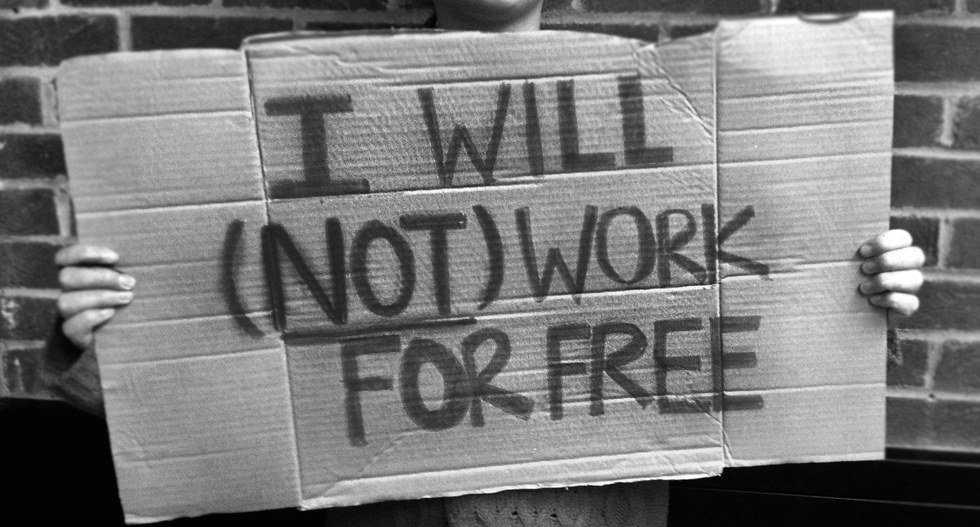
Unpaid internships are surrounded by controversy, and the legalities of the concept are somewhat arbitrary. Part of the Department of Labor guidelines for unpaid interns is as follows: "The employer that provides the training derives no immediate advantage from the activities of the intern," and also, "the internship experience is for the benefit of the intern." So as long as the intern isn't providing direct benefits to the company, they can be legally unpaid. However, according to an Intern Bridge report, when unpaid interns were asked how much work they did that benefited the company directly on a scale of 1-5, the average contended 4.20. The study states, and rightfully so, that "it is nonsensical to suggest that interns do not provide benefits to a company." Additionally, there lies a much deeper issue beyond the general controversy of unpaid labor.
Most students attending university will at some point hold an internship position; it helps them build their resumes, apply in-class concepts to real life situations, and practice work-life balance, forcing us to manipulate our flexibility between work, school, and social life. It’s also an opportunity to network and make valuable connections for post-graduate life that, more likely than not, will prove essential for career advancement. Unfortunately, because the bulk of these positions are unpaid, internships become a luxury not easily afforded by many low-income students. While this might not be problematic for those whose parents or guardians have the means to support them throughout their educational career, many students, including myself, depend largely on themselves. It’s a harmful divide in our educational system that isn’t being properly addressed.
It isn’t news that expectations for graduating students have skyrocketed, but the issue remains that the proliferation of these standards are leaving low-income students in the dust. When a low-income student accepts an unpaid position, they’re forgoing paid working class jobs necessary for them to afford basic essentials. They watch their bank account balances quickly deplete under their cost of living and it’s not a realistic or safe situation. You might be thinking that the reasonable solution is to get an additional part-time job that pays, but the student must consider the effects that multiple jobs might have on their educational career. It goes without saying, but homework and studying are an essential part of schooling which demand time and concentration, and performing classes and extra jobs are mentally and physically draining. There becomes a point when five hours of sleep feels a lot more like 30 minutes.
An internship is the modern-day equivalent to an entry level position. In order to establish any credibility, it’s a borderline necessity. This isn’t to say that without an internship students won’t be hired, but the job that they do get will be lower-level and lower-paying, continuing to keep them one step behind their more affluent counterparts. It’s a cyclical divide that continues to perpetuate the existing inequalities in our educational system. So please, pay your interns.

















