
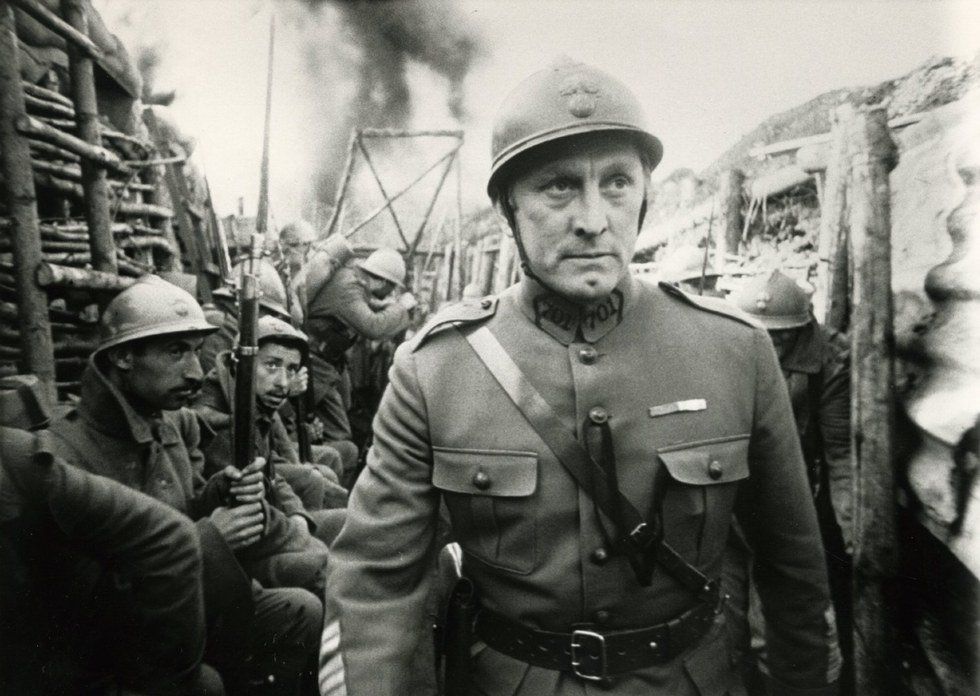
While defending three members of his regiment during an absurd court martial, Colonel Dax, Kirk Douglas’ character in Stanley Kubrick’s Paths of Glory, delivers the film’s most powerful statement. “There are times when I am ashamed to be a member of the human race, and this is one such occasion.” Paths of Glory masterfully criticizes the corruption in the military command hierarchy and creates the most effective anti-war declaration ever put to film.
The World War I French and German armies have been battling over a stretch of land for two years when the film takes place, each entrapped along 500 miles of narrow trenches, and only No Man’s Land separates them. Any attempts of advancement result in incalculable casualties by unstoppable enemy fire, but when offered a promotion by his superior officer, French General Mireau (George Macready) becomes convinced that with an estimated 55% of friendly casualties, the “Anthill” can be taken. And he orders Colonel Dax and his men to do so.
Dax knows the plan is doomed from the start, but still, he follows orders. He’s a loyal officer who knows his limitations. When he is angry, it shows, but he knows how far he can go, and never passes that point.
One of the film’s most disturbing scenes unfolds the night before the attack, as two soldiers debate how they would prefer to die, either by a machine-gun or a bayonet. Both naturally choose the machine gun, saying that even though they are both deadly steel weapons, the machine gun is much quicker, proving that the soldiers “are more scared of getting hurt than killed.”
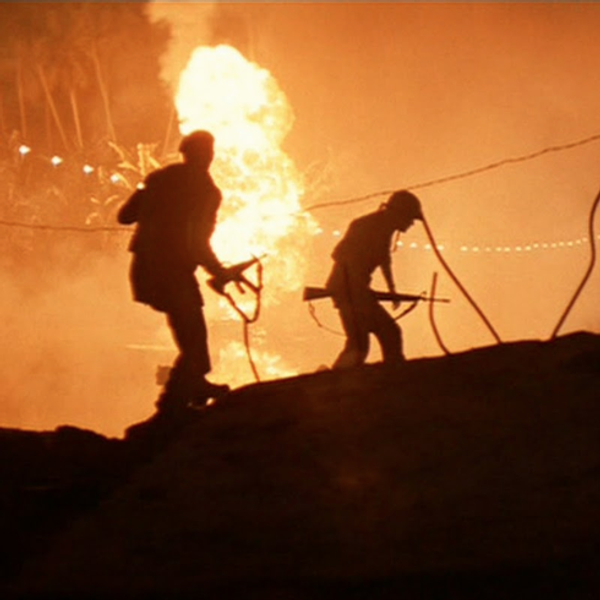
As expected, the attack fails. The men are continually bombarded during the film’s only battle scene (which is realistic despite our exposure to the catastrophic sequences of modern films such as Spielberg’s Saving Private Ryan), they retreat, some refusing to leave the trench, and all the members of the 701st Infantry Regiment end up being charged with “Cowardice in the Face of the Enemy.” And to avoid a certain punishment, Mireau orders one man be picked from each of the regiment’s three companies to be tried.
The three officers are given the opportunity to play God; they get to choose who lives, and who dies. Dax is the only man with authority who realizes this course of action is shameful and disgusting, all but one of the of the officers not taking advantage of the opportunity. One prisoner was picked out of revenge, another for distaste, and the other by chance. Dax volunteers to act as defense counsel for the three men during their court martial, and despite his best efforts, the hearing is informal, unjust, and inhumane, the defense’s main argument being that because the accused soldiers weren’t killed during the battle, they are cowards.
The film brings up an important question about the way war is handled among the powerful. Does a title give one the right to throw away life? The entirety of the film is dedicated to refuting that question, and its preposterous presence in human nature.
Paths of Glory laid the foundation for Kubrick’s legacy, and solidified his place as a great director. Kirk Douglas as Dax also delivers one of the best performances of his career, giving the film a sense of emotional desperation and urgency. And together, Douglas and Kubrick create one of the greatest anti-war films of all time.