
As spring break approaches, thousands of (privileged) high school and college students will head off to their tropical vacation destinations. As someone who was born and grew up in Cuba (I know, you've always wanted to go there), this is the time of year that I worry about the impact that these students will have on the local communities of their destinations and whether they will even notice the implications of their actions.
As a sophomore, I took a course called "Core Caribbean" (problematic in itself, but that's for another article) and read Jamaica Kincaid's book, "A Small Place," about the effects of tourism and tourists on Antigua (I highly recommend it). As a native of a colonized Caribbean island, I can relate to the struggles she described. The neocolonialist industry of tourism becomes a more complicated realm to navigate when one, like me, has been on both ends of the raw deal. Having lived in the United States for more than half of my life and having gone back to my home country a handful of times to visit the rest of my family (but also to take advantage of the beaches and hotels of the beautiful island), it is difficult to reconcile these two conflicting positions.
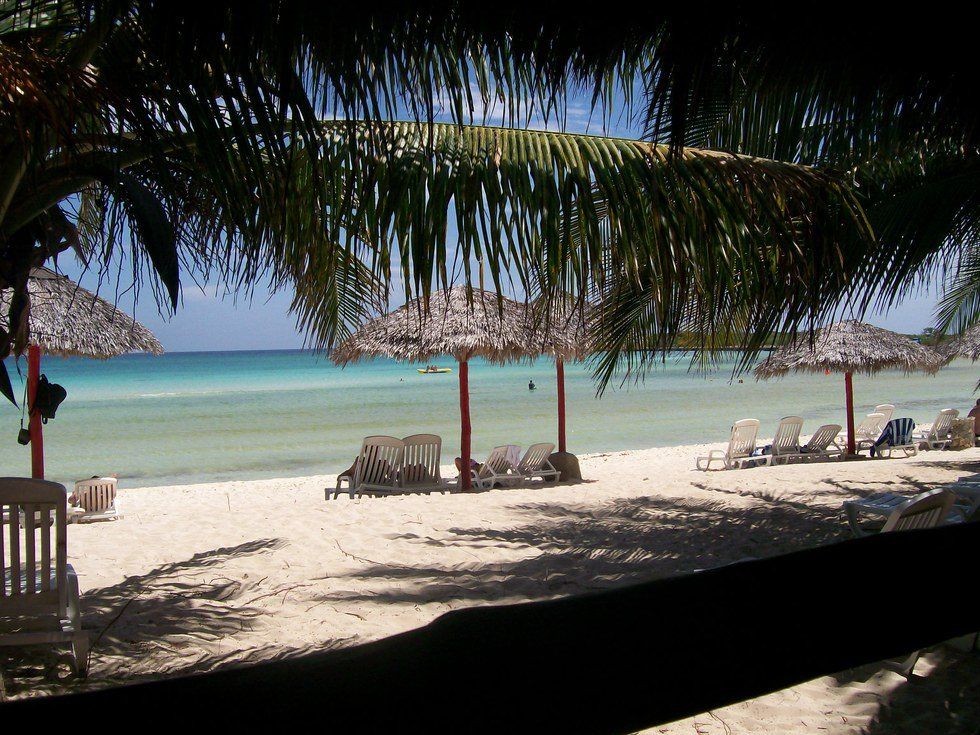
It is hard to sit on resort beaches with their blindingly white sand and look into crystal clear blue water and enjoy the feeling of the sun's rays on my skin. It is hard because I know this is the first time my grandparents have set foot in a hotel. It is hard because I know that the beach that I am on is off-limits to the local people, or so inaccessible that it is nearly impossible for them to enjoy it. It is hard because even if the locals had the money to rent a hotel room here, they wouldn't be allowed to. It is hard because I know if there are any locals enjoying the water, they probably rode standing in a cattle car for hours on end to get here. It is hard because I, like all of the tourists, got here in a car. It is hard because the road to the hotel was paved, but the rest of the roads are dirt. It is hard because in a few hours, I and my fellow tourists will go back to a comfortable hotel room and the locals might have to go back to one room bohíos where they live with their entire family. It is hard because the person serving the mojitos that the tourists came here for is supposed to earn $200 a month for their job, but is given 200 cuc instead, the rough equivalent of $8. It is hard because they live on tips which the tourists are stingy in giving because they think the workers are paid well. It is hard because there is so much food here for the tourists and so much of it goes to waste. It is hard because the locals still live on rations and are only allowed a pound of meat per week per family. It is hard to realize that I, as a tourist, am a part of this neocolonialist practice. It is even harder to be a victim of it.
Our temporary discomfort is nothing compared to a lifetime of oppression. It is easy for us to leave these areas where we feel discomfort (if we feel any at all). It is easy for us to forget. It is easy for us to plan our next vacation. "And so you needn't let that slightly funny feeling you have from time to time about exploitation, oppression, domination develop into full-fledged unease, discomfort; you could ruin your holiday," writes Kincaid.
All I can hope is that everyone going out of the country (or even within the country) for spring break (or any vacation) at least gives some thought to how they are complicit in these devastating systems of oppression, even if it is hard.